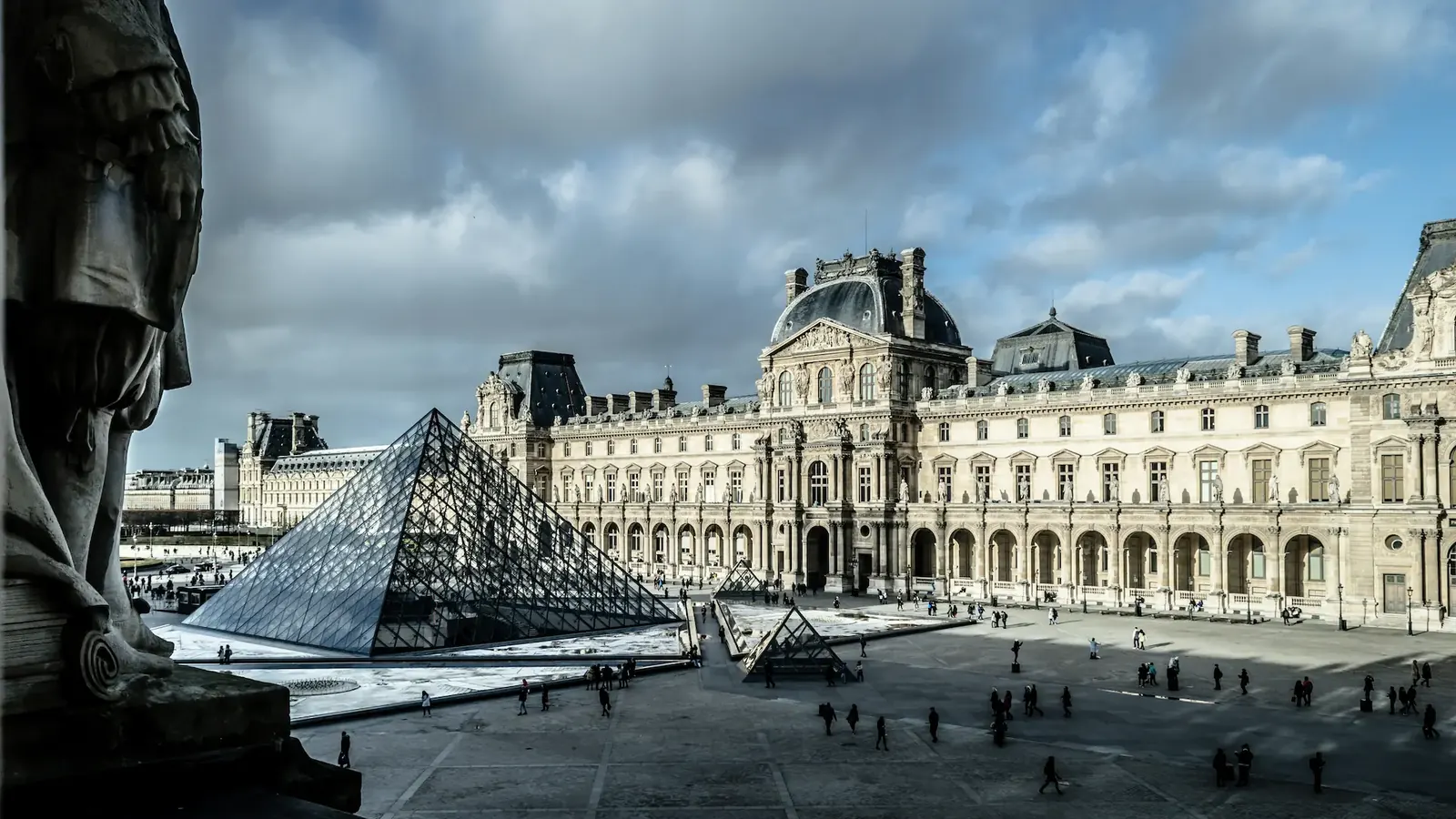
French is a Romance language that evolved from the Latin spoken in Roman Gaul, influenced by the Gaulish (Celtic) and Frankish (Germanic) languages of early France. It emerged as a distinct tongue in medieval times (Old French and Middle French), and was standardized especially around the Parisian dialect. The French language was later propelled onto the global stage through colonization. From the 17th to 20th centuries, France (and to a lesser extent Belgium) established colonies in the Americas, Africa, Asia, and the Pacific, introducing French to vast new territories. Today, French is an official language in 26 countries and spoken in some capacity in over 50 countries. With about 300+ million speakers worldwide, French has developed regional dialects and varieties on every continent – each shaped by local history and influences. In this blog post, we take an in-depth tour of the major French dialects around the world, exploring how French in each region has its own flavor, history, and quirks (with clear examples along the way).
(Note: We focus here on varieties of the French language as used around the world, not the separate French-based creole languages like Haitian Creole. Each dialect below is mutually intelligible with standard French, but has unique features.)*
Metropolitan French (🇫🇷 France French)
History and Status: In France, “Metropolitan French” – essentially the French of France – is considered the standard form of the language. Also called Parisian or Hexagonal French, it rose to prestige thanks to Paris’s political and cultural dominance. As early as the 17th century, institutions like the Académie française (founded 1635) have regulated French in France, promoting a standard literary form (based on the Paris region’s dialect) that spread through education, media, and administration. Today, the Francophones of France generally use this standard Parisian French, though regional accents exist. (Within France, there are also older regional languages/dialects – e.g. Occitan, Breton – but those are distinct languages; here we’re talking about the French language itself in its regional forms.)
Characteristics: Metropolitan French is often considered the reference point for other dialects. Its pronunciation is what most learners encounter first. One notable feature in modern colloquial France French is the tendency to drop the “ne” in negative sentences (e.g. Je ne sais pas → Je sais pas), a simplification heard in everyday speech. Metropolitan French tends to use the “r” sound as a uvular fricative [ʁ] (in the throat), unlike some other regions that trill or roll the r. Vocabulary and grammar are largely standardized nationwide, though there are some regional terms and a north-south accent divide. For example, in southern France (the meridional accent), the intonation and some vowel sounds differ slightly – southern speakers tend to pronounce vowels like é and è distinctly and retain older pronunciations for nasal vowels. Overall, however, the differences within Metropolitan/France French are minor compared to the differences between global dialects. It’s the dialect taught in most French textbooks, and thus serves as a baseline in this tour of world French dialects.
(Fun fact: Until recently, France was slow to feminize job titles. Words like professeure or ingénieure (for a female professor or engineer) were long deemed incorrect in France, even though Quebec had used them for decades – the Académie française only accepted such feminine forms in 2019!).
Canadian French (🇨🇦 Quebec French)
History: French in Canada dates back to the founding of New France in the 17th century. Colonists from France (especially from the Paris region and west coast) settled in Quebec and Acadia. Cut off from Europe after the British conquest (1760), Quebec French developed in relative isolation, preserving some older French features. It also absorbed influences from English (due to proximity to anglophone Canada/USA) and from Indigenous First Nations languages. Today, about 7 million people in Quebec speak French, and it is the dominant language of the province – Québécois French is a coherent system with its own informal norms, though formal written French in Canada remains very close to France’s standard. Quebec’s language policy (through the Office québécois de la langue française) promotes French and has even enriched it with unique terms to resist English influence.
Differences and Examples: Canadian French is fully mutually intelligible with European French, but definitely has its own flavor. Notable characteristics include:
-
Pronunciation: Quebec French has a distinct accent. The “tu, du” sound becomes [ts]/[dz] – for example, tu (you) may sound like “tsu” and dieu (God) like “dzzyeu”. Many Quebec speakers also still distinguish certain vowel sounds that in France have merged. For instance, the â in pâte versus patte (paste vs. paw) is longer in Quebec – preserving a 17th-century French distinction. Nasal vowels can sound more nasalized than in France. All this gives Quebec French a recognizable twang to French ears.
-
Grammar: Informal Quebec French often drops the “ne” in negatives (just like in France). A uniquely Canadian construction is the use of “-tu” as an informal question tag. Example: T’as fini ? (You finished?) might be asked as T’as-tu fini?. This -tu doesn’t mean “you” here, it’s just a question marker in colloquial speech. Also, Quebec French tends to use “on” for we and has some archaisms (e.g. using à with certain verbs where France might not). But syntactically, it’s not drastically different from standard French.
-
Vocabulary: This is where Canadian French really stands out. There are many Québécismes (words or expressions unique to Quebec or Canada). For example, un chum means “a friend/boyfriend” in Quebec (where France might say copain). Un char in Quebec is a common word for “car” (whereas char in France means a tank!). To magasiner means “to go shopping” (standard French: faire des courses). A corner store is fondly called un dépanneur in Quebec (in France, dépanneur means a repairman). Even swear words differ: Quebec has the famous sacres – curses derived from religious terms – like tabarnak! which are less common in France. Not all differences are novel words; some are semantic shifts. For instance, blonde in Quebec is a girlfriend (regardless of hair color!).
-
Older usages: Canadian French has preserved some usages that modern France changed. One well-known case is meal names. In Quebec (and also in Belgian and Swiss French) the word déjeuner still means breakfast (literally “to break the fast”) and dîner means lunch, souper means dinner. In France today, petit déjeuner is breakfast and dîner is dinner. So if a Parisian is invited to souper, they might be surprised, since in France souper is an old-fashioned term usually for a post-midnight meal!. This difference traces back to French usage from before the 18th century, which Canada kept. Similarly, numbers in Canadian French generally follow the French (Paris) system (so 70 is soixante-dix), but historically some regions in Canada did use septante and octante – those older forms are largely archaic now in Quebec, though quatre-vingt-dix (90) is still sometimes pronounced as nonante by some older speakers, aligning with Belgian usage.
Overall, Quebec/Canadian French is rich and expressive. Despite the differences, a Francophone from France and one from Montreal can understand each other with a bit of goodwill (and maybe a few chuckles at each other’s choice of words). As one example of mutual confusion: a French tourist hearing “J’ai cancellé mon appointment au docteur” might be baffled – this means “I canceled my doctor’s appointment” (Quebec French freely integrates English-derived terms like canceller for annuler, and appointment is used alongside the French rendez-vous in informal speech). Meanwhile, a Quebecer in Paris might find it odd to hear weekend or parking (France uses many English loanwords that Quebec tends to avoid in favor of French terms like fin de semaine and stationnement). Such differences are part of the charm of French’s global diversity.
Belgian French (🇧🇪 Belgian French)
History and Context: Belgian French is the variety of French spoken in Belgium’s Francophone regions (mainly Wallonia and the Brussels capital area). French has been used in this region for centuries, initially as a prestige language alongside local Romance dialects like Walloon. After Belgium became independent (1830) with French as the official language of the ruling elite, French spread to the general population of Wallonia and Brussels. Today about 40% of Belgians speak French natively (the rest mostly speak Dutch/Flemish, with a small German-speaking minority). Belgian French is very close to the French of France, especially in formal register, but has some notable distinctions. It’s not a separate language – just a regional flavor of French enriched by Belgium’s unique culture (including influences from Dutch and from Walloon dialects).
Differences and Notable Features: If you travel from Paris to Brussels, you won’t have much trouble communicating – but you might notice a few differences in usage:
-
Numbers: One of the most famous Belgianisms is the number system. Belgians say septante for 70 and nonante for 90, instead of France’s soixante-dix (“60-10”) and quatre-vingt-dix (“4×20-10”). These logical forms (septante, nonante) were actually used in French several centuries ago but died out in France by the 17th century. Belgium (and Switzerland) kept them. However, for 80, Belgian French still uses quatre-vingts (“80”) – they do not use huitante (unlike Swiss French in some areas). Only in some dialects around Brussels might one hear octante, but that’s rare.
-
Meals and daily terms: As mentioned earlier, Belgian French keeps the old meal names similar to Quebec: déjeuner (breakfast), dîner (lunch), souper (dinner). A Belgian inviting you for dîner at noon isn’t confused – it’s just the word means something different in Belgium vs. France. These terms align with the etymology (to “dine” originally meant to eat at midday).
-
Vocabulary (Belgicisms): There are many little lexical differences termed belgicismes. Some examples: A ballpoint pen in standard French is stylo-bille, but Belgians often say un bic (from the Bic brand – in France bic is understood but seen as informal). A cell phone in Belgian and Swiss French might be GSM (from Global System for Mobile) whereas France nowadays says portable. There are charming Walloon-influenced words like une drache for a heavy rain (not used in France). S’il vous plaît is used in Belgium when handing something to someone to mean “here you go, please take it”. This can surprise a Parisian, because in France s’il vous plaît only means “please” (as in a request), not “here you are” – the Belgian usage is a direct calque of Dutch "alstublieft" (which serves both meanings). Another one: Belgians often say une farde for a binder/folder, where France would say classeur. And if a Belgian exclaims “Je sais bien” it might mean “I know, right!” (expressing agreement), a nuance less common in France (where je sais bien usually just means “I do know”).
-
Influence of Dutch/German: In Belgium’s bilingual environment, some Dutch influences have crept in. For instance, a Belgian might say Ça me goûte to mean “I like it (food)” – literally “it tastes me” – which is a calque of the Dutch dat smaakt me. In standard French one would say ça me plaît. Belgian French also uses une fois for emphasis in colloquial speech (a stereotype is ending sentences with …une fois for no real reason, just as a discourse particle – e.g. Viens ici une fois roughly “come here a sec”), reflecting a Flemish usage. Grammatically, one might hear constructions like Tu viens avec? (literally “You come with?” meaning “Are you coming along?”), where standard French would require an object (Tu viens avec nous?) – this too is influenced by the Dutch way of saying it.
-
Pronunciation: The Belgian French accent is generally similar to northern France, but some speakers have a more "trilled r" (alveolar trill) or a fronted "ch" sound due to older local accent or Dutch influence. Another small quirk: older Belgian speakers may pronounce W as /w/ (double u) in some words where France uses /v/. But by and large, pronunciation differences are subtle. There is a tendency in some regions to pronounce
<ei>and<ij>in loanwords differently (like paic detergent pronounced "peick"). Overall, if you know standard French, Belgian French will sound very familiar – just with some new words to learn.
Belgium also has regional French dialect variants – e.g. in Brussels, the French has lots of unique expressions due to the city’s multilingual history. And keep in mind Belgium is also home to Walloon, a separate but related Romance language, which has donated words to Belgian French. For example, baraki/barakî (slang for a lower-class person, akin to “chav”) comes from Walloon. But Walloon itself is not mutually intelligible with French; most Walloons today speak French as their daily language, with just a flavoring from Walloon.
Swiss French (🇨🇭 Swiss French)
History and Context: Swiss French is spoken in the western part of Switzerland, an area known as Romandy (la Suisse romande). French has co-existed in Switzerland alongside German and Italian for centuries. The Swiss Confederation made French one of its official languages in 1848, but French was present even earlier, gradually expanding at the expense of local Franco-Provençal dialects. Today roughly 2 million Swiss (about 25% of Switzerland’s population) are native French speakers, and cities like Geneva, Lausanne, and Neuchâtel are French-speaking. Culturally, Romandy has its own identity but is very much part of the francophone world. Swiss French is extremely close to standard French, with just a few differences in vocabulary, pronunciation and intonation. A Swiss from Geneva and a Parisian understand each other readily – the differences are often described as “minor and mostly lexical”. Still, there are some interesting Swiss twists to French.
Differences and Features:
-
Number system: Like Belgium, Switzerland uses the base-10 system for 70, 80, 90 in French. So you’ll hear septante (70) and nonante (90) universally in Swiss French. For 80, the term depends on the canton: in some places they say huitante (80), in others (like Geneva) they might still use quatre-vingts. (The word octante has fallen out of use.) Using soixante-dix or quatre-vingt-dix in Switzerland will mark you as foreign – the Swiss consistently prefer septante and nonante. This logical numbering aligns with how you say 40, 50, 60 (no weird math needed!).
-
Vocabulary: Swiss French has its own set of regional terms, often called Helvetisms. Many of these are shared with Belgian French (like the meal names déjeuner/dîner/souper for the three meals). Another example: the Swiss word for a cellphone is famously natel (a word derived from an old brand name), whereas standard French prefers téléphone portable. A traffic circle (roundabout) is often giratoire in Swiss French (France says rond-point). A pen can be un stylo, but Swiss might also say un bic informally (like Belgians). Swiss also use bienvenu to mean “you’re welcome” (in response to thanks) more than de rien, which is a direct calque of German "bitte" (this usage is also heard in Canada). And if you’re invited to a Swiss fondue, your host might say "Moi, je vous dis bon appetit et bonnard!" – here bonnard means “great/delicious” (a Swiss slang word for “good” or bien).
-
Pronunciation and Accent: The Swiss French accent is often perceived as slower and more melodic. Studies have found Swiss French speakers may speak a bit more slowly (some say ~15% slower) than Parisians. There’s also a rhythmic difference: Swiss French tends to stress the second-to-last syllable of a word or phrase, more than the last. For example, “bonjour” might sound like BON-jour instead of bon-JOUR, and “salut” like SA-lut instead of sa-LUT. This gives Swiss French a slight “sing-song” intonation to French ears. Additionally, some Swiss, especially in rural areas, have a more pronounced R (somewhat trilled or a heavier uvular sound) than standard French. But overall, the differences in pronunciation are not large.
-
Grammar: Largely the same as in France. One little quirk: in spoken Swiss French, people sometimes use “y” in places France wouldn’t. For example, instead of Il l’a fait (he did it), a Swiss might say Il y a fait or use y to replace direct objects: Tu prends le train? – Oui, je m’y prends. (This is a bit informal and not strict grammar, but a noticeable habit noted by linguists.) Also, Swiss French, like Belgian and Canadian, is generally more formal in some registers – e.g. using vous (formal you) more frequently; the Swiss are known for polite forms.
All in all, Swiss French is “French with a twist” – so similar to the French of France that only a few words or a slight accent give it away. If you can say septante and nonante with ease, you’ll blend in just fine in Genève or Lausanne. And yes, Swiss children watch neufante-neuf the same Dalmatian puppies, not quatre-vingt-dix-neuf!
Senegalese French (🇸🇳 Senegal)
History and Usage: French came to Senegal (West Africa) in the 19th century through colonization. Senegal was a key French colony (Dakar was the capital of French West Africa), and upon independence (1960) Senegal retained French as its official language. Today, French remains the official administrative and educational language of Senegal. However, it is typically a second language – most Senegalese grow up speaking indigenous languages (like Wolof, Pulaar, Serer, etc.) and learn French in school. Senegal is actually one of the largest Francophone countries in Africa, with an estimated 5+ million French speakers (roughly 30% of the population speaks it fluently). Crucially, French in Senegal exists alongside Wolof, the lingua franca that a majority speak; the result is a vibrant urban French that’s influenced by Wolof.
Characteristics: Senegalese French is considered one of the standard forms of “African French” in West Africa. It is generally very clear and articulate. Many say Senegalese speak French a bit more slowly and deliberately than Europeans, which can actually be helpful for comprehension. The pronunciation is usually close to Parisian French, though influenced by local languages’ phonologies (for example, speakers may roll the ‘r’ slightly or pronounce certain vowels with an African tone). Common features of African French, including in Senegal, are using an alveolar trill R (a rolling r) more than the Parisian guttural R, and some intonation patterns that reflect native languages.
One notable phenomenon is code-switching: educated Senegalese often mix Wolof and French in casual conversation. In fact, a sort of “creolized” urban French known as Franlof (French + Wolof) was observed by linguists as early as the 1960s in Dakar. For example, a Dakar resident might start a sentence in French and finish it with a Wolof phrase or vice versa. Some Wolof words have become part of the local French usage. A commonly cited Wolofism is “Y’en a marre” (which is actually French for “fed up,” but became a slogan and movement name – demonstrating how a French idiom can resonate locally). Another example: jaay-fondé (literally “sell peanuts” in Wolof) is used humorously in Senegalese French to mean hustling or side-business.
Vocabulary and Idioms: Standard French vocabulary is understood and used, but there are unique idiomatic expressions. A charming example: in Senegal, one might politely ask a woman “C’est madame ou bien mademoiselle ?” – literally “Is it madame or rather mademoiselle?” – to inquire if she’s married. This question (basically asking Mrs. or Miss) is not something you’d hear in France (where mademoiselle has been phased out of official use), but in Senegal it’s a common polite phrase. Another everyday occurrence is the use of the Arabic “inshallah” (meaning "God willing") sprinkled in French conversation – reflecting the predominantly Muslim culture. So someone might say, On se voit demain, inshallah (“We’ll see each other tomorrow, God willing”). Such multilingual richness is typical of Senegal.
In formal contexts – government, media, education – Senegalese French sticks close to international standard French. Newscasters in Dakar speak a French that a Parisian would find quite standard (perhaps with a slight accent). It’s in informal speech that local flavor shines. Importantly, Senegal has been a center of Francophone African literature – writers like Léopold Sédar Senghor and Mariama Bâ wrote in a high literary French, at times weaving in African proverbs or imagery but still very much in French. This illustrates how Senegalese have made French their own, using it as a vehicle for their culture.
To sum up, if you speak French, you can navigate Senegal easily – and you’ll likely be charmed by the Senegalese accent and the hospitality with which they use the language. Just be ready to respond when asked if you’re madame ou mademoiselle 😉.
Ivorian French (🇨🇮 Ivory Coast)
History: In Côte d’Ivoire (Ivory Coast), French has a similar colonial origin. The country was a French colony until 1960, and French is still the official language and lingua franca among its 25 million people. Ivory Coast is a mosaic of over 70 ethnic groups and languages, so French serves as the unifying medium in government, media, and education. Abidjan, the largest city, is one of the biggest French-speaking cities in the world (often called the “Paris of West Africa” in its heyday). In fact, as of recent years, Abidjan’s metro population has 5+ million people who use French daily, making Ivorian French very influential.
Varieties within Ivory Coast: What’s fascinating is that multiple levels of French coexist in Ivory Coast. Linguists commonly distinguish: (1) a formal or educated Ivorian French – basically standard French with a subtle local accent, used by those who completed schooling in French; (2) an informal “français populaire” – street French with some grammatical simplifications and Ivorian twists; and (3) Nouchi, a vibrant French-based slang that originated in the streets of Abidjan. Nouchi is a highly creative argot mixing French with words from local languages and even English. It was born among urban youth and was once stigmatized, but today it’s quite mainstream in Ivorian pop culture and music. In fact, words from Nouchi sometimes enter even politicians’ speeches or national TV! (For example, enjailler meaning “to excite/enjoy” – from English “enjoy” – started as Nouchi, and even the Ivorian President used it in a formal speech in 2013: “Président, nous sommes enjaillés de toi” meaning “President, we’re delighted with you”.)
Linguistic Features: In educated Ivorian French, the grammar is essentially standard. But one may notice a distinct accent. Some characteristics reported in Abidjan French include: the French “j” ([ʒ] sound) tends to be pronounced more like a “z” or a dy sound – so je (“I”) might sound like ze or dye. Also, certain consonant clusters that are tricky for Ivorian speakers (because many local languages have simpler syllable structures) get simplified. A classic example is parce que (“because). In standard French it’s /paʁs.kə/, which has three consonants in a row [rs(k)]. In Ivorian French this often becomes "paske" or even “pake” to make it easier on the tongue. Similarly train might be pronounced “térin” (inserting a vowel). These adjustments make Ivorian French sound a bit smoother and more syllabic. The R can be a tapped or trilled R (r) rather than the French throaty R, depending on the speaker’s background.
Vocabulary-wise, Ivory Coast has contributed a lot of slang to Francophone Africa. Many terms are so widespread that youth in Cameroon or DR Congo also use them. A few examples: garba – originally Ivorian street food (attieké with tuna) – has come to mean any cheap street food in some contexts. Gnanhi (pronounced roughly nyan-hee) meaning “idiot” in Nouchi. Djo (buddy/guy). La go (the girl) for girlfriend. Even the word go for girl (from English “girl”). Choco means an affluent or pretentious person (from chocolat, implying someone pampered). Boucan (literally “racket/noise”) in Ivorian usage means a flashy party or show-off behavior – faire boucan. And of course Nouchi itself gives the name to the street dialect (originally meaning “knife”, implying something sharp/edgy).
One delightful Ivorian expression in everyday French is “Faut pas fâcher!” (Don’t be mad!). Ivorians sprinkle “faut pas…” (don’t need to…) in a friendly way. There’s also a tendency to use “prendre” (to take) in places standard French might use other verbs. E.g., il a pris malin for “he acted clever” (literally took clever).
To illustrate the three levels of Ivorian French, here’s an example from Abidjan for “The girl stole my money”:
- Formal: La fille m’a subtilisé mon argent. (Perfect standard French, perhaps a bit formal lexically).
- Colloquial: Fille-là a prend mon l’argent. (Notice the post-nominal “-là” as in African languages to say “that girl”, and a non-standard a prend for a pris).
- Nouchi: La go a momo mon pia. (“The girl swiped my cash” in street slang; momo = steal, pia = money, go = girl).
All three mean essentially the same thing – showing the range of French in Côte d’Ivoire. A speaker can shift between these registers depending on context.
Influence and Summary: Ivory Coast’s French is influential in West Africa. “Français populaire africain” – a kind of simplified pan-African French – is said to be largely inspired by Ivorian colloquial French, given Ivory Coast’s cultural influence. For visitors, if you speak French, you’ll get by fine. Just be ready for a lively, colorful version of the language in informal settings. And if someone calls you *mon ché (short for mon cher – “my dear”), don’t be surprised; Ivorians are warm in their greetings, often using terms like ma chère, mon frère, la famille in conversation even with new acquaintances.
Cameroonian French (🇨🇲 Cameroon)
History: Cameroon’s linguistic situation is unique. It was colonized by Germany in the late 19th century, then split between France and Britain after WWI. As a result, modern Cameroon has two official languages: French and English. French is dominant in about 80% of the country (the francophone regions formerly under French mandate), while English is used in parts of the west (former British zones). With over 25 million people and more than 200 local languages, Cameroon’s lingua franca in much of the country is French. Cameroonian French thus developed in a multilingual melting pot. It’s influenced not just by indigenous African languages, but also by English (due to official bilingualism) and even by Cameroon Pidgin English.
Characteristics: Standard French taught in schools is used in formal contexts, but on the street, Cameroonians have a very inventive French. Perhaps the most talked-about phenomenon is “Camfranglais” – a portmanteau of Cameroon + français + anglais. Camfranglais is essentially a hybrid urban youth language mixing French, English, Pidgin, and local African languages. It’s not strictly speaking a dialect of French, but rather a jargon that uses mostly French syntax with heavy code-switching. For example: “Tu go où?” (You go where?) instead of French Tu vas où ?. “On va all back au mboa.” (We will all go back to the country) where all back is from English and mboa is slang from Duala meaning “home”. “Je wanda” for Ça m’étonne (“I’m amazed” – wanda comes from Nigerian Pidgin “wonder”). “Il fimba à mon cousin” for Il ressemble à mon cousin (“He looks like my cousin”, fimba comes from Fulani fimban “resemble”). As you can see, a sentence can hop between French and non-French words, but following French grammar broadly. Camfranglais originated among students in the 1970s and has since spread through music (especially makossa and hip-hop) and daily life. It’s continually evolving – essentially a modern urban slang.
Outside of Camfranglais, even the more standard Cameroonian French has some particularities. There is a tendency to use nous (we) more often than on for the first person plural. Some vocabulary: dégrasser in Cameroon means to “rustle up money or hustle” (not a standard French meaning). They also use causer to mean “to chat” more than just “to cause”. Borrowings from local languages enrich the lexicon – e.g., un njangi is a rotating savings club (from a local term). French spoken in Cameroon often includes direct translations of English or Pidgin expressions because of the bilingual environment. For instance, a Cameroonian might say “Je suis off” to mean “I’m off work/not working now” (calque of English).
Pronunciation: Cameroonian French is generally syllable-timed (each syllable pronounced clearly). The French R here too might be trilled or intermediate. Tonal influence from local languages means intonation patterns can differ – sometimes French sentences are delivered with tonal rises and falls reminiscent of, say, Basaa or Beti language patterns. But overall, Cameroonian French is understandable to other French-speakers, especially in formal settings. It’s often the slang and localized expressions that cause confusion.
Cameroon has been called “Africa in miniature” – its French is similarly a microcosm of global French, blending elements from across languages. Don’t be surprised if a Cameroonian greets you with a mix of French and English: “Bonjour, mon frère, how ça va?” – it’s all part of the linguistic tapestry. Camfranglais, especially, is used by young people almost like a secret code; if you don’t know the lingo, tu ne vas rien comprendre o! (you won’t understand anything, o! being a common West African pidgin exclamation).
Algerian French (🇩🇿 Algeria)
History and Status: Algeria has a deep and complex relationship with the French language. Colonized by France in 1830, Algeria was considered an actual part of France (not just a colony) for 130 years. By 1960, about a million European French lived in Algeria, and many locals were educated in French. After independence in 1962, Arabic became the sole official language, and there were efforts to Arabize education and administration. Yet, French never disappeared – it remained the lingua franca of higher education, science, and much of the press. Today, Algeria is the second-largest Francophone country in the world by number of speakers (after France itself). While precise figures vary, roughly half of Algeria’s 45 million people have some command of French, and a significant portion are fully francophone. Notably, French in Algeria has no official status, but is everywhere in practice: universities teach in French, many official websites and documents are in French, and virtually all educated Algerians are bilingual (or trilingual with Berber). French is often a first language of the urban elite and a strong second language for the general population.
Features: Algerian French as spoken day-to-day is heavily influenced by code-switching with Algerian Arabic (Darija) and to some extent Berber. It’s common to hear a sentence start in one language and end in another. For example: “Je vais à la maktaba pour acheter quelques livres.” Here maktaba is Arabic for bookstore, inserted into a French sentence (“I’m going to the bookstore to buy some books”). Such mixing is seamless for Algerian speakers. Many Arabic loanwords or literal translations appear in casual French. A popular interjection “wesh” is a good example. Wesh? comes from colloquial Arabic (like “what’s up?” or “yo?”) and is used by Algerian youth even in a French conversation as a greeting or to get someone’s attention. Another is “kiffer”, originally slang now widespread in France too, meaning “to like/enjoy” – it comes from the Maghrebi Arabic word kif (literally a type of pleasure or intoxicating substance). Saying Je te kiffe (“I really like you / have a crush on you”) was originally North African French slang that made it into European French.
Pronunciation: Algerian French tends to have a distinctive accent. Many Algerians pronounce R as a rolled or tapped R (like “rr”), influenced by Arabic (which has a rolled r) – as opposed to the French uvular R. The prosody (rhythm) can sound “Mediterranean” – somewhat like southern French or Italian influences – with a bit more emphasis on certain syllables and a musical intonation. For instance, an Algerian speaker might slightly stress the ending of a question or use rising tones that a Parisian might not. Another trait: some vowels in French words might be pronounced with an Arabic flavor, e.g. u sounds or the differentiation of short and long vowels. But by and large, an Algerian speaking standard French is understandable; the accent is just recognizable.
Usage: It’s interesting to note that French occupies a somewhat paradoxical position in Algeria. On one hand, it’s sometimes viewed with suspicion (a legacy of colonialism – referred to as “la langue du colonisateur” by purists). On the other hand, it is indispensable in many domains and is embraced pragmatically. Thus, you’ll find that everyday informal Algerian French might be peppered with dialect Arabic and spoken very freely, whereas in formal situations (business meetings, academic conferences) an educated Algerian can switch to a very polished international French.
Examples: An Algerian student might say in French: “J’ai zhri le cours de maths, c’était facile” – here zhri (sometimes written j’rai) is a form of j’ai rien (I have nothing) pronounced with Algerian accent, meaning “I found the math class easy” (literally “I got nothing (difficult) from the math class”). The word “bled” (originally French for “village/countryside”) has entered French slang via North Africans to mean one’s home country or boondocks (e.g. Il est parti au bled – he went back home to the old country). And of course, Algerian youth in French might toss in the ubiquitous “yaa ni” or “walou” (meaning “nothing” in Arabic) for emphasis.
In sum, French in Algeria is a daily reality for millions, coexisting with Arabic in a diglossic environment. If you speak French and visit Algiers, you’ll be able to communicate widely – just don’t be surprised if people slip into Arabic mid-sentence. It’s all part of the linguistic dance. For many Algerians, French is practically a native tongue – but one that they’ve made uniquely Algerian by blending it with their other identities.
Moroccan French (🇲🇦 Morocco)
History and Role: Morocco was a French (and Spanish) protectorate from 1912 until 1956. Upon independence, Morocco declared Arabic as the sole official language (and recently also Berber/Amazigh). However, French has maintained a strong presence. It functions as an unofficial second language, crucial in commerce, science, and higher education. If Algeria is the second-largest francophone country, Morocco is not far behind – roughly one-third of Morocco’s 38 million people are proficient in French. Notably, French is often a language of the elite and urban classes – many educated Moroccans are essentially bilingual in French and Arabic. Walk the streets of Casablanca or Rabat, and you’ll hear French everywhere, though often intermingled with Arabic.
Characteristics: Moroccan French is very similar to standard French in structure and in the formal register. The differences come out in informal speech and pronunciation. Moroccan Arabic (Darija) influences how French is spoken casually. For instance, Moroccans might maintain the Arabic throaty “qa” sound when saying French words with “q” or hard “k”. The French R can be a guttural sound as in France or sometimes a flap (depending on the speaker’s background – Moroccans who primarily speak French will use the French [ʁ], those who speak mostly Arabic might carry over the Arabic [r]).
Code-switching is as prevalent as in Algeria. A common pattern is a French sentence with an Arabic filler or vice versa. E.g., “Franchement, ma femme elle veut, uhm… walou!” – “Frankly, my wife wants… well, nothing!” Here walou (“nothing”) is Arabic slang often used in Moroccan French. Moroccan Arabic expressions like inshallah (if God wills), hamdulillah (praise God), b’saha (cheers/enjoy, said after a meal or when someone buys something new, meaning “to your health”) frequently appear in a French conversation.
There are some uniquely Moroccan French idioms which are essentially translations from Arabic. One example: In Moroccan Arabic one might say “ma-aandi manchouf” for “I have no face to see (someone)” meaning “I’m ashamed to face them.” In Moroccan French circles, you could hear “Je n’ai pas de visage pour le voir.” It’s a direct translation of the Arabic idiom into French – a native French speaker from Paris might find that construction odd, but Moroccans understand it. Another: “C’est bon, safi” – safi is Arabic for “enough/that’s it”, and they often say safi even when speaking French to mean “okay that’s enough/settled.”
Pronunciation quirks: Moroccan French accent, to a trained ear, has a few tells. Some Moroccans, for example, pronounce “p” as “b” (since Arabic didn’t traditionally have “p” sound) – though this is less common among educated speakers now. You might still hear older folks say *le banane instead of la panane for la panne (joking example). Also, the stress tends to fall on the last syllable more uniformly (like French) but sometimes even stronger, because Moroccan Arabic strongly stresses certain syllables, so there can be a carry-over effect making Moroccan French sound a bit more staccato or emphatic.
One interesting feature in Morocco (and across Maghreb French) is the use of the French perfect tense in places where European French might use the present. For instance, to say “I’ve been living here for 5 years,” French in France would use present: J’habite ici depuis 5 ans. Moroccans (directly translating Arabic structure) might say “J’ai habité ici depuis 5 ans.” This is considered non-standard, but it’s common in speech – a reflection of how English does it (“I have lived here for 5 years”) and how Arabic might convey it.
Usage in society: French in Morocco is the language of business, diplomacy, and higher academia. Universities teach many courses in French (especially sciences). Government ministries often use French internally and in documentation (even though officially they must use Arabic – the reality sometimes differs). The result is many Moroccans switch formality levels. At home with family, they might speak a mix of Darija and French. At work, they might use more formal French.
Comparative note: Moroccans sometimes say their French is easier to understand than say the rapid-fire French of some West Africans. Indeed, Maghreb French is generally quite comprehensible to Europeans. The syntax remains more or less standard, and the rate of speech is moderate. The main differences are vocabulary insertions from Arabic and a certain accent. So a traveler from France in Morocco might feel more at ease language-wise than one in Quebec or Ivory Coast, for example.
If you find yourself in Morocco and you speak French, you’ll navigate fine in cities. Moroccans will appreciate it if you pepper your French with s’il vous plaît and merci, and you’ll definitely hear shukran, afak (Moroccan Arabic for please), or merci bzef (thank you very much – bzef means a lot) in return. It’s a wonderful mix of languages that reflects Morocco’s history at a crossroads of civilizations.
Tunisian French (🇹🇳 Tunisia)
History and Context: Tunisia was under French protection from 1881 to 1956. Like Morocco, it emerged with Arabic as the official tongue, but French firmly entrenched in administration and education. Tunisia is often cited as a highly francophone country – it has a smaller population (~12 million) but a large proportion speak French. In the 20th century, Tunisian elites were educated in French, and even after Arabization policies, French remained the dominant language in sectors like higher education, technical fields, and tourism. Today, French in Tunisia is a strong second language: about 63% of Tunisians report speaking French. It’s used daily, especially in cities.
Characteristics: Tunisian French doesn’t diverge from standard French as much in grammar – differences are more about accent and vocabulary. One can view Tunisian French as part of the Maghreb French continuum. Tunisians mix a lot of Tunisian Arabic (Darija) into their French informally, even more than in Morocco perhaps, because Tunisia is quite homogenous linguistically (nearly everyone speaks Darija natively, with a small Berber minority in the south). So a typical conversation in Tunis might be a mosaic: “On se voit demain, inshallah – mala I’ll call you, d’accord?”. Here mala is a uniquely Tunisian filler word (meaning “so/then”), dropped right into a French sentence.
Influences: Tunisia had a significant Italian influence as well (before French rule, there were many Italian residents in Tunis). You can catch a few Italianisms in Tunisian French. For example, ciao is as common as salut for goodbye among friends. Some older folk, especially on the coast, use Italian words in their French. But this is a minor aspect; the main influence is Arabic.
Pronunciation: Tunisian French speakers often have a “lighter” French accent compared to Algerians – some say it’s somewhat closer to European French in tone. The R can still be a bit rolled, but many Tunisians use a French [ʁ] in formal speech. One hallmark is the pronunciation of the letter “q” or “qa” sound: Tunisians tend to pronounce the French qu- (as in qui, quoi) as a hard [k] (since their dialect of Arabic pronounces qaf as [q] or [ɡ], unlike Moroccan which softens it). So sometimes quoi might come out very crisp. Additionally, like others in Maghreb, short vowels may be pronounced with an epenthetic schwa if clusters are hard: club might sound like “cul-up”. But these are nuances.
Vocabulary: Some French words have a local meaning twist. For instance, in Tunisia bonjour can be used even well into the evening as a general greeting (where a French person might switch to bonsoir). Also, Tunisians often use s’il te plaît in the sense of “here you go” similar to Belgians (perhaps due to direct translation of Arabic “itha bess”). A notable Tunisian phrase is “yatik saha” (actually Arabic) meaning “may it give you health” – often said when giving someone something or after someone does a favor. You might hear a Tunisian say that in the middle of a French sentence – “Tiens, j’ai fini les papiers pour toi, yatik saha.” There are also funny calques: passer une belle journée (to spend a nice day) is standard, but Tunisians sometimes say “passer la nuit blanche” to mean staying awake all night, a direct translation of Arabic yisahar. In standard French, nuit blanche is an expression for a sleepless night, so that one aligns actually.
Usage: French in Tunisia is often described as being used by habit in many domains. There was a period post-independence where Arabic was promoted strongly in administration, yet even government websites in Tunisia today typically have a French version. Educated Tunisians might write on social media in a mix of Tunisian dialect (in Arabic script or even Latin script) and French.
Fun difference: Tunisians (like Moroccans and Algerians) often address a crowd or answer the phone by saying “Allô, salam alaikom” or “bonsoir, asslama” – mixing French hello and Arabic hello. Asslama (from assalama) is Tunisian for “hi”. This warm blend is very Tunisian.
In summary, Tunisian French is vibrant but not dramatically different from other Maghreb French. A French speaker from Paris might find Tunisians speak French with a somewhat more “Mediterranean” intonation and a peppering of Arabic phrases, but otherwise quite standard. Indeed, Tunisia’s education system until recently taught many subjects in French, so an educated Tunisian can speak a very international French when needed. But among themselves, Tunisians effortlessly mix and bend the two languages.
(A side note: The Tunisian dialect of Arabic has also borrowed many French words – so the exchange goes both ways. It’s common to hear Tunisian Arabic sentences filled with French nouns, conjugated in Arabic. The interplay of French and Tunisian is a daily reality, making Tunisia a truly bilingual environment.)
Other Francophone Regions and Dialects
French is truly a global language, and the dialects described above are just a selection. There are many other places where French is spoken natively or as an official language, each with its own story. In this section, we’ll briefly highlight a few more regions to complete our tour:
The French Caribbean and Americas
In the Caribbean, several islands are francophone. Haiti is a prime example – it has French as an official language (alongside Haitian Creole). Haitians mostly speak Creole as their mother tongue, but Haitian French is used in government, education, and media. Haitian French is very similar to standard French; the main difference noted is a subtle intonation influenced by Creole. For instance, Haitian French speakers often have a distinct lilting accent – but mutual intelligibility with other French speakers is not a problem. A metropolitan French person might just notice a different melody in Haitian French. (One difference: the ‘r’ is typically pronounced as in standard French, not rolled – Haitian French sounds closer to European French than, say, Québec French does.) Vocabulary-wise, educated Haitians use international French standards, though the everyday register may borrow some Creole words.
Other Caribbean areas: the islands of Martinique, Guadeloupe, and French Guiana in South America are actually departments of France. So the French spoken there is basically Hexagonal French taught via the French school system. That said, locals also speak a French-based Creole informally. For example, in Martinique a person might switch between French (with perhaps a Caribbean flair in accent) and Antillean Creole depending on context. The accent of French in the French Antilles has a certain musicality and some unique local terms (some call this variety “français régional des Antilles”). It remains quite close to standard French with a few Creole-influenced quirks in pronunciation (like nasal vowels pronounced a bit differently).
In French Guiana, a region on the northern coast of South America, French is the official language and is used in schools and administration (it’s part of France). The French spoken in Guyane has influences from Creole and the many indigenous and immigrant communities there (it’s a very multiethnic place). But formally, it’s standard French.
Moving to North America outside Quebec: There are notable French-speaking communities in the United States. For instance, Louisiana French (often called Cajun French) is spoken by some in Louisiana. This dialect descended from the French of Acadian settlers (who came from Canada) and also from colonial French. Louisiana French has retained some old French words and picked up others from English and Spanish. For example, a Cajun speaker might say “J’suis allé à la boutique hier” for “I went to the store yesterday,” where boutique in Cajun can mean any shop (not just fancy shops as in France). Pronunciation is markedly different – je can sound like “juh” or “shi” and the cadence is unique. While Louisiana French is endangered (English has largely overtaken it), there are revitalization efforts, and it has co-official status in Louisiana. Linguists note that Cajun French is essentially a dialect of French, mutually intelligible with standard French with a bit of patience, though to unaccustomed ears it might sound “rustic.” (It also has some grammatical differences – e.g., using ça a lot: ça va venir hier meaning “it happened yesterday,” literally “that came yesterday.”). There’s also New England French in parts of Maine, New Hampshire, and Vermont, which is quite close to Quebec French.
Additionally, French Creole languages are spoken in some places (e.g., Haitian Creole, Mauritian Creole, Seychellois Creole, etc.), but those are distinct languages grammatically (though with largely French vocabulary). We won’t delve into creoles deeply since the focus is on dialects of French itself, but it’s worth acknowledging that in many regions (Caribbean, Indian Ocean) the population might speak a creole at home and switch to standard French in formal settings, effectively navigating two “French” languages.
Africa (Beyond the Ones Covered) and the Indian Ocean
We discussed a few African countries (Senegal, Côte d’Ivoire, Cameroon, Algeria, Morocco, Tunisia), but French in Africa spans much further. Africa is actually home to the majority of French speakers worldwide (about 60% and growing). In West and Central Africa, French is official in over 20 countries – including Mali, Guinea, Burkina Faso, Niger, Togo, Benin, Democratic Republic of Congo (DRC), Republic of Congo, Gabon, Central African Republic, Chad and more. Each of these countries has its own local flavor of French.
-
In DR Congo, for instance, French is the official language and Lingala, Swahili, Tshiluba and Kikongo are national languages. Congolese French (especially in Kinshasa) incorporates words from Lingala. An example: “Merci mingi” is a common way to say “thank you very much” in DRC – merci (French) followed by mingi (“a lot” in Lingala). Also, Belgian influence (since DRC was a Belgian colony) shows up: they say “bic” for pen (and even have an expression “casser le bic” – literally “to break the pen” – meaning to quit school, since Bic pens were ubiquitous in school). Pronunciation in Congo can differ; for example, “dix” (ten) might be pronounced [dzis] with a slight dz sound. Kinshasa French has some unique phonetic traits like that (due to influence from local languages), but remains intelligible. It’s fascinating that Kinshasa is now the largest French-speaking city in the world, surpassing Paris in population – a reminder of Africa’s importance in the Francophone sphere.
-
In East Africa, countries like Madagascar, Rwanda, Burundi, Djibouti also use French. Madagascar’s French is tinged by Malagasy influence; Rwanda and Burundi’s French have some traces of the fact that many speakers learned it as a second language (and interestingly, after Rwanda’s genocide, French influence waned in favor of English, but French is still spoken by a portion). Seychelles and Mauritius in the Indian Ocean use French alongside creole and English – their French is close to standard, though heavily code-switched with Creole by locals.
In the Indian Ocean, Réunion and Mayotte are fully part of France, so French is the mother tongue there for most people. Réunion French has a few local tweaks – for example, some older speakers pronounce /r/ as [w], so rouge (red) might sound like “wouge”. Also, liaison (linking final consonants to next word) is often dropped in informal Réunionnais French, so les amis might be said as “lé ami” (where standard French pronounces the “z” sound in between). These are influences from the local Creole. But any Reunionnais can also speak standard French (especially in formal situations) since it’s fully integrated in the French Republic.
Mauritius and Seychelles: They have French-derived creoles (Morisyen and Seselwa) which most people speak, but French itself is also spoken and understood by a large portion. The French spoken there can sound somewhat old-fashioned to Europeans (perhaps because some expressions froze via colonial era). For example, Mauritians might still use mademoiselle easily for a young woman (whereas in France it’s less used now). They might say la monnaie to mean “change (coins)” like in France, but also ti-l’argent (little money) in Creole. There’s a mix.
In North Africa, beyond Algeria/Morocco/Tunisia, Mauritania also uses French (though Arabic is main). And interestingly Egypt in the past had French as a prestige language in the 19th/early 20th century among elites – today not so much, though many educated Egyptians know some French.
Asia and the Pacific
Asia: The legacy of French in Asia is mostly tied to former French Indochina. Vietnam, Laos, Cambodia all have communities of French speakers. During colonial times, French was the language of administration and education for the elite. After independence (mid-20th century) and subsequent historical events, French receded in daily use in these countries, overshadowed by local languages and English/Russian. However, Cambodia and Laos still use French in some official capacities and as a second language. In Laos, French remains a diplomatic language and a significant minority (especially older generation and educated folks) speak it – French was never fully displaced there. In Vietnam, French usage declined sharply after the 1970s, but there’s been a small revival in interest. Perhaps 5% of Vietnamese (often older or in certain professions) have proficiency. The French spoken in Indochina historically had some local flavor: e.g., old Vietnamese French had some vocabulary for local realities (like madame was often used to refer to any married woman, even in Vietnamese context, or certain terms for food/plants were borrowed). Today, the younger generation in those countries might learn French as a foreign language in school, but English is often more popular.
A special mention: Lebanon in the Middle East. Lebanon was under a French mandate after WWI until 1943. French became so entrenched that even today many Lebanese speak French fluently, and it’s common to see trilingual switching between Arabic, French, and English in Beirut. Lebanese French doesn’t differ much from standard French except in accent (Lebanese speakers have an audible Levantine accent) and some literal translations from Arabic in idioms. For instance, a Lebanese might say “Ça fait un hoooour!” imitating the Arabic exaggeration for “it’s been ages” (dragging out a word). But largely it’s standard – Lebanon for a long time had French as an official language (until 1941) and the educated class maintain it. Lebanese media often use French; even the national anthem was originally written in French. So Lebanon remains a Francophone stronghold in the Middle East.
Pacific: We have three French territories in the Pacific worth noting: French Polynesia, New Caledonia, and Wallis & Futuna. In these places, French is the official language and widely spoken, but coexists with Polynesian or Melanesian languages.
-
French Polynesia (Tahiti and surrounding archipelagos) – French is official and spoken by the majority (either as first or second language). Interestingly, a distinct vernacular form of French has developed in Tahiti, often called Tahitian French. This arose from contact between native Tahitian speakers and French. It’s a continuum from near-standard French to a heavily Tahitian-influenced French. Some features: dropping of articles, using Tahitian words, simplified conjugations. For example, a Tahitian French speaker might say “To’u mère i travailler” (mix of French ma mère travaille and Tahitian structure). Phonologically, Tahitian has only 10 consonants, so Tahitian French speakers tend to pronounce French words in a simplified way – e.g., très might come out as téresi with extra vowels. Also, the glottal stop common in Polynesian languages can carry into French pronunciation. According to linguist Susan Love’s study, Tahitian French indeed has stable features differentiating it from standard French, in lexicon, sounds, and even word order. Yet, because French Polynesia is an education system under France, people also learn standard French. So locals often command both the colloquial Tahitian-flavored French and the formal French. It’s much like a creole continuum, though Tahitian French isn’t a creole per se (since French and Tahitian are used side by side). An interesting quirk: some Tahitian French speakers use ia (from Tahitian) as a particle in ways French doesn’t – like starting certain statements with ia ora na (hello) or ia for “may...” in wishes. In any case, if you visit Bora Bora or Tahiti, you can speak French and be understood; just know that among themselves locals might be speaking a French that’s richly blended with Tahitian idioms and accent.
-
New Caledonia (a French territory in Melanesia) – French is the native language of the majority of the population there now (especially those of European or mixed descent, known as Caldoches). It’s also a second language for the indigenous Kanak people (who have their own Austronesian languages). New Caledonian French is basically standard French with some local vocabulary (like nakamal for kava bar, etc.) and slightly old-fashioned or colloquial terms carried from 19th century French (since the colony was founded as a penal colony in 1850s). One notable word is “le bang” meaning umbrella in Caledonia (from a local language word). Pronunciation: some Caledonians have an accent akin to Australian English-influenced French (due to proximity and intonation patterns). But generally, a French person in Nouméa would not feel much of a language barrier.
-
Vanuatu – not French territory anymore, but worth noting: Vanuatu (formerly New Hebrides) has French as one of its official languages (along with English and Bislama). There, a portion of the population, especially on certain islands, speak French natively or fluently. Their French might have slight Austronesian accents or archaisms, but it’s standard for the most part.
To wrap up, beyond these, French is also present in pockets such as Quebec’s regional dialects (like Acadian French in the Maritimes), the Channel Islands (Jersey Legal French is used in Jersey’s courts), and even pockets of South America (e.g., some older folks in Argentina’s Santa Fe province speak a Napoleonic-era French from a failed colony!). Each variety – be it the sing-song Swiss French, the earthy Cajun French, the Africanized Cameroonian French, or the creolized Tahitian French – showcases the adaptability of French.
French may have a single written standard, but as we’ve seen, its spoken reality is rich and multifaceted. From Paris to Port-au-Prince, from Montreal to Marrakech, French connects diverse peoples, all the while absorbing local colors. This global journey of the French language is ongoing – in Africa especially, French is evolving in real time with slang like s’enjailler or il est djoss (he’s tough, Ivorian slang) becoming new norms. Far from being owned by any one nation, French today “belongs” to all its speakers worldwide, each community molding it to their thought patterns and culture. C’est la vie d’une langue vivante – that’s the life of a living language. Embracing these dialects and differences not only helps in communication, but also offers a fascinating insight into local histories and worldviews, proving that French truly is a global tongue with many voices.
Further Reading & Sources
-
Organisation internationale de la Francophonie (OIF). "La langue française dans le monde 2022" (PDF)
-
Laoret Translation. "Canadian French vs. French: Key Differences You Need to Know" (Blog post)
-
Lingoda. "Swiss French vs Belgian French – What Are the Differences?" (Article)
-
Français de nos régions. "Le midi, vous déjeunez ou vous dînez ?" (Article)
-
Duolingo Blog. "A Tour of French Dialects Around the World" (Blog post)
-
Wikipedia. "Nouchi (langue)" – Ivorian urban French slang (Page)
-
University of Oxford – Adventures on the Bookshelf. "Wesh is the Word" (Article)
-
NYU Compass. "You Say Oui, I Say Waaw: The Linguistic Politics of Dakar" (Article)
-
Bauer, A. "Tahitian French: The Vernacular French of the Society Islands" (ANU open-research thesis)