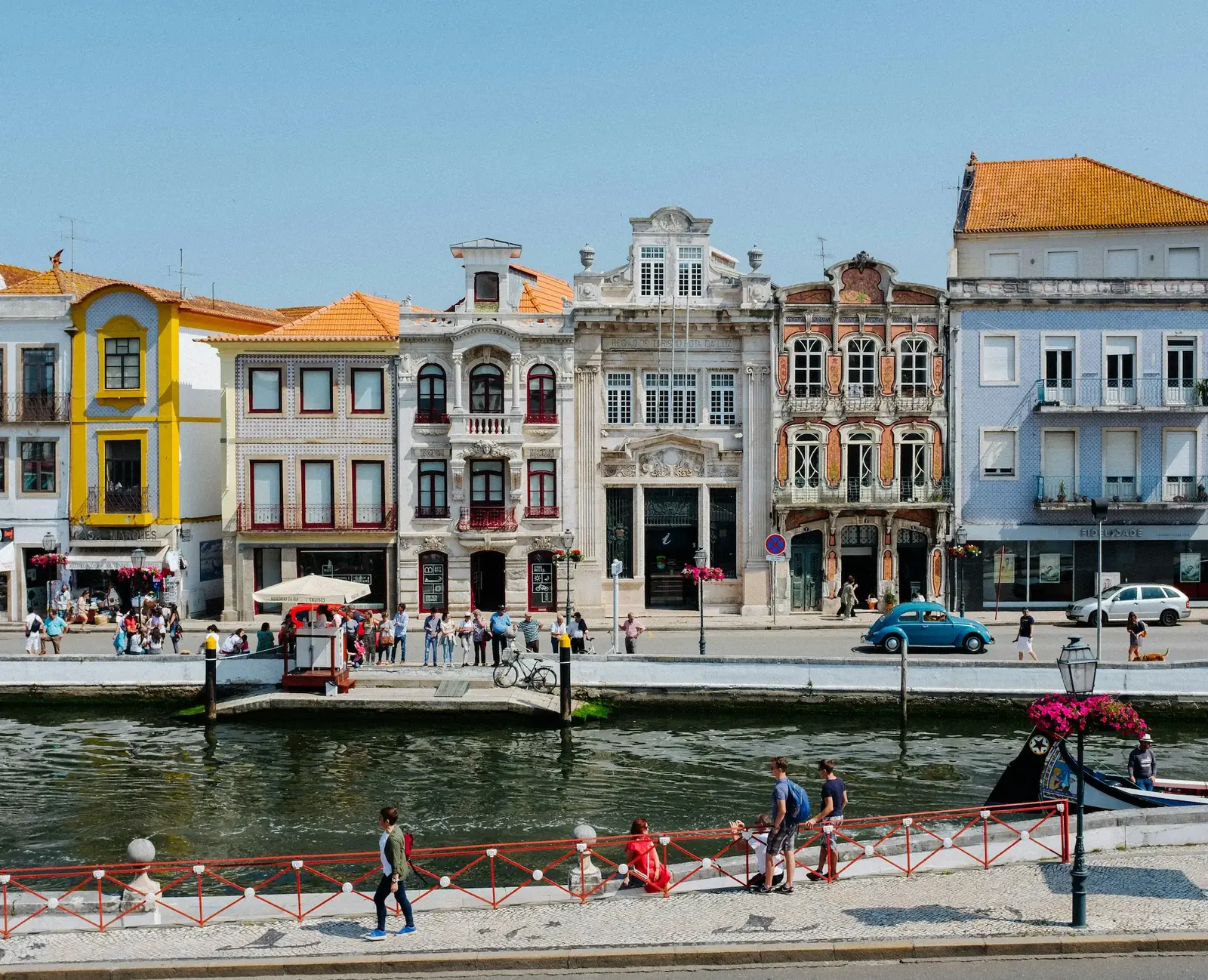
Portuguese is a Romance language that originated on the Iberian Peninsula and today ranks among the world’s most spoken languages, with roughly 250 million native speakers across several continents. It developed from Latin (Galician-Portuguese) in what is now Portugal during the Middle Ages, then spread overseas during the 15th-16th century Age of Discovery. Portuguese explorers, colonizers, and missionaries carried their tongue to Africa, Asia, and the Americas, establishing communities from Brazil to Mozambique and beyond. By the mid-1500s, Portuguese had even become a lingua franca in parts of Asia and Africa for trade and administration. This global dispersal gave rise to a family of dialects – all mutually intelligible, yet each with its own flavor, history, and local twists. In this post, we explore the major Portuguese dialects worldwide, examining how centuries of history and cultural contact have shaped Brazilian, European, Angolan, Mozambican, and other regional varieties of Portuguese, complete with examples of their differences.
Brazilian Portuguese (pt-BR) – The Vibrant New World Variant
History in Brazil: Brought to Brazil by Portuguese colonizers in 1500, Portuguese soon took root as the colony’s dominant language. Over centuries, Brazilian Portuguese (BP) evolved in relative isolation from Europe, influenced by the indigenous and African languages spoken by Brazil’s original inhabitants and enslaved peoples. Indeed, BP’s vocabulary absorbed hundreds of Tupi–Guarani words for local plants and animals and many West African Yoruba terms for foods, religion, and music. For example, abacaxi (“pineapple”) comes from Tupi, and samba (the dance/music genre) is of Bantu origin. This rich mix of influences, along with waves of later European and Asian immigrants, has made Brazilian Portuguese a linguistic cornucopia. Today Brazil is home to the vast majority of Portuguese speakers (over 210 million), giving Brazilian Portuguese a huge cultural reach through media, music, and literature.
Characteristics and Differences: Brazilian Portuguese sounds markedly different from European Portuguese. It has a “musical,” open-vowel quality – Brazilians tend to pronounce vowels more fully and with a wider mouth, whereas European Portuguese often reduces unstressed vowels to a more muted sound. For instance, the word tarde (“afternoon”) might be enunciated with a clear [taɾ.ʤɪ] in Brazil, versus a more reduced [tɐɾð] in Portugal. Brazilian speech also has a slower, more melodic intonation, while European Portuguese can sound faster and more “closed” or nasal to foreign ears. Consonant pronunciation differs too – in many Brazilian accents, “ti” and “di” are palatalized (so tia “aunt” sounds like “chee-a”), and S at the end of syllables is often pronounced [s] or [ɕ] (except in Rio de Janeiro, which uses a “sh” sound like Portugal). Grammar-wise, Brazilian Portuguese has embraced changes that make it more informal and simplified in daily usage. Notably, Brazilians largely dropped the second-person familiar pronoun tu – instead, você (literally “Your Grace”) is used for “you” in almost all contexts, even among friends, and verbs are conjugated in the third person with você. For example, where a European Portuguese speaker might say “tu falas português?” (“do you speak Portuguese?” using tu), a Brazilian would ask “você fala português?”, treating “you” as você with the verb in 3rd person. This shift also affects possessives and verb forms: Europeans say teu livro (“your book”) with tu, whereas in Brazil it’s seu livro. Brazilians tend toward progressive gerund forms as well – estou falando (“I am speaking”) – whereas European Portuguese prefers the infinitive construction estou a falar. Such differences in pronouns, verb tenses, and syntax give Brazilian Portuguese a more relaxed, colloquial feel compared to the European norm.
Lexicon and Examples: Vocabulary provides some of the most visible differences between Brazilian and European dialects. Brazilian Portuguese has coined or preserved words that diverge from the European usage. For instance, a bus is ônibus in Brazil but autocarro in Portugal. A cell phone is called celular in Brazil, whereas Europeans say telemóvel. Everyday items often have dual names: a refrigerator is geladeira in Brazil vs. frigorífico in European Portuguese. Likewise, a pen might be caneta in both, but a bus stop is ponto de ônibus in Brazil and paragem de autocarro in Portugal. Below are a few illustrative vocabulary differences:
- “Bus”: ônibus (Brazil) vs. autocarro (Portugal)
- “Cell phone”: celular (Brazil) vs. telemóvel (Portugal)
- “Fridge”: geladeira (Brazil) vs. frigorífico (Portugal)
- “Bathroom”: banheiro (Brazil) vs. casa de banho (Portugal)
Brazilian Portuguese also incorporates many indigenous and Afro-Brazilian terms. Words like pipoca (“popcorn”), mandioca (“cassava”), and quilombo (a historic community of escaped slaves) all hail from Brazil’s unique cultural landscape. Despite these divergences, Brazilian and European Portuguese remain mutually intelligible, especially in formal registers. Brazilian Portuguese’s vitality and global reach (through Brazil’s population and diaspora) have made it a highly influential variant – one that is distinct yet unmistakably part of the Lusophone language family.
European Portuguese (pt-PT) – The Old World Standard
History in Portugal: European Portuguese (EP) is the origin of the language – the direct descendant of medieval Galician-Portuguese spoken in the Kingdom of Portugal. It evolved in situ on the western edge of Europe and was carried abroad during Portugal’s maritime empire. To this day, European Portuguese (often called “Continental Portuguese”) is considered the prestige norm for many Lusophone countries. Portugal’s Lisbon dialect forms the basis of standard EP, which is regulated by the Lisbon Academy of Sciences. Within Portugal, there is regional variation (e.g. the softer accents of the south vs. the stronger “rr” and distinct vowels in the north), as well as the unique dialects of the Azores and Madeira islands. However, these differences are relatively minor; a uniform written standard has existed since the Renaissance, refined by grammar reforms and, most recently, the Orthographic Agreement of 1990 that Portugal eventually adopted in the 2000s. As the motherland of the language, Portugal has seen its tongue exported worldwide – but even back home, Portuguese continues to absorb influences (historically from Celtic and Arabic, and more recently from English and French via technology and culture). Modern European Portuguese is proud of its linguistic heritage, preserving some classical traits while also reflecting Portugal’s interactions with the world.
Characteristics and Differences: European Portuguese is often described as more phonologically “closed” and fast-paced compared to Brazilian. EP speakers tend to reduce or devoice vowels in unstressed syllables – for example, the word pequeno (“small”) might sound like [pᵊˈkenʊ] in Lisbon, versus the more fully enunciated [piˈkeno] in São Paulo. The pronunciation of sibilants is a hallmark: in most of Portugal (and parts of Africa), s at the end of a word is pronounced as a “sh” sound [ʃ], so português sounds like “portuguêsh”, whereas many Brazilians would say “português” with a plain [s]. European Portuguese also introduced the guttural “R” (a throaty [ʁ]) in the Lisbon area, similar to French, whereas some Brazilian dialects still use a trilled or aspirated R. In grammar, European Portuguese retains a more formal register. The pronoun tu (“you” informal) and its associated verb forms are widely used in Portugal (e.g. tu és meaning “you are”), while você is reserved for polite or formal address. This contrasts with Brazil, where você became common in all contexts. European Portuguese also uses some archaic second-person plural forms – e.g. vós (“you all”) – in formal writing or traditional contexts, though these are largely absent in Brazil. Another difference is in object pronoun placement: EP commonly uses enclisis (attaching pronouns to verbs as in dá-me “give me” or even dá-mo “give it to me”), whereas Brazilians more often place the pronoun before the verb (me dá for “give me”). An iconic divergence is how to say “it’s raining”: in Lisbon you’ll hear está a chover, using infinitive with “a”, while in Rio it’s está chovendo, using the gerund form. These subtleties make EP sound more formal or old-fashioned to Brazilian ears, and indeed African Portuguese has largely followed the European conventions.
Lexicon and Examples: European Portuguese shares the vast majority of its lexicon with other dialects, but there are some distinctive word choices and expressions. Often, Portugal has maintained classical terms where Brazil innovated (or vice versa). For example, a car in everyday Brazil is carro, but in European Portuguese carro is also common – however, automóvel is a slightly more formal word still used in Europe for “automobile”. A train is comboio in Portugal, versus trem in Brazil. Europeans say rapariga to mean “girl/young woman” (neutral term), while in Brazil rapariga is considered derogatory (they say moça or garota instead). Such “false friends” can occasionally cause confusion or laughter. Below are a few European vs. Brazilian vocabulary contrasts:
- “Bus”: autocarro (Portugal) vs. ônibus (Brazil)
- “Young girl”: rapariga (Portugal: girl) vs. rapariga (Brazil: pejorative; use menina/garota)
- “Computer”: computador (Portugal, also Brazil) but also ordenador (Portugal, by Spanish influence; Brazil never uses ordenador)
- “Cool!”: Fixe! (Portugal slang for “cool/nice”) vs. Legal! (Brazil slang for “cool”)
European Portuguese vocabulary has been influenced by Portugal’s proximity to other European languages. It adopted words like bifete (slang for steak from English beefsteak, though standard is bife) and musica rap (from English “rap” music). Meanwhile, some Brazilian coinages have entered Portugal via pop culture – for instance, tchau (from Italian ciao, used in Brazil for “bye”) is now understood and used casually in Portugal alongside the traditional adeus. In recent years, thanks to media and the Orthographic Agreement, the written forms in Portugal and Brazil have converged (Portugal dropped many silent letters to match Brazilian spelling). Yet, spoken European and Brazilian Portuguese still have their clear differences. All the same, any Lusophone will affirm that whether one says estou a escrever or estou escrevendo, autocarro or ônibus, it’s the same Portuguese language at heart – just wearing different regional costumes.
Angolan Portuguese (pt-AO) – Portugal Meets Africa
History in Angola: Portuguese arrived in Angola (southwestern Africa) in the late 15th century, as the Portuguese established coastal settlements and trade posts. Over 400 years of colonization, especially in the 19th-20th centuries, made Portuguese the language of administration and urban life in Angola. After independence in 1975, Portuguese remained the official language and has since become a truly Angolan tongue – today, over 70% of Angolans speak Portuguese at home, and nearly half the population (especially in cities like Luanda) are native speakers. Angola is thus one of the largest Lusophone countries. Uniquely, Portuguese here coexists with many Bantu languages (such as Kimbundu, Umbundu, Kikongo), and decades of interaction have shaped a distinct Angolan Portuguese dialect. In the capital Luanda, Portuguese has practically supplanted indigenous languages in daily life, whereas in rural areas many speak it as a second language alongside African mother tongues. Angolan Portuguese was initially based on the central-southern Portugal dialect (brought by colonists), but it has developed its own nuances and is now regulated by the Academia Angolana de Letras as a national standard. Post-independence, civil war and migration led to a two-way influence: many Angolans spent time in Portugal (or Brazil) and brought back new language trends, even as Angola’s local slang traveled abroad via music and media.
Characteristics and Differences: In general, Angolan Portuguese pronunciation is closer to European Portuguese than to Brazilian, due to historical ties. Many Angolans speak with a clear, somewhat “neutral” Portuguese accent, without the heavy vowel reduction of Lisbon Portuguese or the drawl of Brazilian. However, influence from Bantu phonology can be heard. For example, Angolan Portuguese often drops word-final -r in infinitives in casual speech (so falar “to speak” might sound like falá), especially among second-language speakers. The rhotic “rr” may be trilled or guttural depending on the speaker. Some vowels are more open: Angolans tend to merge the European closed â /ɐ/ with a – pronouncing both as a more open [a] sound. This actually makes Angolan vowel timbre more similar to Brazilian in unstressed syllables. In Luanda, the diphthongs ei and ou are often monophthongized (e.g. sei “I know” sounds like [sê] rather than [sei]). These features give Angolan Portuguese a smoother, less “broken” sound compared to continental Portuguese, while still clearly not Brazilian in tone.
Lexicon and Examples: Where Angolan Portuguese stands out most is in vocabulary. Decades of cultural blending have contributed loanwords from local African languages (especially Kimbundu and Umbundu) into everyday Angolan speech. For instance, an “informal neighborhood” or shantytown is called a musseque in Angola, from Kimbundu, whereas in Lisbon one might say bairro de lata and in Rio favela. A peanut in Angola is often jinguba (from Kimbundu) instead of standard amendoim. Even the Portuguese word for bus has a local twist: many Angolans use machimbombo for “bus” – a term shared with Mozambique – while European Portuguese uses autocarro and Brazil uses ônibus. In the kitchen, ginguba might go into a dish like muamba de galinha (chicken stew), where muamba (“stew”) itself is a Kimbundu word. Below are a few Angolan Portuguese words alongside their European/Brazilian equivalents:
- “Bus”: machimbombo (Angola, Moz) vs. autocarro (Portugal) vs. ônibus (Brazil)
- “Peanut”: jinguba (Angola) vs. amendoim (Portugal/Brazil)
- “Slum/neighborhood of shacks”: musseque (Angola) vs. bairro de lata (Portugal) vs. favela (Brazil)
- “Fridge”: geleira (Angola – lit. “ice box”) vs. frigorífico (Portugal) vs. geladeira (Brazil)
Angolan Portuguese also has plenty of informal slang that has even traveled back to Portugal. Words like bué (from Kikongo, meaning “a lot/very”) are now popular among Portuguese youth, and bazar (slang “to leave/go away”) – common in Angola – is also heard in Lisbon informal speech. Interestingly, some Angolan-origin words made their way to Brazilian Portuguese during the slave trade era, such as moleque (“kid, brat”) and fubá (“cornmeal”), which come from Kimbundu. This shows the historical linguistic loop between Africa and Brazil. In modern Angola, code-switching with indigenous languages is less common in cities (where Portuguese dominates), but many people pepper their Portuguese with local proverbs or expressions. Overall, Angolan Portuguese is a vibrant example of how African identity and the Portuguese language have mixed to create a unique dialect – one that is largely intelligible to European Portuguese speakers, yet enriched with the rhythms and lexicon of Angola.
Mozambican Portuguese (pt-MZ) – A Melting Pot in Mozambique
History in Mozambique: Portuguese contact with what is now Mozambique (southeastern Africa) began in the early 16th century, but for centuries the language was confined to coastal trading posts (like Lourenço Marques, today’s Maputo). It wasn’t until the late 19th and 20th centuries, under full colonial rule, that Portuguese became widespread in Mozambique. Upon independence in 1975, Portuguese remained the sole official language, helping knit together a country with dozens of Bantu languages. Today about half of Mozambicans speak Portuguese, with around 17% (and rapidly growing) using it as their first language. In urban areas like Maputo and Beira, Portuguese is the lingua franca and increasingly the mother tongue of the younger generation. The Academy of Sciences of Mozambique now oversees the standard form (which closely follows European norms). Yet Mozambican Portuguese, like Angola’s, has organically developed under African influence. Mozambique’s many local languages (Makua, Sena, Tsonga, etc.) have contributed loanwords and influenced accent, making this dialect a fascinating blend of Lusitanian and African elements.
Characteristics and Differences: Mozambican Portuguese shares similarities with other African variants. Its pronunciation overall aligns with European Portuguese (for example, maintaining the same five nasal vowels and using the “sh” sound for final s). However, one notable trait is the influence of Bantu phonology on accent. Mozambican speakers often pronounce the consonant “b”, “d”, “g” as fully plosive sounds in all positions (no softening between vowels as in European Portuguese). This can give their Portuguese a clearer, evenly enunciated sound. The RR is usually a multiple vibrant [r] (a trilled r) rather than the guttural [ʁ] of Lisbon. In some cases, consonant clusters are pronounced with an epenthetic vowel (influenced by Bantu languages that favor CV syllables). For instance, Portugal might be said as Porutugal by some speakers, inserting a slight vowel. Such tendencies are stronger in more vernacular speech, whereas educated speakers in Maputo sound closer to European norms. Mozambican Portuguese intonation can also reflect local languages – it may have a more tonal or singsong pattern in some regions, since several Mozambican languages are tonal. Overall, the dialect is mutually intelligible with standard Portuguese, with just a hint of African “music” in its accent.
Lexicon and Examples: Where Mozambican Portuguese really shines is in its vocabulary, which has been enriched with words from Mozambique’s indigenous languages and creative local coinages. Many everyday terms in Mozambique are loans or calques from languages like Makua, Sena, Swahili, and others. For example, the staple cornmeal porridge is called chima in Mozambican Portuguese, a word borrowed from local languages (Emakhuwa, Cisena, etc.). A folkloric “bogeyman” figure is known as xitongolola or xituculumucumba, from Xironga (Changana). Agriculture gave a common loanword machamba (from Swahili), meaning a small farm or field – in Mozambique, people will say vou à machamba (“I’m going to the farm”). Even the word machimbombo for “bus” is used in Mozambique (as in Angola). Mozambican Portuguese has also generated some neologisms and semantic shifts that are uniquely its own. For instance, desconseguir (literally “to un-achieve”) is a popular Mozambican verb meaning “to be unable to” or “to fail at something,” constructed by adding the prefix des- to conseguir (“to be able to”). Another quirky usage: tirar dinheiro, literally “to take money,” is used to mean “to fund/finance” (instead of standard financiar). To cry can be expressed as tirar lágrimas (“take out tears”) in Mozambican parlance. These creative expressions show how local metaphor shapes the dialect. A few more examples of Mozambican Portuguese vocabulary:
- “Bus”: machimbombo (shared with Angola, lit. an old term for bus)
- “Small shop/street trading”: dumba-nengue (from Xironga, meaning informal market or hustling commerce)
- “Earnings/benefits gotten illicitly”: come dinheiro (“eat money”) meaning to embezzle or waste money
- “Breakfast”: mata-bicho (lit. “kill the bug”) – a colorful Mozambican term for the first meal of the day
Mozambican Portuguese also integrates some Arabic-origin words due to the country’s Islamic heritage along the coast (Mozambique was part of the Swahili trade network). For example, the Mozambican currency metical comes from Arabic mithqāl, meaning a unit of weight. Over years of migration, many of these African Portuguese terms have traveled abroad. After Mozambique’s independence, Portuguese settlers and refugees introduced words like machimbombo and canhira (peanut liquor) into South African Portuguese and even Brazil. Within Mozambique, Portuguese lives in a diglossic situation: formal settings (government, media, education) use a standard close to European Portuguese, while informal conversation may feature local dialect forms and code-switching with native languages. Nevertheless, as more young Mozambicans grow up with Portuguese as a first language, the gap between standard and local usage is narrowing. Mozambican Portuguese is truly a melting pot dialect – a testament to the adaptability of the language in an African context.
Other Portuguese-Speaking Regions and Dialects
Beyond the major dialects above, Portuguese is the official language in several other countries and regions, each with its own historical journey and local speech patterns. Here are some notable Lusophone areas and their relationship with the Portuguese language:
-
Cape Verde (Cabo Verde): A West African archipelago, uninhabited until the Portuguese colonized it in the 15th century. Today, virtually all Cape Verdeans grow up speaking Cape Verdean Creole (Kriolu) as their mother tongue, while Portuguese is the official language used in schools, media, and government. This means Portuguese in Cape Verde is often a second language, learned formally – it closely follows European norms but is colored by Creole influence. For example, syntax can be a bit simplified and pronunciations may be influenced by Kriolu (which itself is Portuguese-based). Code-switching is common in informal speech. Still, nearly everyone is bilingual to some degree, and Portuguese serves as the prestigious language of formal communication. (Notably, efforts are underway to standardize Kriolu for official use, but Portuguese remains dominant in writing.) Despite the population’s small size, Cape Verde’s high literacy in Portuguese and diaspora communities abroad give its dialect a modest presence in the Lusophone mix.
-
Guinea-Bissau: A small country on Africa’s west coast, Guinea-Bissau was known as Portuguese Guinea. It’s linguistically unique because, like Cape Verde, it is a creole society – the vast majority of people speak Guinea-Bissau Creole (Crioulo) as their everyday language. Standard Portuguese is the official language, used in parliament, schools, and newspapers, but only about 15% of Bissau-Guineans speak Portuguese fluently (often as a third language, after Creole and a native African language). As such, Portuguese in Guinea-Bissau is confined to formal domains and the educated elite. In casual settings, people mix Creole phrases even when speaking Portuguese, and there is substantial code-switching. Pronunciation follows European Portuguese but with a Creole twist – for instance, some vowel opening and a rhythmic intonation influenced by Creole. Because of limited exposure, the local accent can sound “Brazilian” to outsiders, since speakers may pronounce vowels more openly. It’s interesting that vos (you all) and certain formal verb forms virtually never get used here, given the prevalence of Creole. In summary, Portuguese in Guinea-Bissau is a high-register language, existing alongside a vibrant Creole that carries the national identity.
-
São Tomé and Príncipe: This Central African island nation, once a Portuguese plantation colony, has one of the highest rates of Portuguese use in Africa. Over 95% of São Toméans speak Portuguese, and more than half are native speakers. This makes São Tomé and Príncipe (STP) a truly Lusophone society – in fact, it’s often cited as the world’s third most Portuguese-speaking country by percentage (after Portugal and Brazil). The local variety, São Toméan Portuguese, developed in relative isolation and retains some archaic features from older Portuguese. For example, STP speech historically used dated words and a very pronounced epenthetic vowel in certain clusters, similar to 19th-century European Portuguese. It was once associated with the mixed-race planter class, whereas the elite today tend to emulate European pronunciation. Currently, European Portuguese is the prestige norm taught in schools and used in formal settings (government, media), causing a bit of a diglossia: everyday São Toméan Portuguese vs. formal European standard. Locals also speak Portuguese-based creoles – Forro, Principense, Angolar – but these are mostly used in family settings, while Portuguese dominates public life. A noteworthy trait in São Toméan Portuguese is a singsong intonation and the use of meu pai (“my dad”) in places a European might say o meu pai. They also use some unique expressions; for instance, leve-leve (from Portuguese leve, “light”) is a local motto meaning “take it easy/slowly”. In general, STP’s Portuguese is a charming blend of old-school Lisbon norms and local innovation, all on a tiny Gulf of Guinea island.
-
East Timor (Timor-Leste): A Southeast Asian nation, East Timor is a special case – it’s the only sovereign state in Asia (aside from Portugal’s special region Macau) that lists Portuguese as an official language. Portuguese arrived with missionaries in the 16th century, but for centuries coexisted with the local lingua franca Tetum. After Portuguese rule ended in 1975, a period of Indonesian occupation suppressed Portuguese. However, upon independence in 2002, East Timor reinstated Portuguese as co-official with Tetum, aiming to reconnect with the Lusophone world. Today, Portuguese is used in government, courts, and as a medium of instruction, though only a minority (perhaps 30% and growing) of Timorese are proficient. The form of Portuguese taught is basically European Portuguese standard, often by teachers from Portugal, Brazil, or other CPLP countries. Locally, an accent is emerging among new speakers – some have noted a slight “Brazilian” lilt among youth, likely due to exposure to Brazilian media and the influence of Tetum phonology (Tetum has no [ʎ] or [ɲ], for example, so Timorese Portuguese might pronounce lh and nh a bit differently). Timor has also borrowed many Portuguese words into Tetum (e.g. igreja for church, obrigadu for thank you, from obrigado), creating a comfortable interchange. East Timor’s Portuguese is still developing; one could say it’s a revival of a colonial dialect with fresh inputs. As of 2025, demand for Portuguese education in Timor is rising, and a new generation is becoming fluent, which will likely solidify a distinct East Timorese Portuguese flavor in years to come.
-
Macau: On the southern coast of China, Macau was a Portuguese territory from the 16th century until 1999. Today it’s a Special Administrative Region of China, and Portuguese remains co-official with Cantonese. However, the Portuguese-speaking community in Macau is small (only about 2–3% of the population speak Portuguese fluently, many of them Macanese Eurasians or recent migrants). Macau’s traditional Portuguese dialect, often called Macanese Portuguese, developed under Asian influence and was marked by a heavy Cantonese accent and some old-fashioned turns of phrase. For example, Macanese Portuguese speakers might use interjections like ah-ia! (adapted from Cantonese) that you wouldn’t hear elsewhere. There was also a unique Portuguese-based Creole called Patuá (Macanese Creole), which mixed Portuguese with Malay, Cantonese, and Sinhalese – though this creole is nearly extinct, its legacy survives in some family slang and cuisine terms. In modern Macau, standard European Portuguese is used in official contexts (courts, street signs, Portuguese-medium schools) – you’ll find news broadcasts and journals in Portuguese. Interestingly, Macau’s Portuguese has contributed a few loanwords to Cantonese and Mandarin (e.g. 葡國菜 “Portuguese cuisine” for Macanese-style baked goods). While tiny in number, Macau’s Lusophone presence is symbolically significant as a bridge between China and the Portuguese-speaking world. The dialect heard in Macau today sounds similar to European Portuguese, with perhaps a softer tone and some Cantonese-influenced pronunciation of tones and rhythm. It remains a testament to Portugal’s far-flung colonial history that one can order uma bica (an espresso) in fluent Portuguese on a street in Macau, thousands of miles from Lisbon.
-
Equatorial Guinea: A unique addition to the Lusophone family, Equatorial Guinea (Central Africa) was a Spanish colony, not Portuguese. However, in 2011 it adopted Portuguese as an official language (alongside Spanish and French) in a bid to join the Community of Portuguese Language Countries (CPLP). The country has a tiny population of Luso-descendants and a small island (Annobón) where a Portuguese-based Creole (Fá d’Ambô) is spoken by a few thousand. For most Equatorial Guineans, though, Portuguese is not spoken at all or is learned as a foreign language. As of 2025, the presence of Portuguese is mainly in official name only: government publications or CPLP events might use it. There have been initiatives to teach Portuguese in schools and promote it, but proficiency remains low. So while Equatorial Guinea shows up on the map of Lusophone countries (and is the only African country where Spanish and Portuguese share official status), it doesn’t yet have a robust Portuguese dialect. If these efforts continue, perhaps in a generation we might see a distinct EG Portuguese accent emerge, likely influenced by Spanish phonetics. For now, the Portuguese impact is minimal – aside from a few loanwords (Annobón Creole uses some old Portuguese terms) and the intriguing fact that one can find official documents in Malabo written in Portuguese.
Other locales with historical Portuguese influence include Goa, Daman and Diu in India (former Portuguese India), where Portuguese was widely spoken by local elites and is still used liturgically in some Catholic churches. Nowadays, only a few thousand older Goans speak Portuguese, though interest in learning it has seen a small revival (about 10,000 speakers as of 2015). In Malacca (Malaysia) and Sri Lanka, communities descended from Portuguese colonists or converts developed Creole languages (Kristang in Malacca, Sri Lanka Portuguese Creole) which are distinct from Portuguese but retain many Portuguese words. These Creoles are endangered but represent the lingering echoes of 16th–17th century Portuguese. And of course, Portuguese diaspora communities in the USA, France, Canada, South Africa and elsewhere maintain their own accents – for example, many New England Americans of Azorean Portuguese descent speak English natively but preserve some unique Azorean Portuguese phrases at home. All these pockets contribute to the diverse mosaic of the Portuguese language.
Conclusion
From the bustling streets of São Paulo to the markets of Luanda and the villages of Timor-Leste, the Portuguese language has blossomed into a global tapestry of dialects. Each variant – Brazilian, European, African, Asian – carries echoes of its local history and cultural contacts, whether indigenous American, African tribal, or Chinese Cantonese. Yet, the core of the language remains remarkably uniform. All Portuguese dialects are mutually intelligible, and efforts like the 1990 Orthographic Agreement have aligned the written language even further. A reader in Maputo can pick up a newspaper from Lisbon or Rio and comfortably understand it. Linguists often describe Portuguese as a pluricentric language – one language with multiple standard forms – much like English or Spanish. Indeed, despite regional quirks in accent, vocabulary, and grammar, Lusophones everywhere recognize one another as speaking a mesma língua (“the same language”). This unity in diversity is celebrated through the CPLP (Community of Portuguese Language Countries) and international Portuguese media, music, and literature. In sum, the dialects of Portuguese spoken across the world showcase the adaptability and vitality of the language. They are a reminder that language lives and breathes through people: shaped by conquest and trade, colored by local tongues, but ultimately connecting millions across four continents in a shared linguistic heritage. Whether you greet with a Brazilian oi, a Portuguese olá, or an Angolan kumusta, you are part of the vast Lusophone story – one of exploration, fusion, and enduring linguistic camaraderie.
Further Reading & Sources
- Portuguese Language – Britannica
- Portuguese dialects – Wikipedia
- Portuguese in Equatorial Guinea – Wikipedia
- Brazilian Portuguese – Wikipedia
- European Portuguese – Wikipedia
- Angolan Portuguese – Wikipedia
- Mozambican Portuguese – Wikipedia
- Cape Verdean Portuguese – Wikipedia
- Guinean Portuguese – Wikipedia
- São Tomean Portuguese – Wikipedia
- East Timorese Portuguese – Wikipedia
- Macanese Portuguese – Wikipedia
- Goan Portuguese – Wikipedia
- PracticePortuguese.com – European vs. Brazilian Portuguese
- Chang-Castillo & Associates – Diversity in Portuguese
- Ethnologue: Portuguese Language Overview