13 Best Happy Scribe Vs Rev Alternatives in 2026

13 Best Happy Scribe Vs Rev Alternatives in 2026
Both tools claim 99% accuracy. Neither shows their work. Here is what that unverifiable number actually costs you, and how to demand real evidence before you spend a cent.
Buyers who reach the "Happy Scribe vs Rev" search have already done the work. The common assumption is that comparing two established, named transcription tools on a feature table is a reliable way to pick the right one. If both claim 99% accuracy, the difference must come down to price or interface.
They've read the comparison articles, noted the pricing pages, and feel close to a decision. The problem is that the comparison itself is built on a foundation that cannot hold. A tool like Cockatoo makes the contrast visible: some tools show their evidence, Cockatoo publishes per-language FLEURS benchmark results across 30 languages on a public benchmarks page, and some just show a number.

See our transcription software for how this works in practice.
"When comparing Happy Scribe ($17/month for 120 minutes) and Rev ($1.50/minute), I find it difficult to determine which is truly cost-effective for my usage volume; the per-minute vs. subscription model makes direct comparison confusing."
— what we hear from transcription service users
: The Unverifiable 99% Accuracy Claim Both Tools Share
Both Happy Scribe and Rev advertise 99% accuracy, yet in Votars (2024), neither publishes benchmark data, test conditions, language breakdowns, or audio-type caveats behind that figure. No word error rate. No test corpus. No methodology. A credible accuracy benchmark, such as those built on the FLEURS dataset, specifies the language tested, the audio conditions, and the evaluation method. What Happy Scribe and Rev publish is a percentage with none of that scaffolding.
As Votars's 2024 breakdown notes, comparing two tools that share the same unverifiable accuracy claim reduces only to price and interface, obscuring any real performance difference. A marketing coordinator uploading a client interview recorded in Australian English has no way to know, before paying, which tool handles that accent better. That's a structural gap both tools created by publishing a number without a method.
What Transparent Benchmarking and Free Trials Actually Offer Happy Scribe offers a free trial with no credit card required, so real-world validation before payment is possible on their platform. Cockatoo publishes per-language FLEURS benchmark results across 30 languages on a public benchmarks page, so a buyer can verify performance on their specific language before spending anything. Comparing two tools that hide their evidence is a coin flip with a feature table attached.
Key takeaways
- Both Happy Scribe and Rev quote '99% accuracy' with no methodology, no dataset, and no per-language breakdown, comparing them on that number is a coin flip dressed up as research.
- A 1% word error rate on a 60-minute transcript still produces roughly 90 wrong words, the gap between a bare percentage claim and a verified WER figure is not cosmetic, it's a budget and time risk.
- Five checkpoints separate a real accuracy claim from a marketing number: a published WER figure, a standardised benchmark dataset (FLEURS or LibriSpeech), per-language results, real-world audio tests, and a methodology you can actually read.
- Price and interface differences between Happy Scribe and Rev are real, but they're secondary, if neither tool can prove its accuracy holds on your specific language or audio type, the feature table is decorative.
- Thirteen alternatives exist in this space; the meaningful split is not price tier or UI polish, it's whether the tool publishes evidence you can check before uploading a single file.
- Cockatoo closes that gap directly: upload any audio or video file and get an editable transcript with word-level timestamps, automatic punctuation, and speaker recognition where renaming one speaker updates every line. Accuracy evidence lives on a public benchmarks page, per-language FLEURS and real-world results across 30 languages, not a bare percentage. V4-Pro adds a dynamic custom vocabulary that carries edits across transcripts and a true-verbatim mode that keeps ums and false starts.
What Unverifiable Accuracy Claims Actually Cost a Solo Transcriber
That cost starts accumulating the moment a wrong choice is made, not when it's discovered. The common assumption is that comparing two established, named transcription tools on a feature table is a reliable way to pick the right one: if both claim 99% accuracy, the difference must come down to price or interface. If it fails, you cancel and move on. The real cost lands before you reach the cancel button: in correction hours you didn't budget, in compliance exposure you didn't anticipate, and in the discovery that a tool fails on your audio only after you've paid for its best tier.

How Unverifiable Accuracy Claims Create Hidden Correction Costs
No transcription service can guarantee 100% accuracy, even in English, and that is a structural reality of how AI transcription works today. The practical consequence for solo transcribers is that vendor accuracy claims give you almost nothing to work with. Search results and AI assistants return optimised marketing language rather than real-world performance data, leaving buyers with no reliable signal before committing money or time. You are, in effect, asked to take accuracy on faith.
Even a small accuracy gap compounds fast. FingerLinks Infotech's analysis identifies up to 10 error categories AI tools routinely miss, none of which a bare percentage reflects:
- Overlapping speech
- Heavy accents
- Technical jargon
A solo operations manager transcribing ten hours of monthly call recordings can easily spend two to three additional hours correcting errors that never appeared in pre-purchase marketing. As FingerLinks Infotech notes, users forced into manual correction effectively pay twice for the same output. That hidden labour tax does not appear on any pricing page, and it multiplies when your use case demands more than a clean transcript, such as summarising a long recording down to only what actually needs acting on.
GDPR and Data-Security Risks to Check Before Choosing a Transcription Tool
Uploading a client call recording to a transcription platform is a data-processing act under GDPR. A solo buyer who skips vendor vetting takes on that exposure without realising it. FingerLinks Infotech's guidance is direct: sending sensitive audio to an unvetted platform creates compliance risk that surfaces only after a regulatory issue. For a small business, a GDPR enforcement action is a business-threatening event. Every file you upload to an unverified service is an uncosted liability sitting alongside an already uncosted correction burden.
Where Happy Scribe and Rev ask you to pay first and discover accuracy gaps later, Cockatoo's transcription software publishes per-language benchmark results across 30 languages on the FLEURS dataset, so a solo transcriber can verify fit before a dollar changes hands. Critically, you can run that verification without a credit card: Cockatoo's Free tier is fully self-serve, no card required, and gives you three transcripts per day, up to 30 minutes each, with all export types available and files stored in 2 GB of encrypted cloud storage until you choose to delete them. That is enough headroom to test your actual audio, in your actual language, against your actual correction tolerance, before committing to a paid plan. It removes both the correction-labour trap and the compliance gamble simultaneously.
The encrypted storage scales to 2 TB, and Canvas, Cockatoo's AI notes editor, is included to turn long recordings directly into actionable summaries, so the output of transcription becomes a decision-ready document rather than a wall of text.
The industry has normalised asking buyers to take accuracy on faith. The next section shows exactly what evidence you should demand from any transcription tool before you commit, and how to run the check yourself in under ten minutes.
How to Actually Compare Transcription Tools When Accuracy Claims Are Unverifiable
Accuracy claims from transcription vendors are almost impossible to verify at face value, yet the number you see on a pricing page will almost certainly influence which tool you choose. Before you weigh Happy Scribe against Rev, or either against Cockatoo, you need a way to stress-test those claims against your actual use case, your languages, and your audio conditions. The checkpoints and criteria below give you exactly that framework.

The Five Checkpoints That Reveal Whether an Accuracy Claim Is Real
Use this checklist before shortlisting any transcription tool:
| # | Checkpoint | What to look for | Pass criteria |
|---|---|---|---|
| 1 | Word Error Rate (WER) published? | A numeric WER figure, not a bare percentage | Yes, with a number |
| 2 | Standardised benchmark dataset used? | FLEURS, LibriSpeech, or equivalent held-out test set | Named dataset cited |
| 3 | Per-language results available? | Breakdown by individual language, not aggregate only | Your language listed |
| 4 | Audio conditions disclosed? | Clean studio, phone, noisy environment distinguished | Conditions named |
| 5 | Methodology public and reproducible? | Evaluation method described so a third party could replicate | Method documented |
If a vendor cannot answer all five, the number is copywriting, not evidence. A "99% accuracy" badge is a measurement artifact from audio conditions that almost certainly do not match yours. As FLORES-101 benchmark research makes clear, performance on low-resource languages diverges sharply from performance on high-resource ones, so a single aggregate figure hides the per-language variation that actually matters to you.
Five checkpoints cut through that noise. First, ask whether the vendor publishes a Word Error Rate (WER) figure rather than a bare percentage. WER counts every substitution, deletion, and insertion at the word level and is the standard metric in speech recognition evaluation. Second, check whether the test set is a standardized, held-out benchmark such as FLORES-101, designed to prevent vendors from gaming results.
Third, demand per-language results, not an aggregate. Fourth, look for disclosed audio conditions: clean studio recording, phone audio, and noisy environments are not interchangeable. Fifth, confirm the methodology is public and reproducible.
How to Evaluate Language Coverage and Pricing Structure When Comparing Transcription Tools
"Supports 100 languages" often means English-quality accuracy for English only. Without a per-language breakdown, buyers have no equivalent to what FLORES-that same figure gives researchers. If your recordings are in Portuguese, Tagalog, or any language outside the top handful, the aggregate claim is functionally useless. Pricing structure carries a similar trap: per-minute and per-hour rates look comparable on a feature table but diverge fast under real workloads, and you typically discover the mismatch only after uploading a month's worth of files.
Free Trial Scope as a De-Risking Mechanism
A free trial only de-risks your purchase if it gives you access to the tool's highest-accuracy tier on your own audio. A trial locked to a lower-quality processing mode tells you nothing about the performance you would actually pay for. Cockatoo's transcription software returns a transcript on the first upload with no setup and no credit card required, and its published benchmarks page shows per-language results for 30 languages, so you can check whether your language clears the bar before committing to a billing cycle. That five-checkpoint framework is exactly the lens applied to every tool in the list below.
Related Reading
- Turboscribe Pricing
- Transcription Accuracy
- What Is Ai Transcription
- Local Ai Transcription
- How To Transcribe A Video
- Multilingual Transcription
- Offline Ai Transcription
- Best Transcription Software
13 Best Happy Scribe and Rev Alternatives That Actually Show Their Work
Thirteen tools claim to solve the same problem: you have a recording, you need text, and you need it fast. The real split in this list is price or interface versus whether the tool can prove its accuracy claim holds on your specific audio before you pay for it.
Here is the synthesis claim that most transcription comparisons bury in a footnote: a 1% word error rate on a 60-minute transcript still produces more than 50 mistakes, and because AI errors cluster around precisely the words that matter most, proper nouns, negatives, speaker attributions, technical terms, the downstream correction labor often costs more in time and expertise than the price gap between any two tools being compared. The real comparison between Happy Scribe, Rev, and alternatives should be measured at the point of delivery: how many skilled human minutes does each tool's output require before it is usable? That is the lens applied to every item below.
1. Cockatoo - Best Overall for Verified Multilingual Accuracy
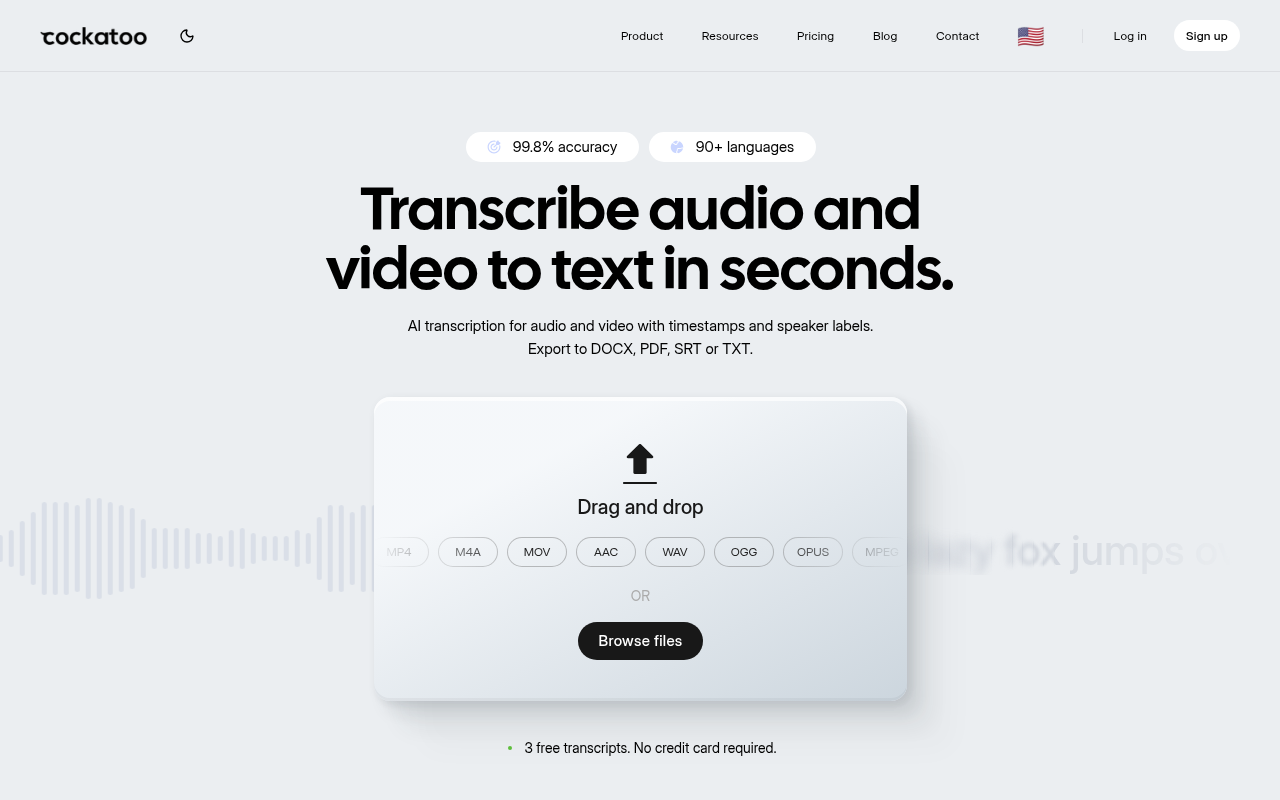
Most transcription tools ask you to trust a percentage. Cockatoo publishes per-language word error rates across 30 languages on a public benchmarks page, tested against the FLEURS dataset and real-world audio, so you can check accuracy on your specific language before uploading a single file. Pro is $29.99/month with truly unlimited transcription on standard modes and no monthly hour cap. The one honest trade-off: V4-Thinking and V4-Pro carry a weekly usage limit shown in Settings, so extremely heavy users on those modes will hit a ceiling.
2. Happy Scribe - Best for Human + AI Hybrid Workflows with a Subtitle Editor
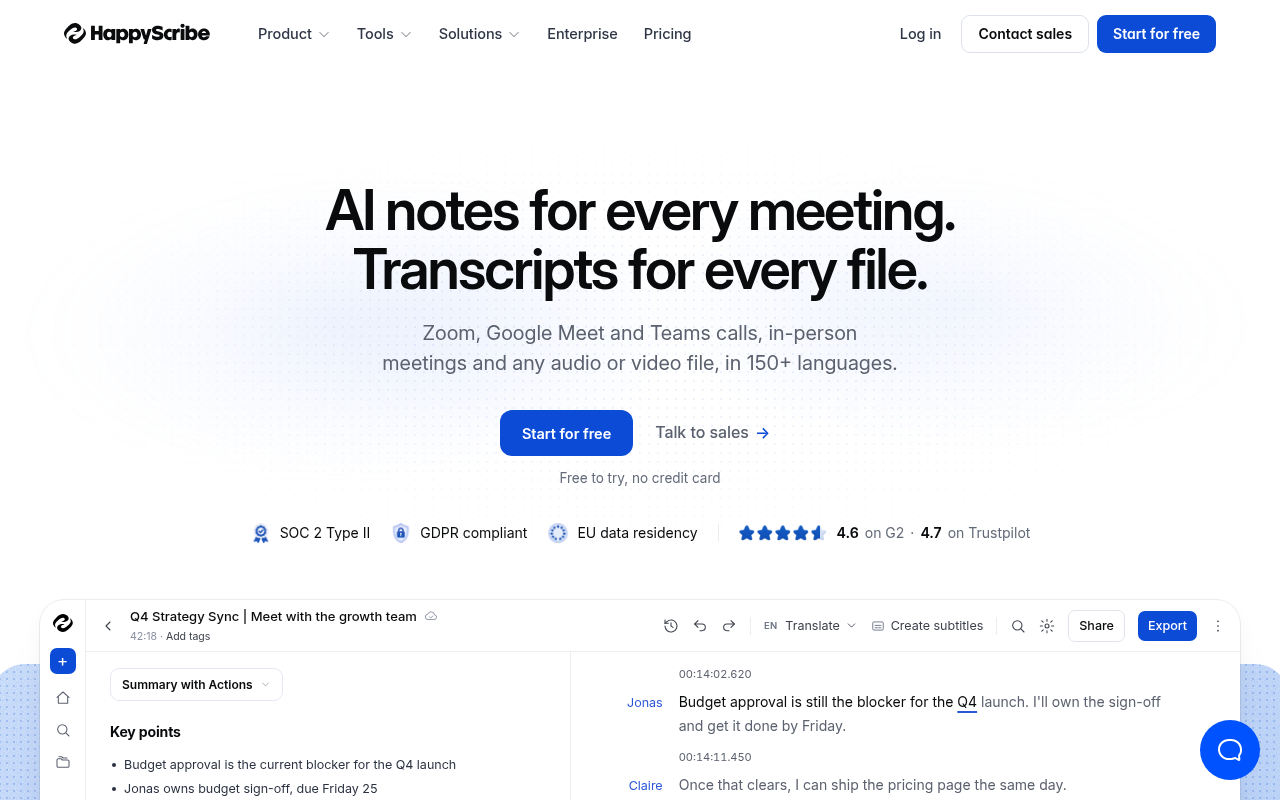
Happy Scribe's subtitle editor is genuinely well-built, and the option to order human transcription from the same dashboard is useful when audio quality rules out any AI engine. The friction shows up at volume: human transcription is priced per hour of audio, and that rate escalates quickly for anyone processing more than a few hours a week. AI transcription pricing is more accessible, but the accuracy figure on the marketing page carries no published benchmark data behind it, which makes it hard to predict performance on accented speech or lower-resource languages before committing.
3. Rev - Best for On-Demand Human Transcription with Established Brand Trust
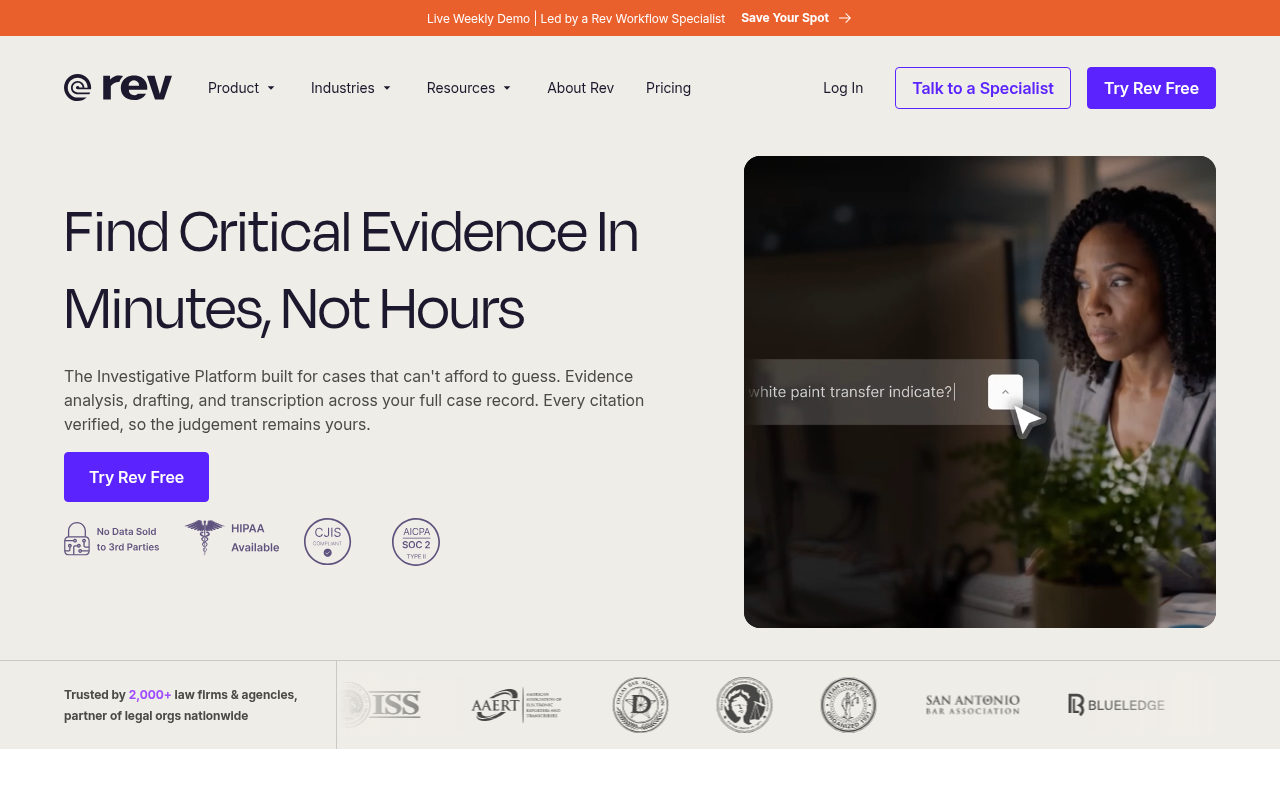
Rev's human transcription service is the strongest argument for the brand: a large pool of vetted transcriptionists, fast turnaround, and a long track record. The AI tier is competitively priced for occasional use, but the free trial on the highest-accuracy tier is limited enough that real-world validation before payment is difficult. Buyers whose audio is too noisy or accented for any AI engine should price the human tier seriously; buyers who need to process volume regularly will find the per-minute model adds up faster than a flat subscription.
4. TurboScribe - Best Flat-Rate Option for High-Volume AI Transcription
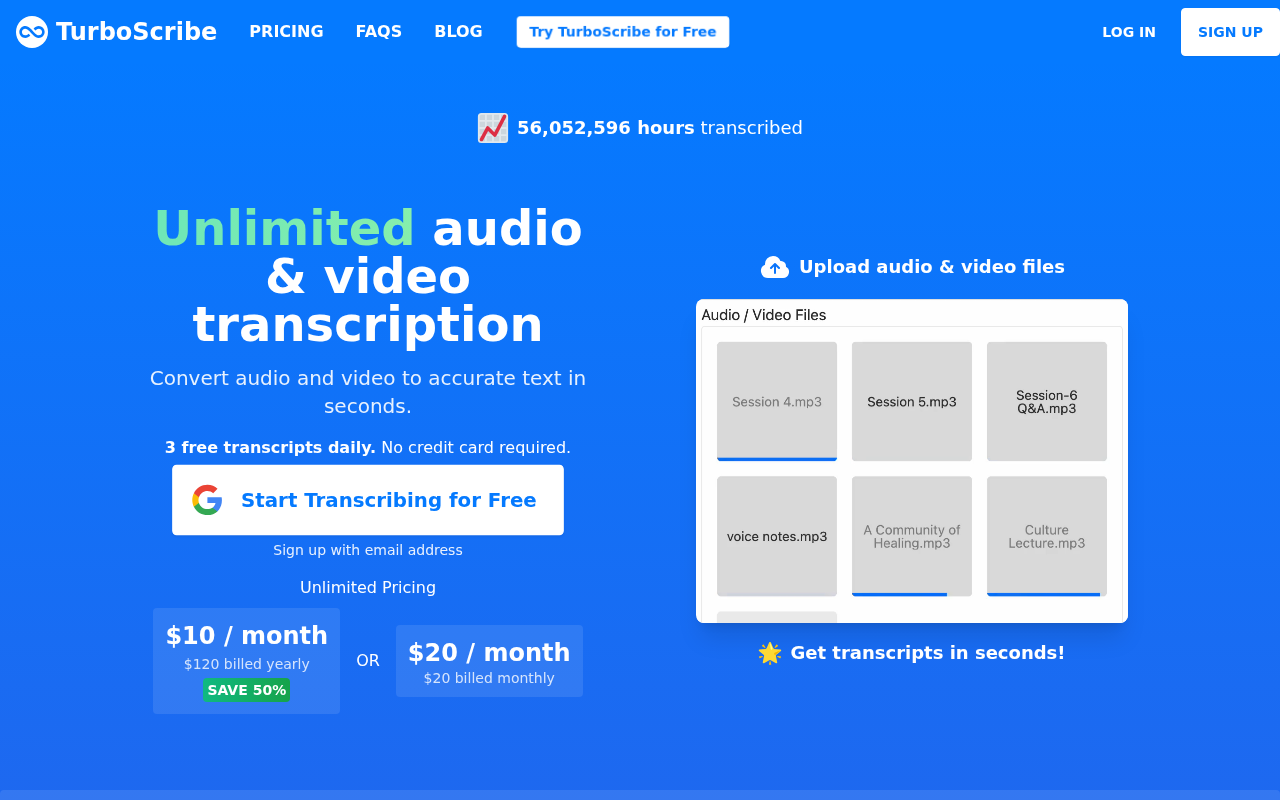
TurboScribe's flat-rate unlimited model is its clearest advantage: no per-minute billing, no surprise charges at the end of a heavy month. The accuracy claim on its marketing page (cited as 99.8%) originates from its own promotional copy rather than any published third-party benchmark or methodology, a pattern documented across most tools in this category by industry research, which puts it in the same unverifiable category as most tools in this list. It is a reasonable pick for buyers whose audio is clean, accented-neutral English and who prioritize volume over the ability to audit accuracy on a specific language before buying.
5. Otter.ai - Best for Live Meeting Notes, Wrong Tool for File Upload Workflows
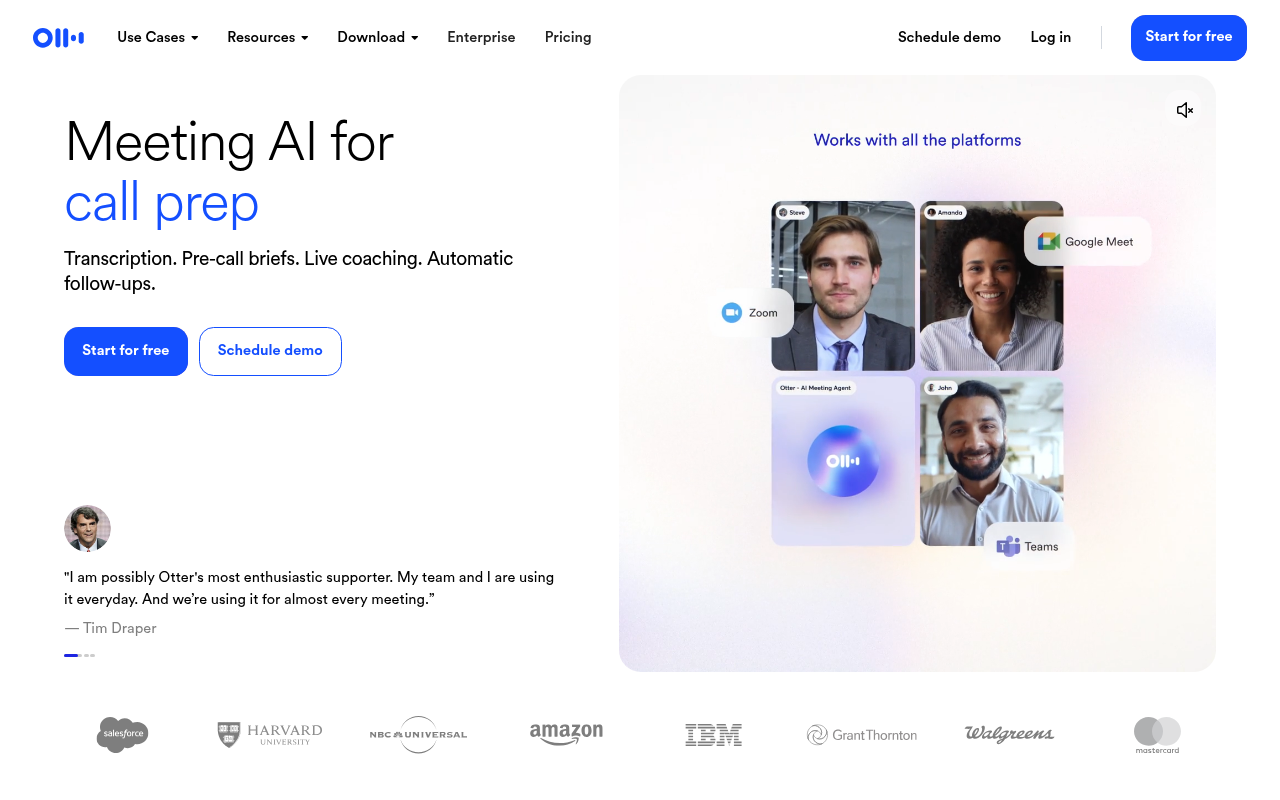
Otter.ai is built around a live meeting bot that joins Zoom, Teams, or Meet and captures conversation in real time. That use case it handles well. For buyers who need to upload a pre-recorded interview, podcast, or call recording and get a clean editable transcript back, the tool is structurally mismatched: the file-upload workflow is secondary to the live-meeting product, and accuracy on uploaded files with background noise or multiple speakers is inconsistent in practice. Choose it only if live meeting capture is the primary job.
6. Descript - Best for Podcast and Video Editors Who Want Transcript-Driven Editing
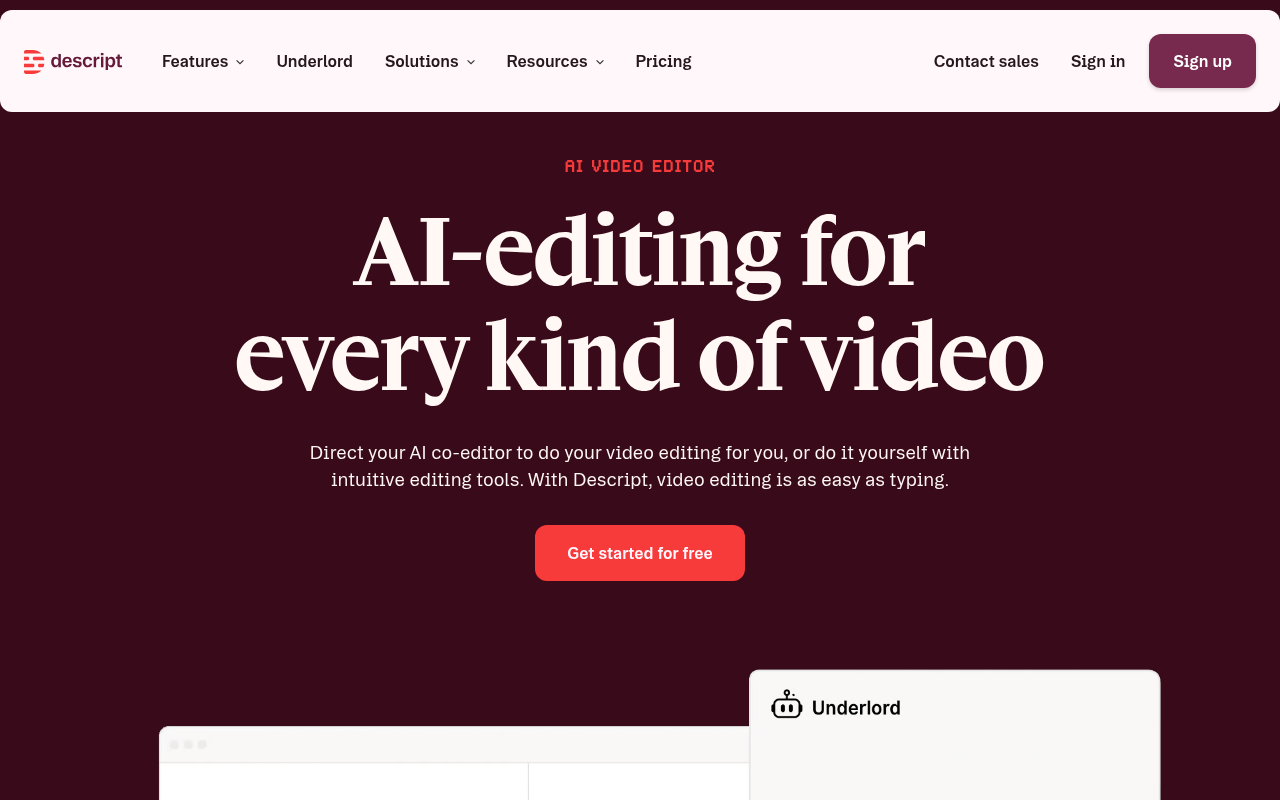
Descript lets you edit audio and video by editing the transcript text, which is a different workflow from every other tool on this list. For podcast producers and video editors who already spend time in a timeline, that integration removes a full export-and-reimport step. The trade-off is scope: Descript is a production tool with transcription built in, not a transcription tool with editing features. Buyers who want a clean text file fast will pay for capabilities they never use, and the learning curve is steeper than any pure transcription tool here.
7. Sonix - Best for Teams Needing Automated Translation Alongside Transcription
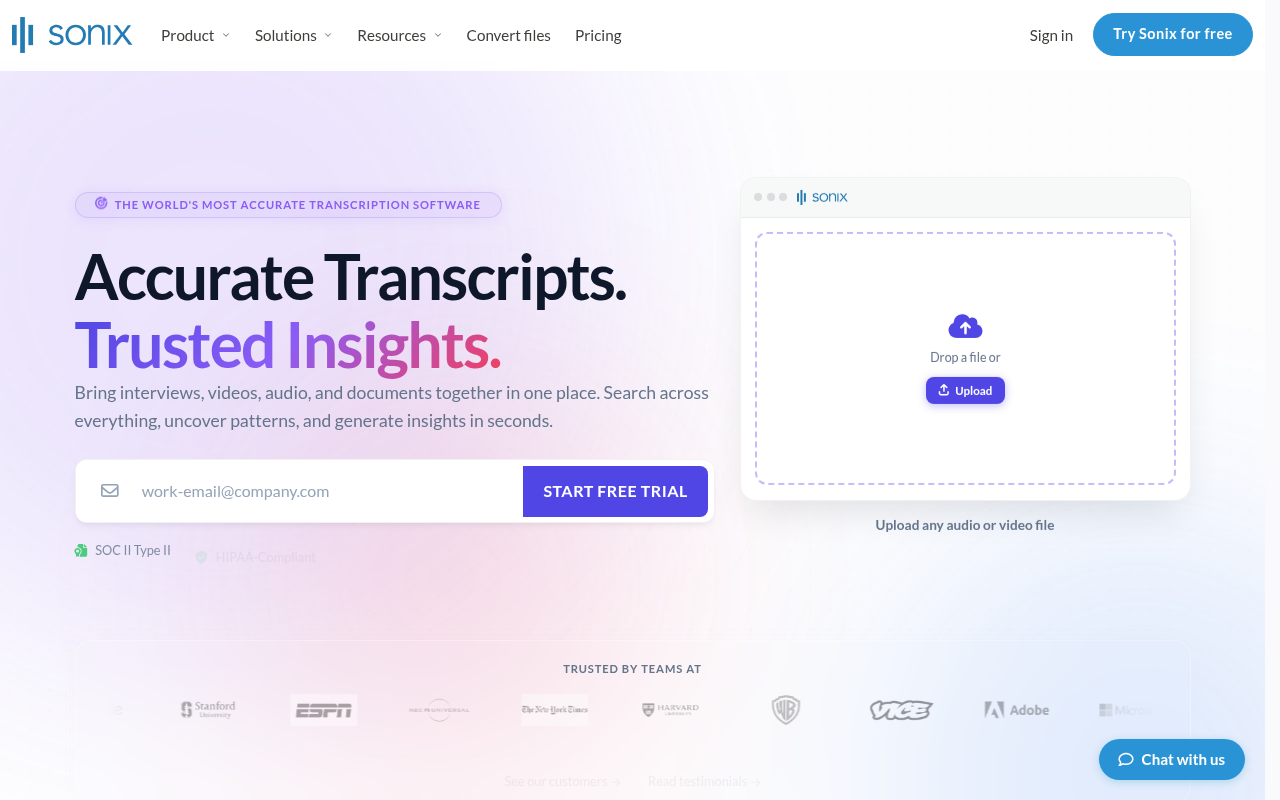
Sonix combines automated transcription with in-platform translation, which matters when a team is processing multilingual interviews or international media and wants both outputs from a single workflow. Pricing is per-hour on the pay-as-you-go tier, with a subscription option for heavier users. The accuracy claim on the site is a bare percentage with no published benchmark methodology, which is a consistent pattern across this category. Most beneficial when the translation step is the bottleneck rather than the transcription itself, and when the team processes enough volume to justify the subscription tier.
8. Trint - Best for Newsroom and Journalism Teams with Collaboration Features
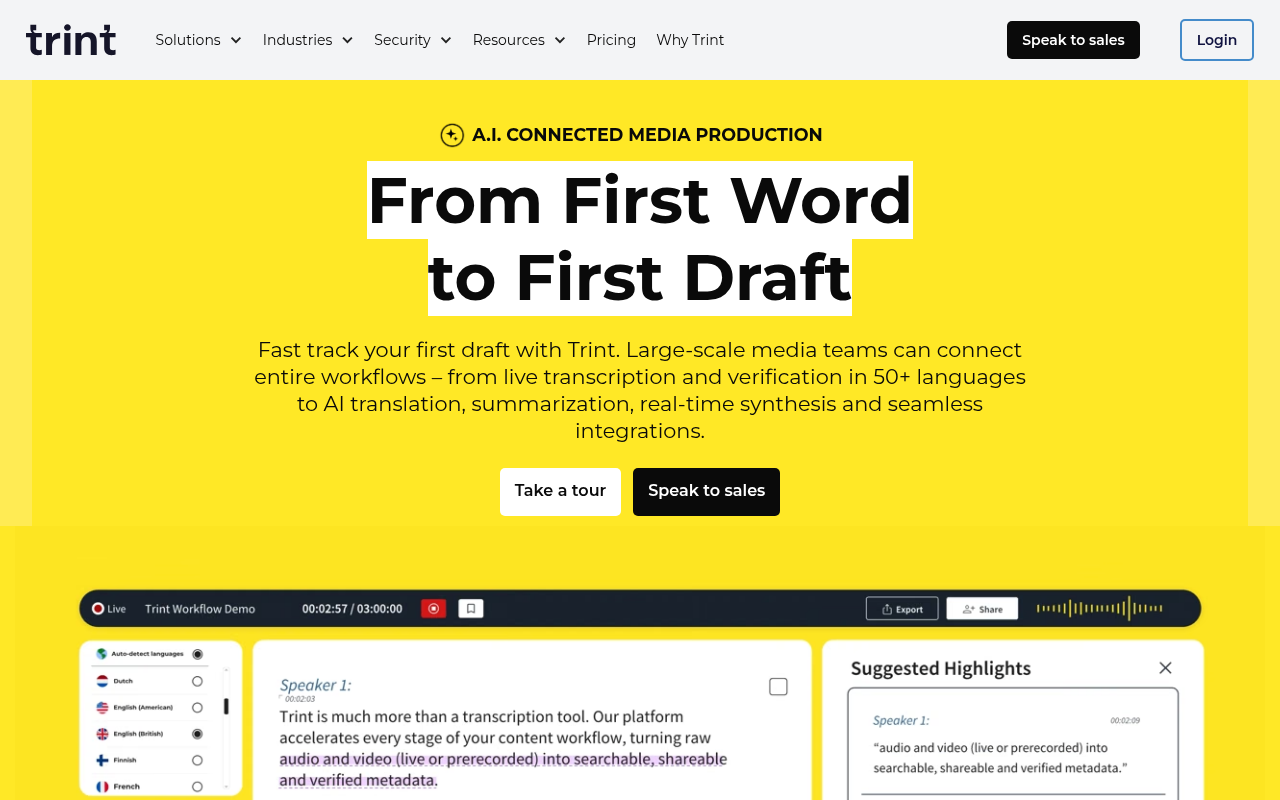
Trint is built for teams: collaborative transcript editing, version history, and a searchable transcript library are the features that justify its per-seat pricing, capabilities that appear in Trint's own feature documentation and are the primary differentiators cited in newsroom workflow reviews. For a journalist or producer working inside a larger editorial team, those features have real value. For a solo user or a one-person operations team, the per-seat model prices them into a tier they don't need. Accuracy claims follow the same unverified pattern as most tools here; the differentiation is workflow and collaboration, not engine quality.
9. Notta - Best for Multilingual Meeting Transcription Across Asian and European Languages
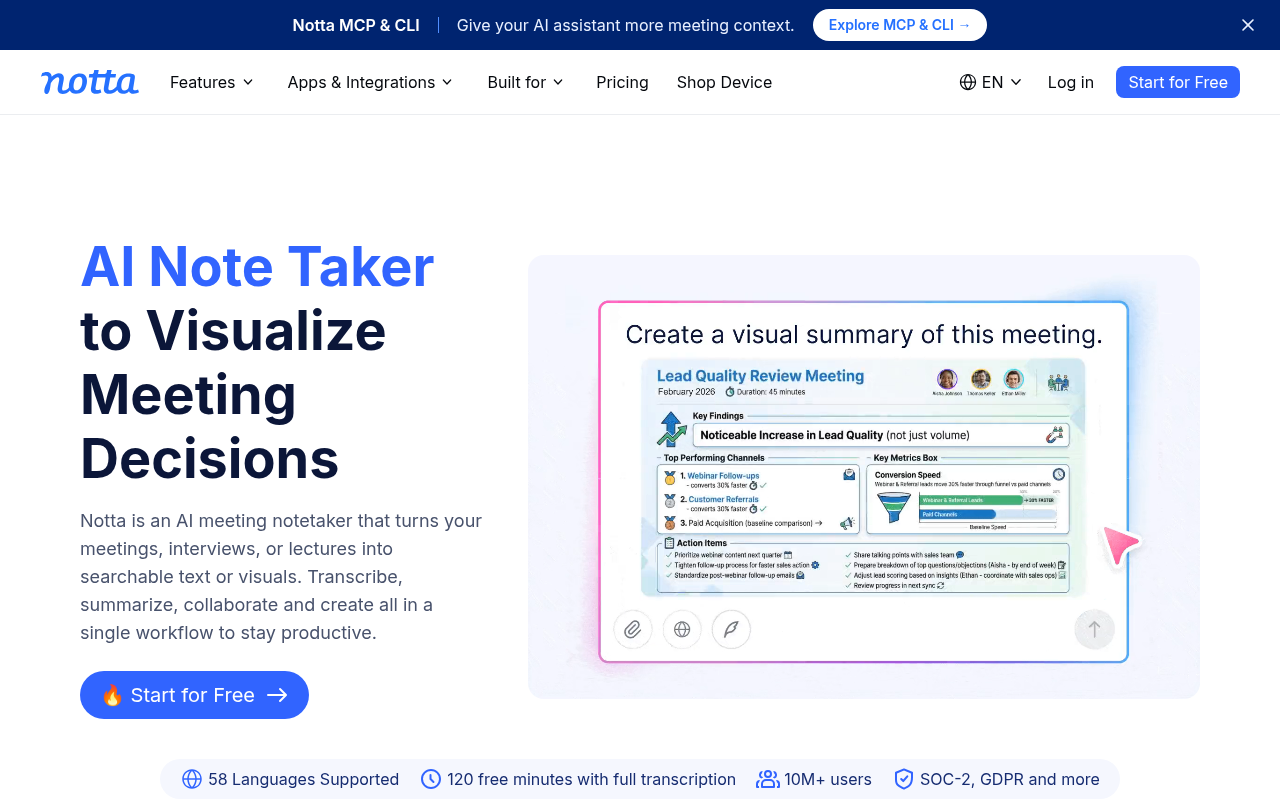
Notta's language coverage skews toward Asian and European languages, which makes it a more relevant option than most tools for buyers transcribing Mandarin, Japanese, Korean, or Portuguese content. The meeting transcription and file upload workflows both exist in the same product. Like most alternatives in this list, Notta does not publish per-language benchmark data, so accuracy on a specific language or dialect is difficult to validate before purchase. Most beneficial when the target language is one where English-optimized tools consistently underperform and the buyer has tested Notta's free tier on a real sample file.
10. Fireflies.ai - Best for Sales and Revenue Teams Tracking Meeting Intelligence
Fireflies.ai is a meeting intelligence platform: it joins calls, transcribes them, extracts action items, and surfaces keyword tracking and CRM-ready summaries. For a sales team that needs to review call recordings at scale, that layer of structure has clear value. For a solo user who needs a transcript of a pre-recorded interview or a podcast episode, the product is over-engineered for the job. The pricing reflects the team-facing use case, and the per-seat structure makes it expensive for individuals who only need the raw transcript.
11. Whisper (Open-Source) - Best for Privacy-First Teams Willing to Self-Host
OpenAI's Whisper model supports 99 languages and achieves competitive word error rates across a wide range of languages in its large-v2 and large-v3 variants, with published benchmark results that can be independently reviewed. That transparency on accuracy is rare in this category. The real cost is setup: running Whisper locally requires technical configuration, hardware that can handle the model size, and ongoing maintenance. Teams comfortable with that overhead get genuine privacy (audio never leaves their infrastructure) and no per-minute billing. Everyone else will spend more time on setup than they save on transcription.
12. Transkriptor - Best Budget Option for Occasional Transcription Without Commitment
Transkriptor offers subscription-based plans (as indicated by a standard Pricing page with a "Try it Free" option), not pay-per-use pricing without ongoing commitment. The accuracy claim on the site is a self-reported marketing figure with no published methodology behind it. A reasonable starting point for someone who needs a transcript a few times a month and wants to test a tool before committing to anything, but not a scalable choice for anyone whose transcription needs grow.
13. Fathom - Best Free Meeting Recorder for Individual Contributors on Zoom
Fathom is a financial reporting, analysis, and forecasting platform that integrates with accounting software like QuickBooks, Xero, and MYOB. It has no meeting recording or transcription functionality whatsoever.
Most buyers shortlisting Happy Scribe and Rev alternatives assume they will have to choose between a tool that is affordable but unproven on their language and one that is proven but priced for a team. That tradeoff is real across most of the 13 tools above: the ones with transparent pricing tend to hide their accuracy evidence, and the ones with the most polished accuracy claims rarely publish the methodology behind the number. The pattern that keeps surfacing in this list is that a bare percentage, whatever it says, tells you nothing about performance on your audio specifically.
Each of the 13 tools above earns a "best for" label, but labels only get you so far when the decision comes down to three or four finalists. The next section puts Happy Scribe, Rev, and Cockatoo into a single side-by-side table scored on the one variable this list kept surfacing: whether the accuracy claim is something you can actually audit.
Related Reading
- Happy Scribe Alternatives
- Sonix Alternatives
- Turboscribe Alternatives
- Trint Alternatives
- Trint Vs Otter
Happy Scribe vs Rev vs Cockatoo Side-by-Side Comparison
A comparison table feels like the rational move when two tools both claim "99% accuracy" and you're trying to pick between them. The problem is that a table built on unverifiable numbers doesn't resolve the decision. It just makes the coin flip look more organised.

The Side-by-Side Table Across Accuracy Evidence, Pricing Model, Language Depth, Trial Scope, Speaker Diarization, and Data Security
| Variable | Happy Scribe | Rev | Cockatoo |
|---|---|---|---|
| Accuracy evidence | "99% accurate", no source, no benchmark | "99%", no source, no benchmark | Per-language FLEURS benchmarks, 30 languages, public page |
| AI pricing model | From ~$0.20/min pay-as-you-go; Basic plan €17/mo (120 min) | $0.25/min pay-as-you-go | Truly unlimited on standard modes; Pro at $29.99/mo |
| Language depth | 150+ AI languages, 60+ human | 37 AI languages, English-only human | Per-language coverage on benchmarks page |
| Free trial scope | Free tier available | No free tier | Free tier, no credit card required |
| Speaker diarization | Yes | Yes | Yes, settable speaker count |
| Data security | SOC 2 Type II, GDPR, EU residency | SOC 2 Type II, HIPAA, GDPR | SOC 2 Type I in progress |
The accuracy row is where the table stops being a parity exercise. Happy Scribe and Rev each assert a figure with no source behind it, while Cockatoo's row has a URL behind it. That structural difference matters more than any single feature.
Choose Your Tool Based on Your Primary Constraint
If your binding constraint is language coverage, Happy Scribe's 150+ AI language list is the widest of the three. If compliance is non-negotiable today (HIPAA, CJIS), Rev's certified stack, as confirmed by Rev's published compliance documentation and the SOC 2 / HIPAA entries in the table above, is the only one among these three tools that currently meets those requirements. If your constraint is budget on volume, the economics of per-minute billing become punishing quickly.
25/min, so a solo content creator transcribing 10 hours a month is looking at $150 in AI fees alone, before a single human-verified minute is added. That billing model is unsustainable for anyone who transcribes as a regular part of a content workflow rather than as a one-off project. Cockatoo's truly unlimited standard-mode transcription, with exports to pdf, docx, txt, srt; bulk export supported, is structured for that kind of recurring volume.
The trade-off is honest: V4-Thinking and V4-Pro carry a weekly usage limit, so "unlimited" applies to the standard tier only. If you need auditable accuracy evidence before committing money, Cockatoo is the only option where that validation is structurally possible.
The Only Benchmark That Actually Matters - Your Own Audio
The only evidence that matters for your use case is how a tool performs on your own audio. Because free trials convert only a small fraction of potential customers who sign up, any vendor that restricts this validation step, by limiting trial access to its highest-accuracy tier or by offering no free upload at all, is structurally preventing you from acquiring that evidence. Rev offers a free tier that can be tried without a credit card, so you can test the service without payment.
Happy Scribe and Cockatoo both permit it; Cockatoo additionally provides the public benchmark baseline against which your upload result can be meaningfully interpreted. Cockatoo's free tier requires no credit card, allows 3 transcripts per day up to 30 minutes each, and stores files in 2 GB of encrypted cloud storage until you choose to delete them, giving you a genuine validation window rather than an artificially narrowed sample.
When AI Fails - The Human Transcription Fallback
Poor audio conditions, heavy background noise, and strong regional accents can push any AI model below an acceptable accuracy floor. According to Speecho's pricing data, Rev charges $1.99/min for human-verified transcription ($119.40/hr). Happy Scribe's human tier starts at approximately $1.70/min. Both are genuinely useful for legal, medical, or compliance-sensitive recordings. Cockatoo does not currently offer a human transcription tier, a real limitation if your audio regularly requires human review.
The table above hands you a decision artifact, not a verdict, and the right next step is to upload a representative file to whichever tool matches your primary constraint and let your own audio settle the question.
Next steps
If your recordings keep producing transcripts you have to spend an hour fixing before they are usable, the path forward starts with verifying accuracy on your specific language before you pay for anything. Picking between two tools that both cite "99%" without a methodology behind it is not research; it is a coin flip with a feature table attached. Start with our transcription software.
The hidden correction cost insight is the first reason this matters: a 1% error rate on a 60-minute recording still produces more than 50 mistakes, and AI errors cluster around the words that carry the most meaning, so correction labor quietly exceeds the price gap between any two tools you are comparing. The vendor incentive insight compounds that: when a tool's business model depends on human correction upsells, tolerating higher AI error rates costs the vendor nothing while the buyer absorbs the time. Together, they point to one practical move: find a tool whose accuracy claim has a published method behind it, test it on your own audio before billing starts, and treat the output as your actual decision signal rather than the marketing percentage.
Start with transcription software that publishes per-language FLEURS benchmark results across 30 languages on a public page, then upload your own file on the free tier with no credit card required. By the time a paid plan enters the conversation, the accuracy question is already answered with your own evidence.
Frequently Asked Questions
Do Happy Scribe and Rev actually back up their 99% accuracy claims with real data?
No. Votars's 2024 analysis found that neither Happy Scribe nor Rev publishes benchmark data, test conditions, language breakdowns, or audio-type caveats behind that figure, no word error rate, no test corpus, no methodology. The number is a marketing claim with none of the scaffolding that makes an accuracy figure meaningful.
Is it safe to upload client call recordings to a transcription platform under GDPR?
Uploading a client call recording to a transcription platform is a data-processing act under GDPR, and sending sensitive audio to an unvetted platform creates compliance risk that surfaces only after a regulatory issue. For a small business, a GDPR enforcement action is not a theoretical fine, it is a business-threatening event, so vetting a vendor's data practices before uploading is essential.
Can I try a transcription tool on my own audio before paying?
Yes, and the free trial scope matters: a trial only de-risks your purchase if it gives you access to the tool's highest-accuracy tier on your own audio. Cockatoo's Free tier is fully self-serve with no credit card required, gives you three transcripts per day up to 30 minutes each, includes all export types, and stores files in 2 GB of encrypted cloud storage, enough headroom to test your actual audio before committing to a paid plan. Happy Scribe also offers a free trial with no credit card required.
Does it matter which transcription tool I use if my recordings are in a language other than English?
It matters significantly. "Supports 100 languages" often means English-quality accuracy for English only, and without a per-language breakdown, buyers have no way to verify performance on their specific language before paying. FLORES-101 benchmark research shows that performance on low-resource languages diverges sharply from performance on high-resource ones, meaning a single aggregate accuracy figure hides the per-language variation that actually matters.
What should I look for in a transcription tool beyond the advertised accuracy percentage?
The post outlines five checkpoints: whether the vendor publishes a Word Error Rate (WER) figure rather than a bare percentage, whether results are tested against a standardized benchmark dataset such as FLEURS or LibriSpeech, whether per-language results are available for your specific language, whether audio conditions (clean studio, phone, noisy environment) are disclosed, and whether the evaluation methodology is public and reproducible. If a vendor cannot answer all five, the number is copywriting, not evidence.