7 Types of Transcription Explained (Complete Guide)

Pick the wrong transcription type and you inherit an editing job nobody quoted you. Here is the one decision that determines whether your transcript is publish-ready or a second afternoon of work.
Forty-five minutes. That is how long a marketing coordinator typically spends cleaning up a transcript before it is usable, simply because they ordered the wrong type. Not the wrong tool.
See our voice transcription app for how this works in practice. The wrong type. The transcription tool they used worked exactly as designed.
The mismatch was upstream, in the choice made before the file was ever uploaded. The common assumption is that transcription type is an industry-vertical label (medical vs. legal vs.
That assumption is what turns a time-saving process into an afternoon of editing. Transcription is the process. A transcript is the document it produces.
At its most basic, transcription converts spoken audio or video content into written text, and the resulting written document is the transcript. The distinction matters because buyers often evaluate the wrong thing: they judge the transcript they received without examining whether the transcription process they chose was right for their use case.
Transcription splits across three independent dimensions. Choosing correctly on all three determines whether your output file is immediately usable. A verbatim file delivered to someone who needed clean, readable text does not save time.
It creates a second job, one that cannot be sent, published, or shared without a full editing pass. As a general principle, choosing the wrong transcription type results in output that requires significant additional editing, adding both time and cost to the workflow. Dimension 1 - Style and Detail Level, The Verbatim Axis Of the three dimensions, this one has a disproportionate impact on whether your output is publish-ready or edit-heavy.
That dimension is the verbatim axis, and most transcription guides bury it under a list of job titles.
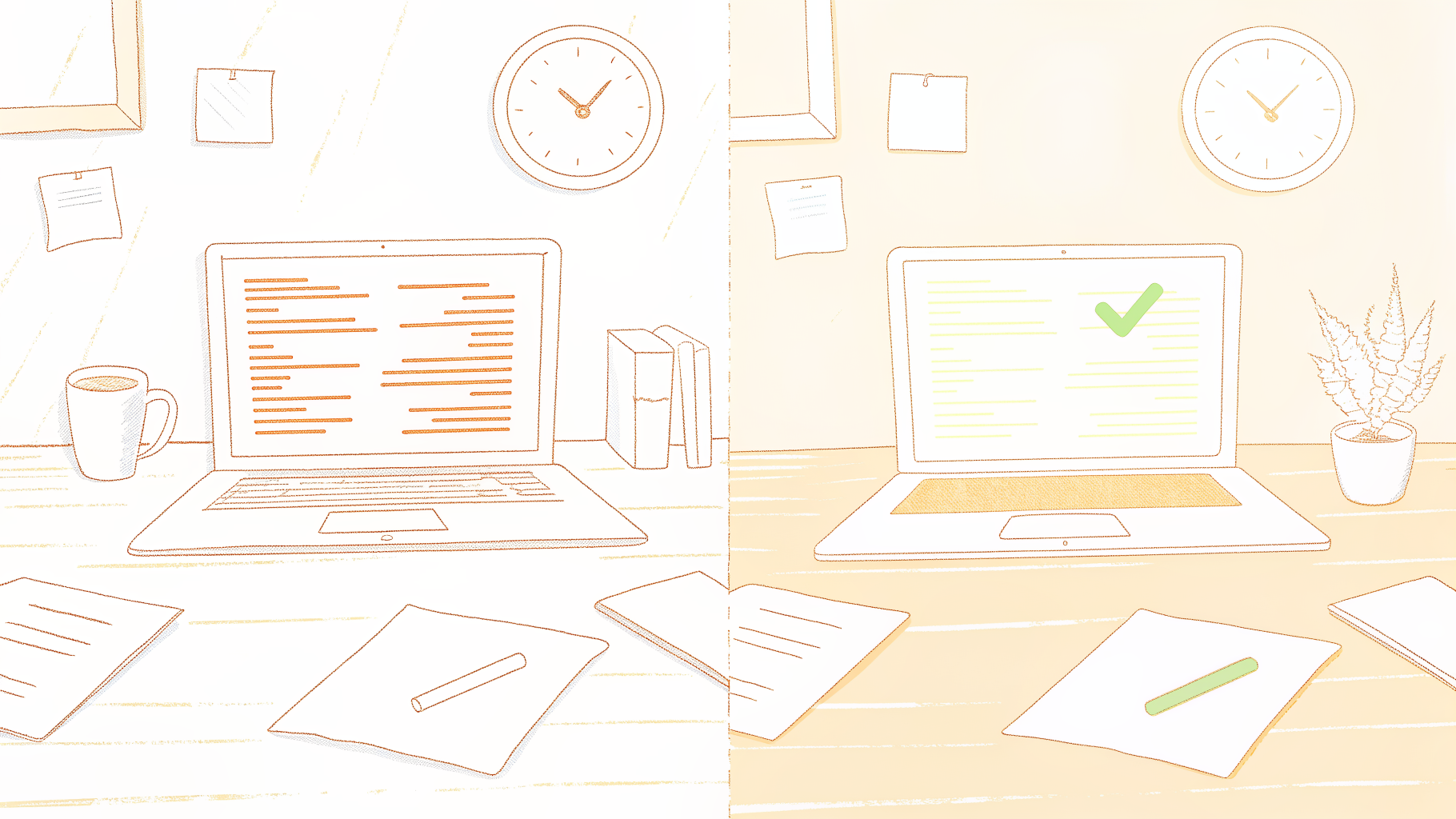
Broadly across the market, style and detail level governs how faithfully the transcript captures every spoken element, filler words, false starts, overlapping speech, versus how much it is cleaned into readable prose. Getting this choice wrong is the most common source of the downstream editing burden described above. Dimension 2 - Industry Vertical, Medical, Legal, or General The second dimension is the industry vertical, which is also the one most buyers treat as the only dimension. Labels like medical, legal, and general do carry real meaning: they signal the vocabulary, formatting conventions, and compliance expectations a provider is equipped to handle.
The problem is that selecting the correct vertical is necessary but not sufficient. A legal transcript ordered in the wrong style still arrives as a document that requires a full editing pass before it can be filed, shared, or published. Dimension 3 - Production Method, How the Work Gets Done The third dimension is production method, which describes whether the transcription is produced by a human, an automated speech-recognition system, or some combination of the two.
This choice affects turnaround time, cost, and the baseline accuracy of the raw output. Production method interacts with the other two dimensions rather than operating independently of them. A highly specialized medical file, for example, may demand human review regardless of which style or vertical was selected, because automated systems can introduce errors that carry real downstream consequences.
Key takeaways
- The verbatim vs. clean-verbatim choice matters more than any industry label, pick the wrong one and you're adding 45 minutes of editing before the transcript is usable, regardless of how accurate the tool was.
- Seven transcription types exist, but the real decision has three layers: style (how much raw spoken noise survives), vertical (whether specialist vocabulary matters), and production method, most buyers skip straight to vertical and pay for it later.
- Human, AI, and hybrid methods aren't interchangeable: a deposition that legally requires verbatim output has already ruled out pure AI for final delivery before you've opened a single browser tab.
- The assumption that automated transcription trades accuracy for price is outdated, Cockatoo users consistently flag strong performance on difficult accents and dialects, which is where older tools historically fell apart.
- Defaulting to your industry as the starting point ('I'm in healthcare, so I need medical transcription') is the single fastest way to land a transcript that needs a full editing pass before anyone can read it.
- Cockatoo lets you test AI transcription on your actual recordings, audio, video, and document translation, free for up to three 30-minute files a day, with no credit card required, so you match format to use case before spending anything.
The Verbatim vs Clean Verbatim Split That Most Transcription Guides Bury
The common assumption is that transcription type is an industry-vertical label, medical vs. legal vs. general, and that once you pick the right label, the output will be ready to use.

Verbatim Transcription - Every Um, False Start, and Silence Captured Exactly
Verbatim transcription captures every word spoken, including filler words, false starts, stutters, and crosstalk. According to research standards in qualitative inquiry, hesitation patterns and self-corrections carry meaning that a cleaned transcript would erase, which is why verbatim output is the required standard for academic interviews, focus groups, and court depositions.
Spoken English averages around six filler words per minute. Over a one-hour recording, that is roughly 360 instances of "um," "uh," or "you know" in the raw text. For legal proceedings and qualitative research, those 360 instances belong there; the noise is the signal.
A verbatim transcript exported as a DOCX or PDF, the kind Cockatoo produces on the first upload with no setup and no credit card required, lands in a state a colleague can open and annotate immediately. For court reporters or research coordinators sharing raw transcripts with a team, that matters: the file is editable the moment it arrives, without an extra conversion step.
Clean Verbatim - All the Meaning, None of the Noise That Slows Readers Down
Clean verbatim transcription (also called intelligent verbatim) keeps every idea and every word that carries meaning, then removes fillers, false starts, and repetitions that add no information. The result reads the way a confident speaker intended to sound, not the way speech actually flows.
A verbatim transcript of a one-hour podcast episode can run to 9,000 words, with hundreds of filler words woven through every paragraph. Getting the transcript into a Word or PDF file that someone else can edit, without reformatting, copy-pasting, or converting, removes one full layer of that hidden cost before cleanup even starts. Cockatoo exports to PDF, DOCX, TXT, and SRT directly, so the file is share-ready the moment transcription finishes.
For individuals, Cockatoo's Pro plan supports truly unlimited transcription on its standard modes with no monthly hour cap, batch uploads of up to 20 files at a time, and 2 TB of storage, which means a backlog of recordings can be processed and exported in a single session rather than spread across days. Teams of three or more get those same capabilities across every seat, with shared transcript editing and centralised billing layered on top.
If your goal is a readable document, clean verbatim is the right call upfront. Either way, the format decision should be made before you hit upload, not after you are already deep into an editing pass you did not budget for.
7 Types of Transcription Explained
Seven transcription labels get thrown around constantly, but the label alone tells you almost nothing about what will land in your inbox. The real decision stack has three layers:
- Style (how much raw spoken noise gets kept)
- Vertical (whether specialist terminology matters)
- Production method (who or what does the work)
Most buyers jump straight to the vertical layer, pick "medical" or "legal" or "general," and discover too late that two of those three decisions were never made. The output needs an hour of editing before anyone can use it, and that editing hour is the cost nobody quoted.
Start with style. Everything else follows from that.
1. Verbatim Transcription - Every Word, Filler, and False Start Captured
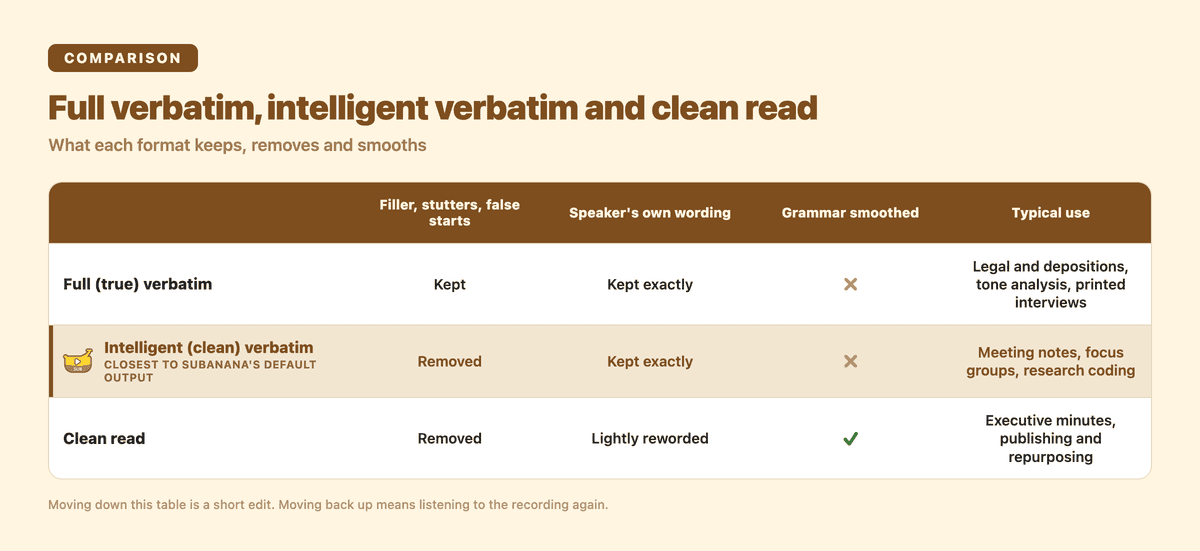
Verbatim transcription preserves every "um," "uh," false start, stutter, and non-verbal sound exactly as it occurred. This is the right pick when the hesitation itself carries meaning: qualitative research interviews where a pause signals discomfort, legal depositions where a self-correction matters, or linguistic studies where filler patterns are the data. The hard tradeoff is readability. A verbatim transcript of a 30-minute interview can run to 8,000 words of text that nobody except the researcher wants to read straight through.
One real tension researchers face is wanting to avoid manual typing altogether (hours of re-listening and transcribing by hand is a tax on research time, not a research methodology) while remaining unsure whether an automated tool will meet academic standards for accuracy. Knowing your style upfront matters here: ordering verbatim from a reliable tool like Cockatoo and reviewing the output is a faster, more auditable workflow than typing from scratch. Cockatoo's free tier ($0, no credit card required) returns a first file within minutes on the very first upload, with no setup overhead to justify before you know whether the output suits your needs.
2. Clean Verbatim Transcription - Accurate Speech, Minus the Noise
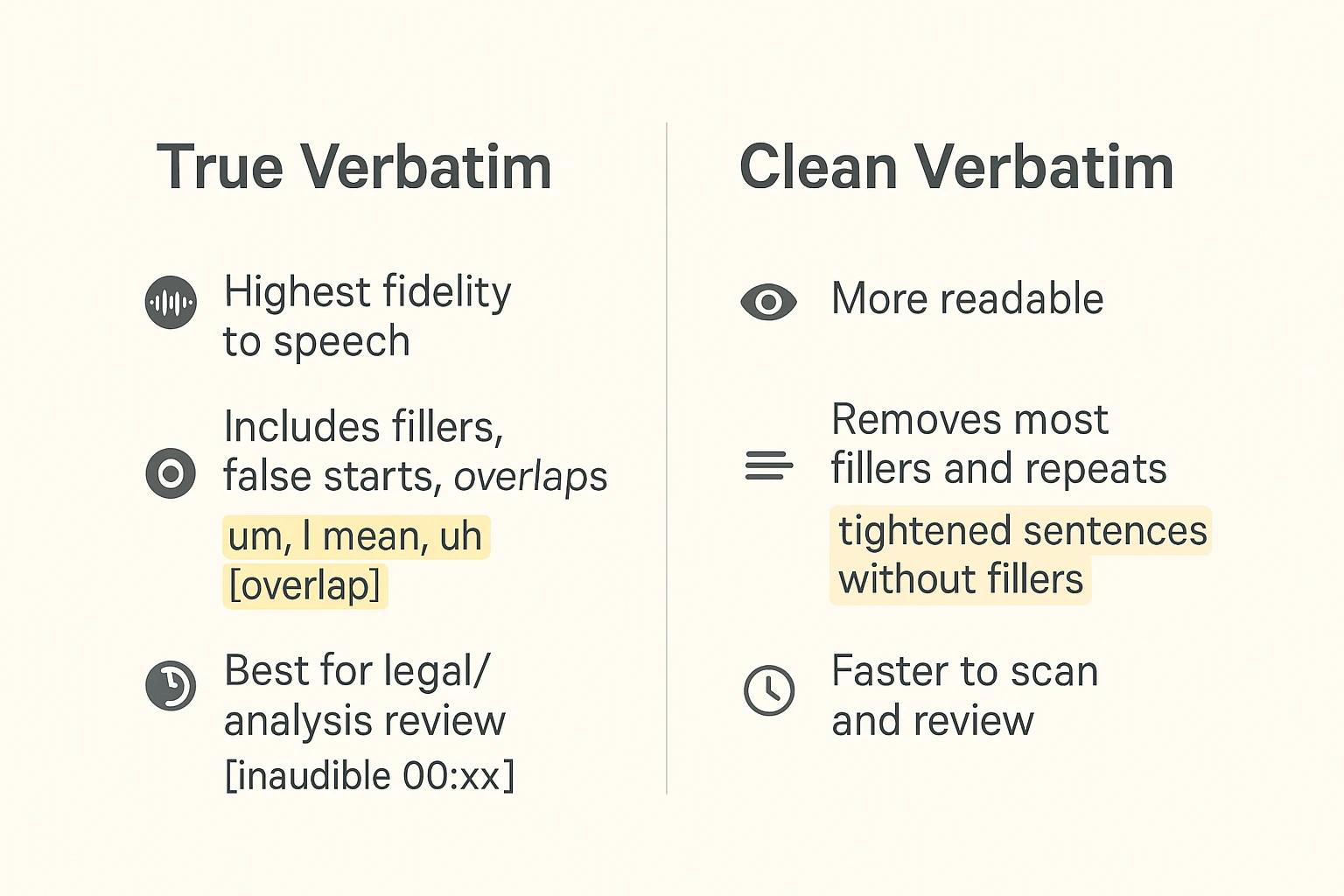
Clean verbatim (sometimes called intelligent verbatim) removes fillers and false starts while keeping every substantive word intact. Industry surveys consistently show this is the default that most transcription buyers actually want, even when they order without specifying a style. Business meeting notes, podcast show notes, interview articles, and internal call summaries all belong here. The output reads naturally without sounding rewritten. If you are unsure which style to request, clean verbatim is the right starting assumption for roughly 80% of business recordings.
80%
of business recordings
3. Edited/Polished Transcription - Spoken Language Rewritten as Publication-Ready Prose
Edited transcription goes further than clean verbatim: a human editor restructures the spoken language into formal, publication-ready prose. A journalist turning a 45-minute interview into a magazine-ready quote block uses this type. So does a researcher who needs a conference keynote converted into a white paper. According to industry pricing data, edited transcription carries the longest turnaround and the highest per-hour cost of any style, often two to three times the rate of clean verbatim, because the editor is effectively rewriting, not just cleaning. Use it when the output must stand alone as a published document, not when you just need readable notes.
4. Phonetic Transcription - Sound-Level Notation for Linguistics and Speech Therapy

Phonetic transcription records how words actually sound rather than what words mean, using the International Phonetic Alphabet (IPA) or similar notation systems. A linguist documenting a regional dialect, a speech-language pathologist tracking a patient's articulation patterns, or a language teacher building pronunciation exercises all reach for this type. It is highly specialized and requires trained annotators who can work at the sound level. For anyone outside linguistics, speech therapy, or formal language research, phonetic transcription is almost certainly not what you need, even if the word "phonetic" sounds precise and appealing.
5. Time-Coded Transcription - Text Synced to Audio and Video for Captioning Workflows

Time-coded transcription embeds timestamps at regular intervals or at every speaker turn, mapping text to specific frames in a video or audio file. This is the format that feeds closed-caption workflows and subtitle exports. If you publish video content, whether a course, a webinar recording, or a YouTube channel, time-coded captions make that content accessible to viewers who are deaf or hard of hearing, and most major platforms support or require them. Cockatoo exports SRT caption files directly from uploaded video, so the time-coded file is ready for your video editor or caption uploader without a separate captioning step.
A practical note for teams onboarding new staff: one of the clearest articulations of why a dedicated transcription tool differs from a general-purpose AI is precisely this SRT export workflow. A generative AI asked to "transcribe this video" will return text; a dedicated audio-to-text tool returns a time-coded, frame-synced SRT file that plugs directly into a caption uploader. That distinction is the difference between a file that ships and a file that still needs an hour of reformatting.
6. Medical Transcription - Physician Dictations Converted into Official Health Records
Medical transcription converts physician dictations and clinical notes into official health records: discharge summaries, operative reports, radiology reads, and referral letters. The stakes are unusually high. Research published in peer-reviewed clinical literature has documented that transcription errors in medical records contribute to patient safety incidents, because a misheard drug name or dosage becomes part of the permanent clinical record.
This is the one vertical where the label genuinely changes the minimum quality bar. Do not use a general-purpose service for medical content. Certified medical transcriptionists or services with explicit medical terminology training are the appropriate choice, and human review of AI output is non-negotiable here.
7. Legal Transcription - Court Depositions and Proceedings Where Accuracy Is Non-Negotiable

Legal transcription covers court depositions, hearings, arbitration proceedings, and legal correspondence where the transcript may be submitted as evidence. Accuracy requirements are not advisory: the Federal Rules of Civil Procedure and corresponding state rules govern how deposition transcripts must be certified, and an inaccurate transcript can be challenged, excluded, or used to impeach a witness. Transcriptionists working in this vertical typically hold certifications and carry professional liability. AI-only transcription without human review is a genuine risk here, not a cost-saving option. If the file will ever appear in a courtroom or a legal filing, treat accuracy as a hard requirement, not a preference.
Human, AI, and Hybrid Transcription Methods Compared
The production method you choose is not a separate decision from the type of transcript you need. The moment you decide a deposition requires verbatim output, you have already ruled out pure AI for final delivery. The moment you decide a podcast recap needs clean-verbatim text, you have already ruled out paying specialist rates. Method and type are the same decision, made in two steps.
1. Human Transcription - Highest Accuracy for Complex Audio

Human transcription is the right call when the audio itself is the problem: heavy crosstalk, strong regional accents, dense legal or medical jargon, or a recording where every hesitation carries evidential weight. Specialist human transcription can cost up to $120 per hour, making it the most expensive method available. That price is justified for a court deposition where the transcript may become evidence. It is not justified for a clean 60-minute client call where the audio is clear and the goal is readable notes.
2. AI Transcription - Fast, Affordable, and More Accurate Than You Think
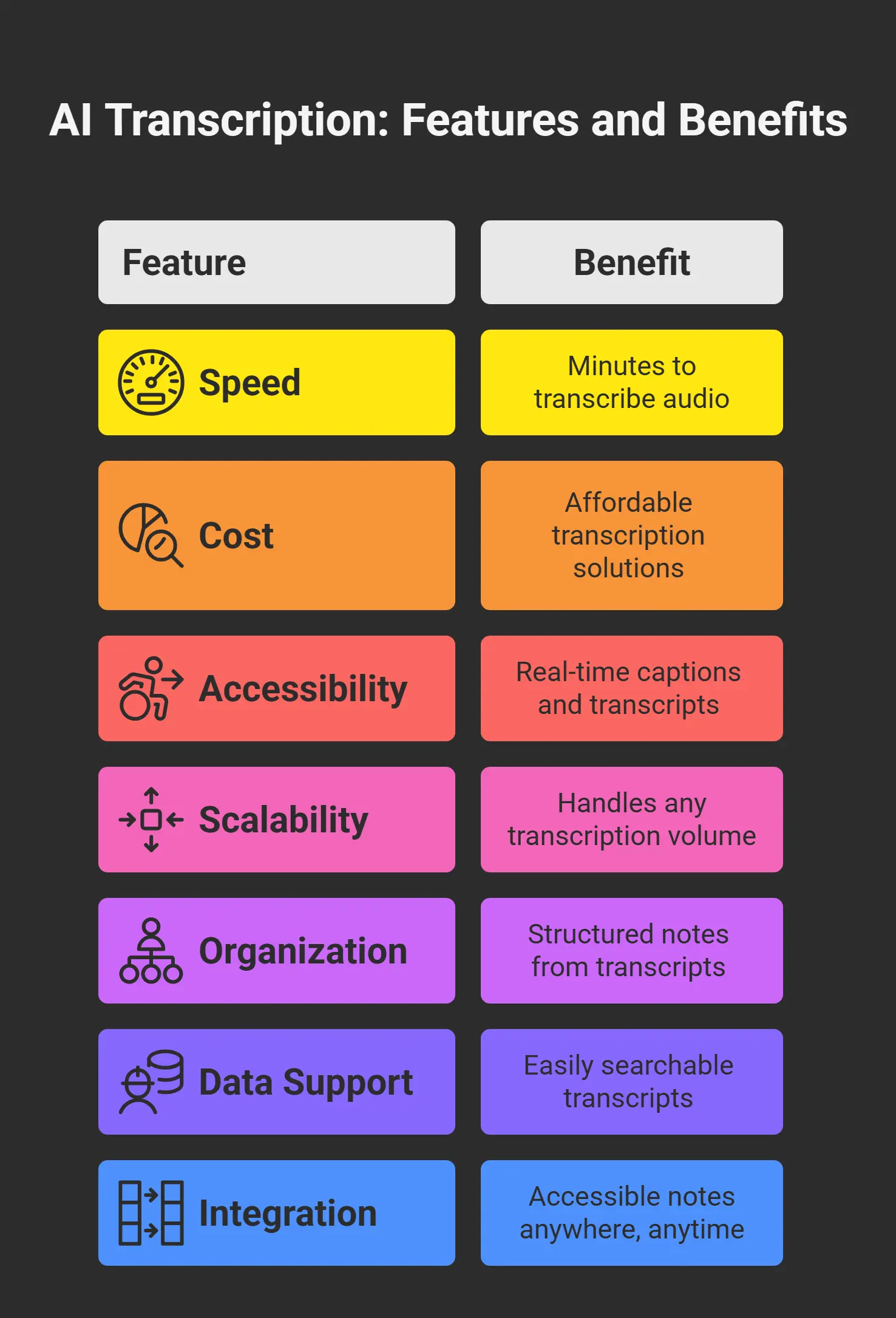
The old assumption that AI transcription trades accuracy for speed has quietly become outdated. Industry research notes that AI transcription has historically struggled with non-standard accents and poor audio quality, but that framing describes older, generic models. The critical variable is whether the tool runs its own in-house inference or simply resells a third-party API. Tools built on proprietary models, like Cockatoo's in-house transcription engine, have drawn consistent user praise for handling accented speech and overlapping speakers, areas that once reliably required a human specialist.
For most clean business recordings, the accuracy gap between AI and human output is smaller than it was three years ago. Industry benchmarks show leading AI models routinely reaching 95% or higher accuracy on clear audio, and the editing time saved typically outweighs waiting 24 hours for a human turnaround. A transcript comes back in minutes on the first upload, with no setup and no credit card required. Cockatoo's free tier lets you test this on up to three files a day, no payment details, no onboarding friction, so the speed claim is verifiable before you spend anything.
Where the content involves video, Cockatoo also handles video captioning and subtitle export, so the same upload that produces a readable transcript can simultaneously generate publish-ready captions. For multilingual work, link import and multilingual handling are built in, and document translation covers PDF, DOCX, PPTX, XLSX, and TXT files, useful when a recording references source material that also needs to travel across languages.
3. Hybrid Transcription - AI Draft Plus Human Polish for Quality-Critical Work

Hybrid transcription runs AI first, then sends the draft to a human editor for review and correction. Industry analysis describes this as combining the speed of AI with the quality control of human review. It is the right pick when the stakes are high but not quite at the level of a formal legal proceeding: a published interview, a medical summary, or a research transcript where a missed term would embarrass rather than invalidate.
The real tradeoff is cost and turnaround. Hybrid is slower than pure AI and more expensive, so it is not worth the premium for internal meeting notes or podcast show notes where a quick edit pass by the person who was in the room is faster than waiting for a human reviewer. For those lighter workloads, starting with Cockatoo's free tier, no credit card, transcript back in minutes, keeps both cost and turnaround to a minimum.
Knowing what each method costs you, in time, money, and editing hours, is only half the equation. The next step is matching your specific recording to the right combination of type and method, so you are not over-engineering a podcast recap or under-resourcing a court exhibit.
Related Reading
- Market Research Transcription
- Qualitative Research Transcription
- How To Transcribe Youtube Video
- Business Transcription
- Podcast Transcription Software
- Automatic Video Transcription Software
- Meeting Transcription And Summary Ai Tools
- Best Transcription Software For Interviews
- Best Lecture Transcription App
- Best Medical Transcription Software
- Best Closed Captioning Software
- Best Transcription App For Iphone
- Best Transcription Software For Qualitative Research
- Zoom Ai Transcription
How to Choose the Right Transcription Type for Your Recording
That matching process starts where most people go wrong: leading with industry instead of use case. Defaulting to "I work in healthcare, so I need medical transcription" or "I work in law, so I need legal transcription" sends you straight into a format problem you won't notice until the transcript lands in your inbox and needs a full editing pass before anyone can use it.
"Users struggle to find the right transcription tool for their specific recording type (e.g. live meetings vs. YouTube videos vs. podcasts vs. short-form social media content), indicating confusion about which tool fits which use case."
— what we hear from content creators and podcast producers

Step One - Settle the Verbatim Axis Before You Touch Anything Else
The single decision that controls whether your output is immediately usable is whether you need every filler word preserved or a clean, readable document. Multiple industry sources make this explicit: the verbatim-vs-clean-verbatim axis must be settled first, because it determines whether the transcript goes straight into a document or straight into an editing session. Ask one question: "Does the exact wording, including every 'um' and false start, matter for how this transcript will be used?"
If you're documenting a court deposition or a qualitative research interview where hesitations carry meaning, yes. If you're turning a team meeting or client call into shareable notes, no. That answer alone eliminates most of the tools on the market before you evaluate anything else.
Step Two - Add the Vertical Filter Only If Specialist Terminology Is on the Line
The vertical label (medical, legal, general) only adds meaningful signal when domain-specific terminology is dense enough that a general model will consistently misread it. For most business recordings, a strong general-purpose model is sufficient and the vertical filter can be skipped entirely.
Three Questions to Choose Your Transcription Method
Once you know where you land on those two axes, the choice narrows quickly. Cockatoo's clean-verbatim AI output delivers a readable document at a self-serve price. Plans start at $0 with no credit card required, and the paid tier is available for under $12 a month on an annual plan. It is most effective when your recordings are interviews, calls, or meetings where clean output matters more than word-level forensic detail.
One honest fit-check before you upload: if your primary need is a bot that joins live Zoom or Google Meet calls to capture meetings in real time, Cockatoo is not that tool today. It works from files you upload, not from calls it joins, so it's the right choice when you have a recording in hand rather than a live session you need covered.
Next steps
If your recording is sitting unprocessed because you are not sure which transcription label to order, the path forward starts with settling the verbatim axis first. That single decision, made before you upload anything, determines whether the output lands in an editable document or lands in an editing queue. Start with our voice transcription app.
The verbatim-vs-clean split controls immediate usability, which means getting it wrong generates a hidden editing cost that never appears on any pricing page. Audio difficulty then determines whether AI alone is sufficient or a human review layer is needed, and only after those two decisions does the vertical label (medical, legal, general) add any meaningful signal. Together, they point to one practical next step: test your actual recording against a clean-verbatim AI output before committing to a more expensive or more complex workflow.
Start with the voice transcription app Cockatoo offers on its free tier, which returns a clean-verbatim transcript on your first upload with no credit card and no setup. If the output is accurate enough to use with a light review pass, the format question is answered by evidence, not guesswork, and the hidden editing cost that comes with ordering the wrong type stays exactly where it belongs: at zero.
Frequently Asked Questions
What's the difference between a transcript and transcription?
Transcription is the process of converting spoken audio or video into written text, while a transcript is the written document that process produces. The distinction matters because buyers often judge the transcript they received without examining whether the transcription process they chose was right for their use case.
What is phonetic transcription and do I actually need it?
Phonetic transcription records how words actually sound rather than what they mean, using notation systems like the International Phonetic Alphabet (IPA), and is used by linguists documenting dialects, speech-language pathologists tracking articulation patterns, and language teachers building pronunciation exercises. It requires trained annotators who can work at the sound level. For anyone outside linguistics, speech therapy, or formal language research, phonetic transcription is almost certainly not what you need.
When should I choose edited transcription over clean verbatim?
Use edited transcription when the output must stand alone as a published document, for example, a journalist turning a 45-minute interview into a magazine-ready quote block, or a researcher converting a conference keynote into a white paper. Edited transcription carries the longest turnaround and highest per-hour cost of any style, often two to three times the rate of clean verbatim, because an editor is effectively rewriting rather than just cleaning. If you just need readable notes, clean verbatim is the right call.
What types of transcription are used in research?
Qualitative research typically requires verbatim transcription, because hesitation patterns and self-corrections carry meaning that a cleaned transcript would erase, a pause can signal discomfort, and filler patterns can be the data itself. Clean verbatim is appropriate when a researcher needs readable documentation rather than raw spoken noise. Phonetic transcription is a further specialisation used in linguistic studies where filler patterns and sound-level detail are the subject of analysis.
Why does picking the wrong transcription type cost so much extra time?
The post gives a concrete example: a marketing coordinator typically spends 45 minutes cleaning up a transcript simply because they ordered the wrong type, and a verbatim transcript of a one-hour podcast episode can run to 9,000 words with hundreds of filler words woven through every paragraph. Choosing the wrong style means the output requires a significant editing pass before it can be sent, published, or shared, a hidden cost that rarely appears in any comparison of transcription tools.