How to Do Market Research Transcription Faster in 2026

Transcription doesn't just eat your time. It shapes every insight that follows. Here is why the format of your research session determines whether automation helps or quietly breaks your data.
Four hours. This is February 2025's guide to manual transcription. Finish a two-hour focus group on a Tuesday afternoon, and Wednesday is already gone before analysis begins. For the solo researcher or small-team operator who handles everything from recruitment to reporting, that is a structural problem that quietly degrades the quality of every deliverable that follows. The common assumption is that transcription is clerical work, something to get through before the real thinking starts.
That framing is wrong. Transcription is where the research day gets spent, and what comes after is shaped entirely by how much time and mental energy it leaves behind. See our voice transcription app for how this works in practice.

Market research transcription is the conversion of qualitative research recordings into written text that can be searched, coded, and analyzed. This covers audio and video from focus groups, in-depth interviews (IDIs), usability tests, and customer feedback sessions. It feeds the executive summaries that reach decision-makers.
Without an accurate transcript, none of that work starts cleanly. The ratio is brutal. Manual transcription runs at 4 to 6 hours of work for every hour of recorded audio, meaning a single 60-minute interview can consume a full working day.
A five-interview IDI study with sessions averaging 45 minutes generates roughly 15 to 22 hours of transcription work before a single insight is written down.
4 to 6 hours
transcription work per hour of audio
The hidden cost is the analytical energy that never gets applied to the data. A researcher who spends Wednesday transcribing arrives at Thursday's analysis window already depleted, working against a deadline that just got shorter.
Rushed analysis is where strategic errors are born. A voice transcription app like Cockatoo addresses that gap directly: upload the recording, receive an editable, speaker-labeled transcript automatically, and redirect those hours back into work that requires a human mind.
The volume of qualitative research recordings is growing, driven by demand for richer consumer insight and the lower cost of remote research tools that make it easier to run more sessions. Clients expect faster turnaround on findings too, which means transcription turnaround time sits directly on the critical path between data collection and insight delivery. But not all research recordings are created equal. A one-on-one depth interview is a very different transcription challenge from a six-person focus group or a remote usability session with background noise, and that complexity is exactly what the next section maps out.
Key takeaways
- Manual transcription costs a minimum of four hours for every hour of recorded audio, finish a two-hour focus group on Tuesday and Wednesday is already gone before analysis starts.
- A vendor's '99% accurate' badge is meaningless without knowing what audio it was tested on; broadcast-quality recordings score far better than the noisy, multi-speaker conditions of a real focus group.
- Format choice is irreversible: picking the wrong transcript output, wrong speaker turns, wrong timestamps, wrong granularity, doesn't just create extra work, it destroys the data signal downstream.
- The speed-vs-accuracy trade-off only resolves when you can verify performance on your specific recording conditions before you commit, not after six hours of focus group audio is already processed.
- Transcribed text unlocks search, coding, and compliance review in ways audio never can, the transcript isn't the end of the work, it's where the real analysis begins.
- Cockatoo closes the loop: upload any audio or video file, get an editable transcript with automatic speaker recognition, word-level timestamps, and flexible export formats, and check its published accuracy tests across 30 languages before trusting a single word of your research data.
What Types of Research Sessions Are Transcribed Most Often
The common assumption is that transcription difficulty is mainly a function of audio quality: get a clear recording, and any tool will handle the rest. Six research session formats produce recordings that need transcription, and each one breaks transcription tools in a different way. The format shapes everything: how many voices are speaking, how close they are to the microphone, and how much competing noise surrounds them. A tool calibrated for a quiet two-person conversation can still collapse a focus group into a wall of unattributed text, or silently drop whole passages from a usability test. Understanding why each format is hard to transcribe is the first step to not being surprised mid-project.
1. Focus Groups - Overlapping Voices Create Speaker Separation Nightmares

Six to ten participants speaking in an interactive setting is the standard focus group format, and that speaker count is the core problem. When two people talk at once, most transcription tools have to guess who said what, and they often guess wrong. The result is misattributed quotes, collapsed speaker turns, and passages where the transcript simply stops making sense, a dynamic well-documented in foundational focus group methodology. Researchers who rely on focus groups routinely end up checking transcripts line by line against the original audio, which wipes out the time saving that automated transcription was supposed to deliver.
The acoustic problem compounds in a round-table room. Participants at the far end of the table speak at lower volume relative to the microphone, so their contributions are quieter than the moderator's. Tools trained on balanced studio audio treat that volume drop as noise and skip it.
Cockatoo's multilingual handling is worth noting here: focus groups conducted in languages other than English face a double accuracy penalty with generic tools; speaker separation errors multiply on top of language-model gaps. Cockatoo supports transcription across multiple languages, so researchers are not forced to choose between using the right tool and working in the right language. Language coverage varies by transcription mode; the benchmarks page lists per-language accuracy in detail.
2. In-Depth Interviews - Deceptively Clean Audio That Still Demands Precision

In-depth interviews (IDIs) are the most commonly referenced session type for transcription, with multiple tool recommendations in researcher communities specifically framed around interview use cases. That volume of use means precision errors compound faster here than in any other format. A single misheard word in a verbatim quote can change the meaning of a finding, and because IDIs feel like the "easy" case, researchers often skip the verification step they would apply to noisier recordings.
The deception is real. IDIs are cleaner than focus groups, but clean audio still contains fast speech, domain-specific terminology, and accents that generic models handle poorly. The error rate stays low enough to feel trustworthy, yet high enough to corrupt a key quote. That gap, between a transcript that looks right and one that is right, is where research integrity quietly erodes.
Cockatoo addresses this directly. The Pro plan offers truly unlimited transcription with no monthly hour cap on its default modes, and its highest-accuracy mode is available for sessions where a single misattributed phrase could derail a finding. Researchers who want to try before committing can start on the Free tier, no credit card required, which includes three transcripts per day at up to 30 minutes each, covering a full standard IDI without any upfront cost.
3. Usability Testing - Low-Volume Think-Aloud Audio Buried Under Interface Noise
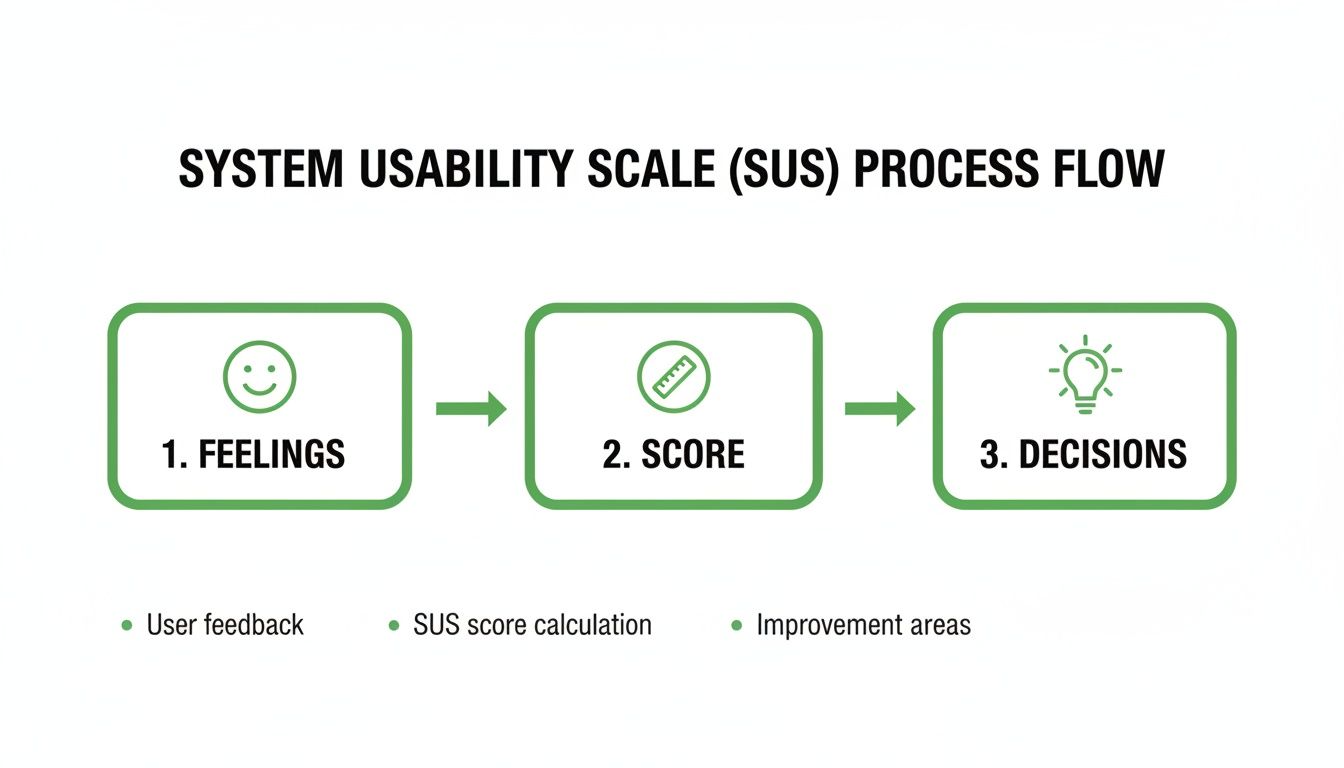
Think-aloud usability sessions produce some of the hardest audio in qualitative research. Participants are asked to narrate their thoughts while interacting with an interface, but most people murmur when they concentrate. That murmur competes directly with keyboard clicks, notification sounds, and screen reader feedback. Speech recognition tools calibrated for conference-room audio routinely drop entire think-aloud passages because the volume falls below the threshold they treat as speech.
The loss is not random. Participants tend to murmur most when they are confused or hesitant, which is precisely the moment that matters most for usability analysis.
For teams running usability studies at scale, Cockatoo's Pro plan supports batch uploads of up to 20 files at a time and places no hard cap on file length or size, so a full day of back-to-back sessions can be processed together rather than queued one by one.
4. Customer Feedback Studies - High Volume, Inconsistent Recording Conditions

Customer feedback studies often involve dozens or hundreds of recorded calls, which creates a volume problem on top of a quality problem. Phone-line audio is compressed by telephony codecs, and that compression degrades speech recognition accuracy in ways that studio-quality benchmarks never reveal. A tool that performs well on a clean MP3 file can produce significantly higher word error rates on the narrow-band audio that call center recordings typically carry.
The inconsistency is the deeper issue. One call is recorded in a quiet office; the next comes from a customer on a motorway. No single model setting handles both well, and at scale, those errors accumulate across hundreds of files before anyone notices.
Teams handling this volume benefit from centralised workflows. Cockatoo's Team plan, built for three or more people, includes shared transcript access and editing, centralised billing, and 2 TB of encrypted cloud storage per person, keeping every call record in one auditable place rather than scattered across individual accounts.
5. Ethnographic Research - Ambient Real-World Noise Overwhelms Standard Models
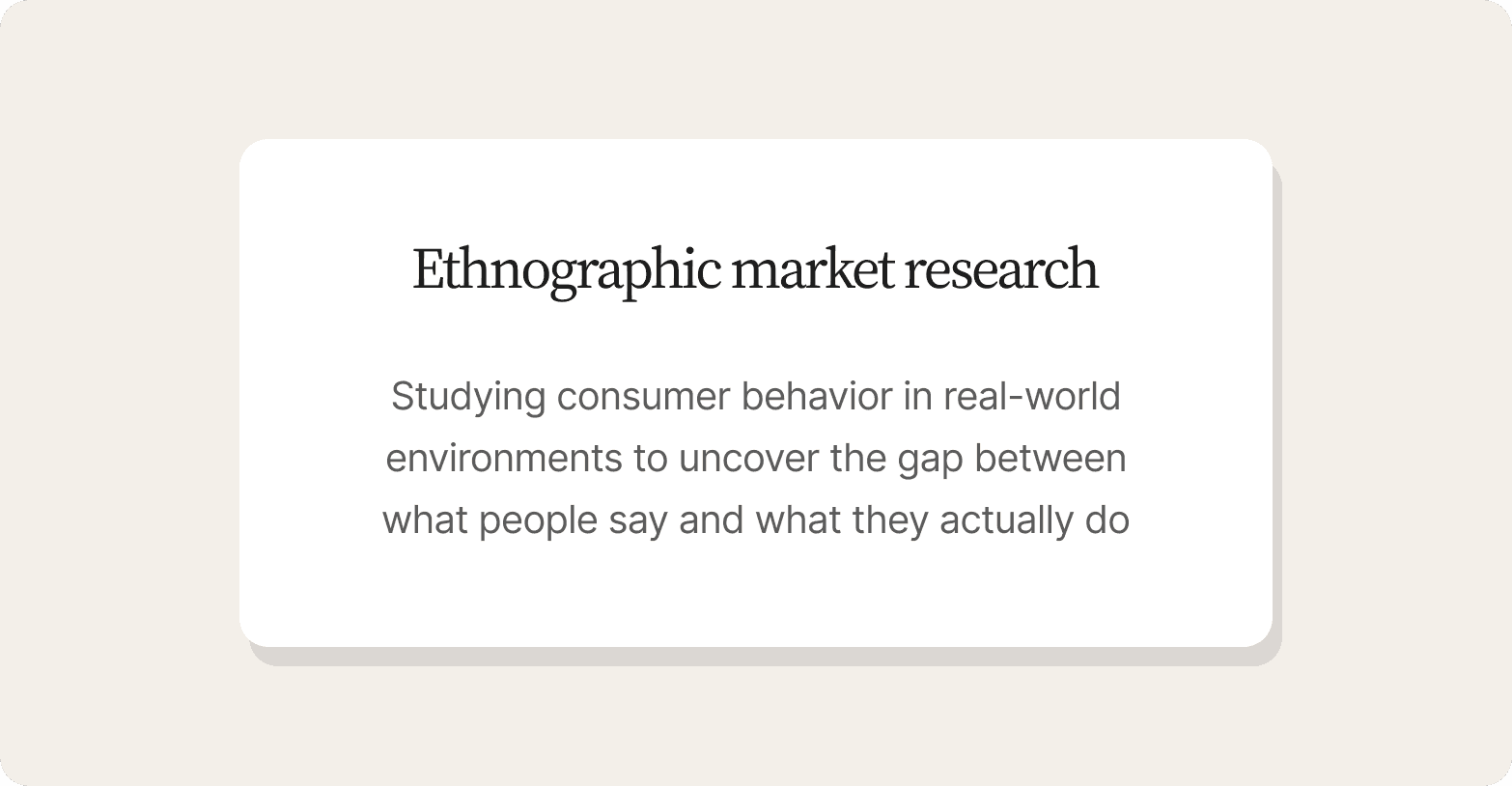
Ethnographic research sessions are recorded in the environments where people actually live and work, which means the audio contains everything those environments contain. Traffic, children, colleagues, background music, and overlapping conversations are not edge cases in field recordings; they are the norm. Standard transcription models are trained predominantly on controlled audio, so real-world recording conditions expose their limits immediately, as established ethnographic research practice makes clear when it describes the gap between laboratory assumptions and field realities.
The failure mode is quiet and cumulative. The model does not crash. It produces a transcript that looks complete, but whole clauses are substituted or omitted wherever the ambient noise briefly overwhelms the speaker.
Multilingual fieldwork adds a further layer: ethnographic researchers working outside English-speaking contexts need a tool whose interface and output are not English-only. Cockatoo's multilingual support extends to both transcription and document translation. PDF, DOCX, PPTX, XLSX, and TXT files can be translated directly within the platform, so field notes and interview records in a local language do not require a separate translation workflow.
6. Diary Studies - Fragmented Self-Recorded Entries Captured Across Days or Weeks
Diary studies ask participants to record their own entries over an extended period, which means the researcher receives dozens of short clips per person, each recorded in a different location, on a different device, at a different time of day. The audio quality varies from entry to entry within the same participant's data. A morning clip recorded in a quiet kitchen sounds nothing like an evening clip recorded in a busy restaurant.
At scale, that inconsistency becomes a systemic data-integrity risk. Most researchers discover a tool's acoustic blind spots only after uploading a full diary study dataset and receiving transcripts where acoustic variation within a single participant's entries has produced wildly uneven accuracy across the set.
Cockatoo's Free tier, which keeps files in encrypted cloud storage until the user deletes them, means researchers can upload and revisit diary entries on their own timeline without worrying about automatic purges mid-project. For larger studies, Pro's 2 TB of storage and unlimited transcription remove the ceiling entirely.
---
The six session types above do not just vary in format; they represent six different accuracy gambles when the tool handling them has not been tested on messy real-world audio. The logical next question is whether solving that gamble means hiring a human transcriptionist or switching to AI, and the answer is more nuanced than the industry's usual speed-versus-accuracy framing suggests.
Manual vs Automated Transcription for Market Research - What the Speed-Accuracy Trade-off Really Looks Like
The speed-vs-accuracy trade-off in transcription is not a fixed constraint but a function of audio complexity: controlled one-on-one interviews are a fundamentally different transcription problem than multi-speaker focus groups, and only tools that publish benchmark results across varied real-world conditions let researchers know in advance which category their recordings fall into.

Human Transcription - Accuracy, Cost, and Wait Times
Human transcription delivers up to 99% accuracy on clean audio and handles overlapping speakers, heavy accents, and dense industry jargon better than most automated tools. Human transcription services typically charge in the range of $1 to $1.50 per audio minute for standard turnaround, putting a six-hour focus group recording somewhere between $360 and $540 depending on the provider and audio complexity, a figure confirmed by multiple published rate cards across the industry.
AI Transcription - Speed and Cost vs. Accuracy Evidence
That speed advantage compounds across a full research project, and the cost gap versus human rates makes it accessible to researchers who cannot get budget approval for a per-hour human service.
Cockatoo's transcription engine is built around this expectation.
For projects that exceed those limits, Cockatoo Pro offers truly unlimited transcription on the default modes, no monthly hour cap, with support for multi-hour files and batch uploads of up to 20 files at a time. Exports cover PDF, DOCX, TXT, and SRT, with bulk export supported, and Canvas, Cockatoo's AI notes editor, is included at every tier.
Accuracy claims, however, deserve scrutiny before any tool earns a place in a research workflow. A badge reading "99% accurate" with no source behind it tells you nothing about performance on accented speech or a room where three people talk at once. Research from the FLEURS benchmark shows that real-world conditions, background noise and regional accents, materially degrade speech recognition accuracy on tools tested only on clean studio audio. Cockatoo publishes per-language coverage and mode-level benchmark results, so you can check before you upload whether your language and audio type fall inside the tool's reliable range, not discover the gap after the fact.
The Hidden Cost That Makes Free Auto-Captions the Most Expensive Option
Across the market, word error rates for free tools on accented or overlapping-speaker audio run well above 20%, meaning correcting one hour of output can take longer than typing the transcript from scratch. A tool that is free to run but requires three hours of editing, consistent with the 20%+ word error rates widely reported for free auto-caption tools on accented or overlapping-speaker audio, is more expensive than a paid subscription that returns a trustworthy first draft.
Knowing that verifiable accuracy is the real differentiator changes what you should demand when evaluating any transcription service, whether that is GoTranscript, Qualtranscribe, or Cockatoo.
Cockatoo's free tier exists precisely to remove the information asymmetry: test it on your audio, in your language, before you pay anything, and let the transcript quality, not a marketing claim, make the decision for you.
What Features to Look for in a Market Research Transcription Service
A vendor's "99% accurate" badge means almost nothing until you know what audio it was tested on. Research into diarization performance confirms that recording conditions, including room layout and microphone placement, measurably degrade speaker identification accuracy in real-world settings. Broadcast news recordings score far better than conference or focus group audio because the signal-to-noise ratio is simply cleaner. That gap between lab conditions and your actual recordings is where transcription tools quietly fail researchers.
The features below are the ones that actually matter when the audio is messy, the speakers overlap, and the findings have to hold up in a client presentation.
1. Speaker Identification and Auto-Labeling Across Every Line

Speaker identification is the feature that separates a usable focus group transcript from a wall of unattributed text. A tool worth shortlisting lets you set the expected speaker count before processing, then rename any speaker label globally so that fixing one instance updates every occurrence throughout the file. In a 90-minute focus group, that single capability saves significant review time. The honest limitation: as 2023 diarization research confirms, accuracy drops when speakers overlap or share similar vocal characteristics, so recording hygiene upstream sets a ceiling no tool can raise.
2. Verbatim vs. Clean-Read Output - Selectable Per Project
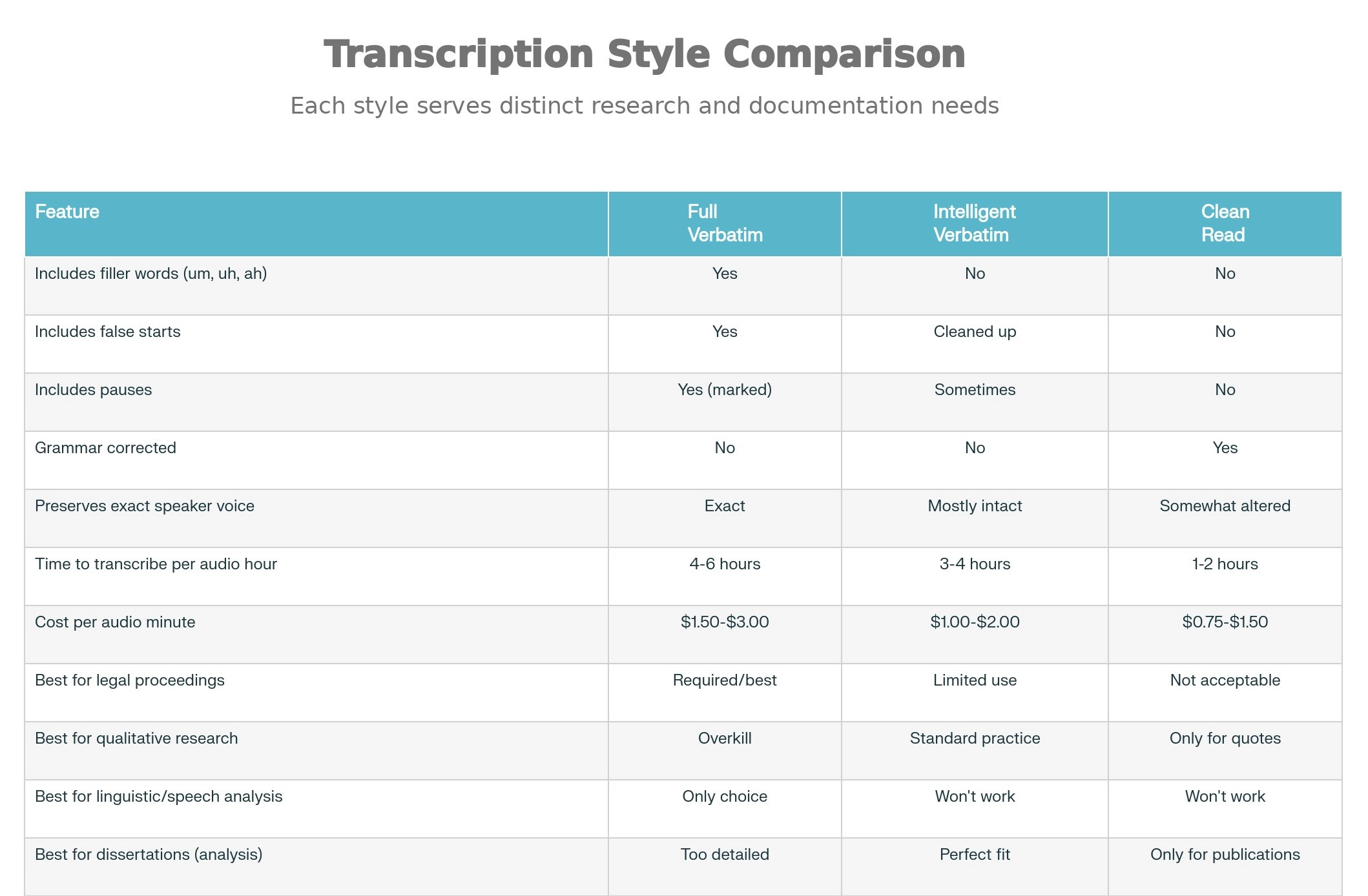
The output style applied by default shapes how much editing you do afterward. Clean-read output, which removes filler words while keeping the speaker's exact phrasing, suits most executive reports and quote extraction without manual cleanup. True verbatim, capturing every "um" and false start, is essential when language itself is the data being analyzed, such as in discourse analysis or linguistic research. Confirm that switching between styles is self-serve per project. A tool locked to one mode forces manual editing on every transcript that does not fit the default.
3. Export Formats Built for Qualitative Coding Software

Qualitative coding platforms including NVivo, ATLAS.ti, and Dedoose all require structured input with speaker-turn segmentation preserved. A transcript exported as a flat text block loses the speaker labels those platforms depend on for coding. Confirm your chosen service exports DOCX or structured TXT with speaker turns intact, not just a PDF that strips the structure. SRT export adds value if recordings need captions for accessibility or internal sharing. The tradeoff: services that offer more export formats sometimes apply them inconsistently, so test the format your coding software actually ingests before committing.
4. Security, NDA Coverage, and HIPAA-Compliant Data Handling

Data privacy is non-negotiable when recordings contain personally identifiable information or healthcare-adjacent content. At minimum, look for encrypted storage, a clear data retention policy, and a stated position on whether customer files are used for model training. For healthcare market research, HIPAA compliance requires a Business Associate Agreement from the vendor. Equally important: confirm whether support staff can access your files and under what conditions, because that detail directly affects client NDA obligations and any institutional review requirements attached to the research.
5. Verifiable Accuracy Benchmarks Across Real-World Audio Conditions
A transcription service worth trusting publishes accuracy results tested on real-world audio, not just studio recordings. Vendor-reported figures tested on broadcast-quality audio tell you almost nothing about how a tool performs on a noisy focus group recording. The Cockatoo voice transcription app publishes accuracy tests across 30 languages on the same public benchmark independent researchers use to compare transcription engines, so you can audit the evidence before a single file is uploaded rather than discovering the gap after a client presentation goes wrong.
Feature Evaluation Checklist: What to Demand from a Market Research Transcription Service
Use this before shortlisting any tool:
| Feature | Why It Matters | What to Check |
|---|---|---|
| Verifiable accuracy benchmark | Marketing badges are unauditable | Published WER on a public test set (e.g. FLEURS), across multiple languages |
| Speaker diarization | Focus groups produce unattributed text without it | Pre-set speaker count + global label rename |
| Word-level timestamps | Quote verification without manual scrubbing | Confirm word-level, not just file-level markers |
| Export formats for coding software | NVivo/ATLAS.ti reject flat text | DOCX or structured TXT with speaker turns intact; SRT optional |
| Data privacy & retention policy | Recordings contain PII | Encrypted storage, no-training-use clause, BAA for healthcare |
| Clean-verbatim vs. true-verbatim toggle | Wrong default = manual editing on every file | Self-serve per-project toggle, not locked to one mode |
If a vendor cannot answer every row in this table before you sign up, treat that as a signal.
Related Reading
- How To Transcribe Youtube Video
- Best Transcription Software For Qualitative Research
- Meeting Transcription And Summary Ai Tools
- Best Lecture Transcription App
- Best Transcription App For Iphone
- Best Closed Captioning Software
- Qualitative Research Transcription
- Business Transcription
- Automatic Video Transcription Software
- Best Medical Transcription Software
- Podcast Transcription Software
- Zoom Ai Transcription
- Best Transcription Software For Interviews
The Transcript Formats Market Researchers Actually Use
That gap between vendor promises and real-world performance has a parallel in output format, where the consequences of a poor choice are just as irreversible. Format is a downstream decision. The right transcript output is determined entirely by what you plan to do with the text, and choosing the wrong one does not just create extra work. It can silently destroy the data signal you needed, because fillers erased in a clean-read transcript or context compressed in a summary cannot be recovered without starting the transcription over.
A 90-minute focus group produces roughly 15,000 words of raw audio. Getting the format wrong on a file that size is not a small problem.
1. Verbatim Transcription - Every Word, Pause, and False Start Preserved
Verbatim transcription captures every filler, false start, repetition, and pause exactly as spoken. It is the right pick when the language itself is the data: thematic coding in NVivo, ATLAS.ti, or Dedoose requires this level of fidelity because hedging language, self-corrections, and emotional cues carry analytical weight. The real tradeoff is volume. A 90-minute focus group produces a dense, difficult-to-skim document that is poorly suited for executive delivery without a second editing pass.
2. Clean Read Transcription - Polished Text Ready for Reports and Quote Extraction
Clean Read, or edited, non-verbatim transcription removes fillers, false starts, and non-verbal sounds, producing polished prose a client can read without friction. It is the fastest path from recording to executive slide deck, and pull quotes lift directly into reports without editing. The limitation is irreversibility: once hesitation language and self-corrections are stripped, the analytical signal they carried is gone. A researcher who later needs to code emotional tone or speaker uncertainty will need to return to the original recording.
3. Summarised Notes Format - Key Themes Distilled for Internal Briefings
Summarised notes compress a full session into key themes, representative quotes, and notable moments, typically a few hundred words per hour of audio. This format suits internal stakeholder briefings where decision-makers need the finding, not the full evidence trail. It is not appropriate as a primary research record: compression introduces interpretation, and any theme the summariser did not flag is permanently lost. Use it as a secondary deliverable alongside a verbatim or clean-read master file, never as a replacement.

4. Structured Q&A Format - Responses Mapped Directly to Interview Questions

Structured Q&A, or Smart Format, organises transcript output by question rather than by chronological speaker turn, mapping each participant's response directly under the prompt that generated it. This is the most efficient format for cross-participant comparison in depth interviews: a researcher can scan all responses to a single question in one pass instead of reading five separate transcripts. The tradeoff is that conversational context between questions is lost, making it a poor fit for sessions where probing and follow-up are analytically significant.
5. Timestamped Verbatim Transcription - Precision Navigation for Long-Form Sessions
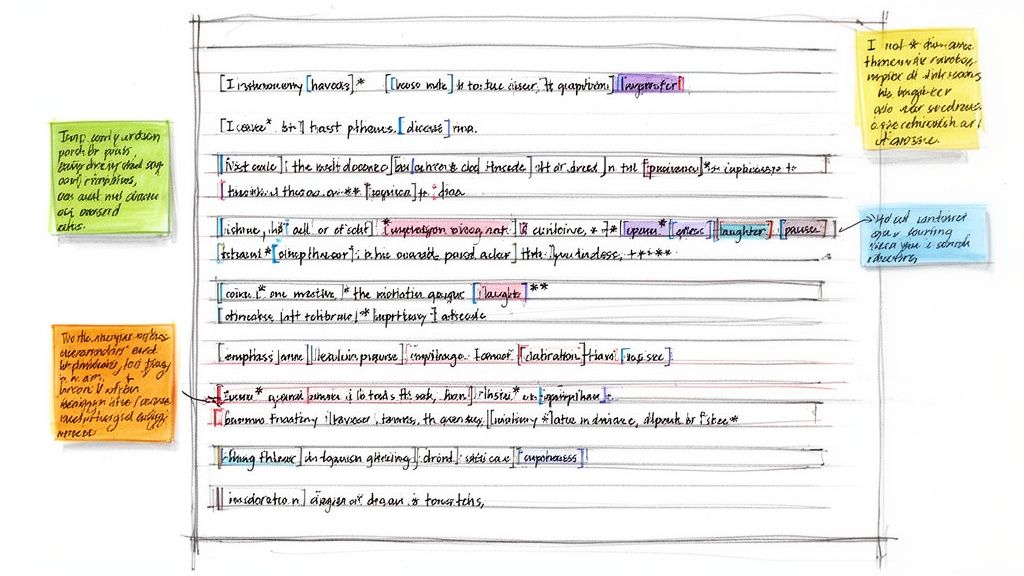
Timestamped verbatim transcription pairs every word or speaker turn with a time code, letting a researcher jump directly to any moment in the source recording. This format is used for client video clip reels and moderator verification, not just internal archiving. It is most valuable when a finding needs to be shown rather than described: a stakeholder who can watch the exact 40-second clip is harder to argue with than one who reads a summary. Cockatoo's voice transcription app produces word-level timestamps with speaker-turn export options, so navigating back to source audio to verify context or recut a clip takes seconds rather than a manual scrub through the full recording.
Verbatim transcription is not the analytically neutral default it is often treated as. Qualitative analysis tools, executive reports, and compliance archives each consume transcript data in structurally different ways, and defaulting to verbatim for every session creates a precision tax researchers pay in transcription time but rarely recover in analytical value.
Once you have the right format in hand, the real question is what to do with it, and that is where most researchers leave significant speed on the table. The next section maps exactly how a well-formatted transcript compresses the gap between raw recording and actionable insight.
Why Transcribing Market Research Makes Your Data Faster to Use
Researchers who finish a transcription and feel the hard work is done are actually standing at the beginning of the real work. The transcript itself is the foundation on which analysis, reporting, and archiving are built.
One of the most common places researchers lose time is in the aftermath, when 25,000 words of raw recordings, notes, and secondary sources are sitting unstructured and need to be turned into a coherent picture. Transcription is what makes that structure possible.
Searchability Turns a 90-Minute Recording Into a 10-Second Ctrl+F
Across the market, transcripts let researchers search, filter, and cross-reference data in seconds, a task that is impossible with raw audio. For large research programmes, that efficiency compounds quickly across dozens of interviews.
Cockatoo's Pro plan removes that bottleneck: there is no monthly hour cap on the default transcription modes, multi-hour files are supported, and up to 20 files can be uploaded in a single batch, so an entire round of fieldwork can move to searchable text in one session rather than a trickle across days.
Verbatim Quotes Go Straight Into Reports Without Rewatching
Verbatim quotes can be pulled directly from transcripts into executive reports and deliverables, removing the need to re-listen to recordings when building client-facing materials. That alone can save hours at the reporting stage.
Cockatoo exports to PDF and DOCX, formats a colleague can open, annotate, and edit without specialist software, as well as TXT and SRT.
Transcripts as Required Input for Qualitative Coding and Compliance
Platforms like NVivo, ATLAS.ti, and Dedoose require a text-format transcript before any coding can begin, a baseline constraint that holds true across the broader research workflow.
The same research notes that transcripts create a permanent, shareable paper trail supporting compliance requirements, internal audits, and longitudinal research programmes.
Cockatoo's Pro tier stores transcripts in 2 TB of encrypted cloud storage, keeping files accessible until the researcher chooses to delete them, a practical requirement for longitudinal projects or compliance archives that span months or years.
How to Get Market Research Transcription Done Faster Without Sacrificing Accuracy
Manual transcription of a one-hour research interview typically takes four to six hours of focused effort. That ratio means a week of fieldwork can generate a month of transcription backlog, and the actual analysis never starts.
The familiar response is to accept one of two bad trades: pay professional human transcription services approximately $120 per hour of audio and wait days for delivery, or run recordings through a free auto-caption tool and spend the afternoon fixing errors that corrupt the very quotes you plan to code. Both paths treat the speed-accuracy tradeoff as a fixed law. It is not.
How to Verify Transcription Accuracy Before You Commit to a Tool
Most transcription tools publish a single accuracy percentage with no explanation of what audio it was tested on, which accents were included, or whether the test set was internal. That number is unauditable, which means it is functionally useless for a researcher whose findings will drive a business decision.
Cockatoo's published accuracy benchmarks run on the same public test set that researchers and engineers use to compare transcription engines across languages, covering 30 languages with results any user can inspect before uploading a single file. The highest-accuracy mode achieves under 5% word error rate in 12 of those languages, and records the lowest error rate among compared engines in 25 of 36 tested languages. Those figures are verifiable, not asserted.
1. Cockatoo's FLEURS Benchmark Results - Verified Accuracy Across 30 Languages
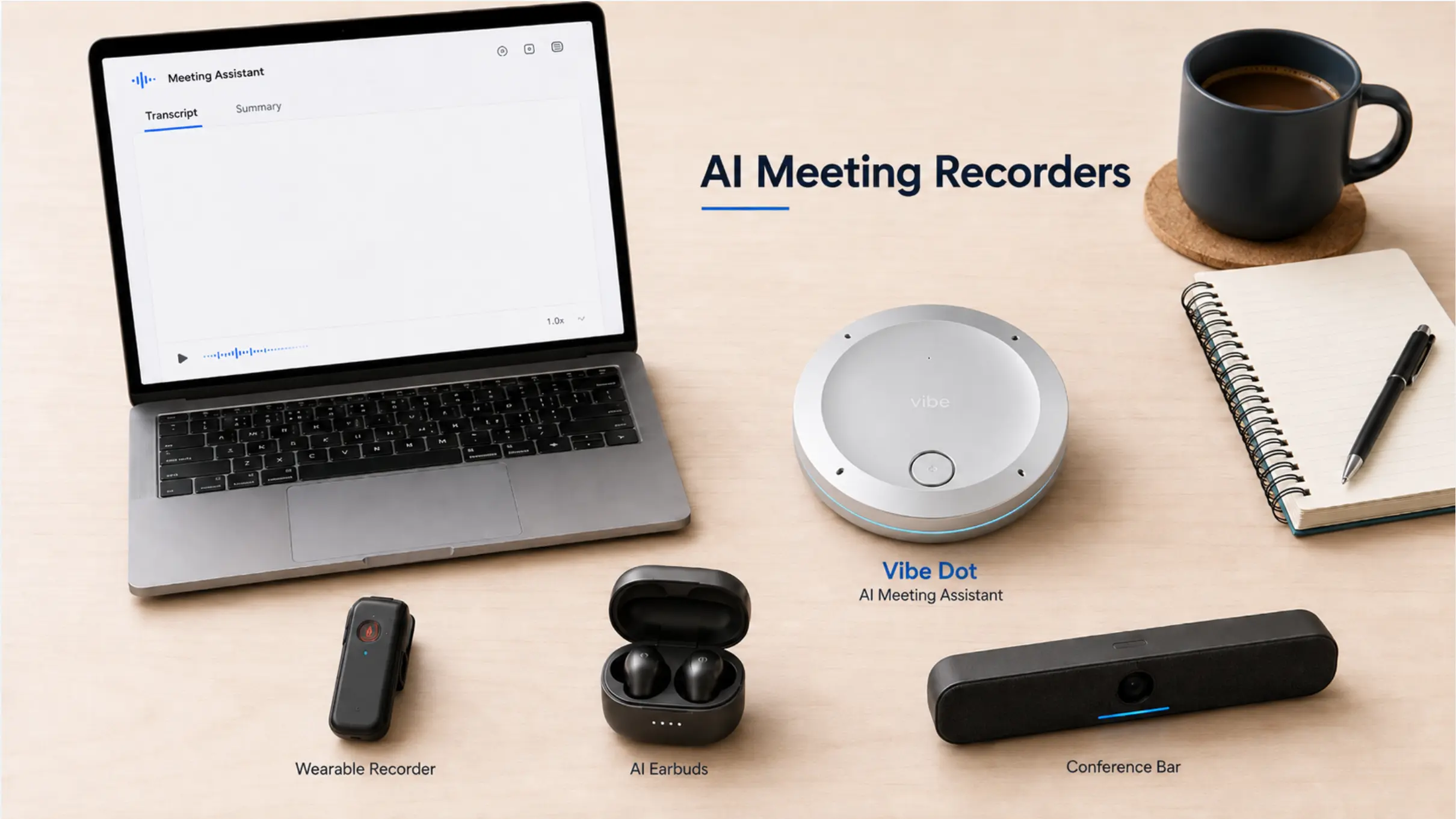
Cockatoo publishes accuracy benchmarks measured against the FLEURS public test set across 30 languages, the only credible way to verify transcription quality before trusting a transcript with research decisions. Unlike competitors who cite unverified internal percentages, FLEURS-grounded results are reproducible and auditable. Researchers running multilingual studies or cross-market interviews should treat published benchmark data as a non-negotiable selection criterion, not a marketing footnote.
2. The Five-Step Faster Workflow - Upload, Configure, Transcribe, Label, Export
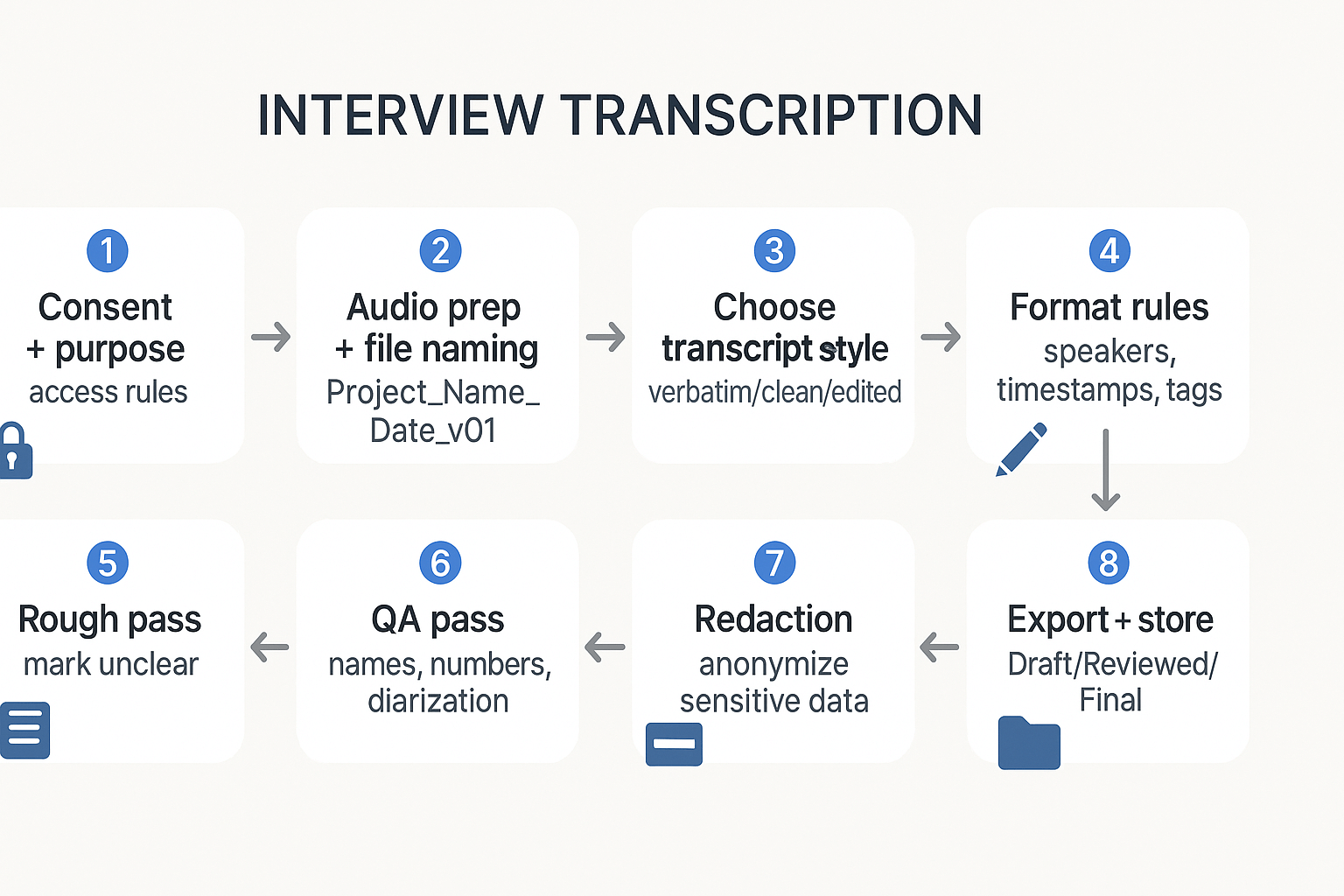
The practical workflow collapses what used to take a working day into under five minutes of active time. Upload the recording (audio or video, any format). Set the speaker count for the session. Receive the timestamped transcript. Rename each speaker once, and every line attributed to that speaker updates automatically. Export to DOCX, PDF, SRT, or TXT for direct import into qualitative coding software.
A 90-minute three-speaker interview processed this way arrives as a structured, punctuated, speaker-labelled document ready for NVivo or ATLAS.ti without a reformatting step. The free tier lets you test the workflow on a real recording before any commitment, with no setup and no credit card required, so you can verify the tool handles your session format before considering a Pro plan upgrade.
3. Auditability Over Unverified Percentages - The Accuracy Standard That Protects Research Decisions

The hidden cost of inaccurate transcription is the downstream effect: a misquoted participant changes a theme, a missed word shifts a sentiment, and an executive report built on that output carries the error forward invisibly. The real cost of transcription includes accuracy levels and the downstream cost of errors in research decisions, not just the per-hour rate.
Auditability closes that risk. When benchmark results are public and methodology is stated, a researcher can confirm before committing whether the tool handles their specific languages and real-world audio conditions. That is a structural protection, not a marketing claim.
4. Improving Data Analysis by Converting Interview Audio Into Searchable, Structured Text
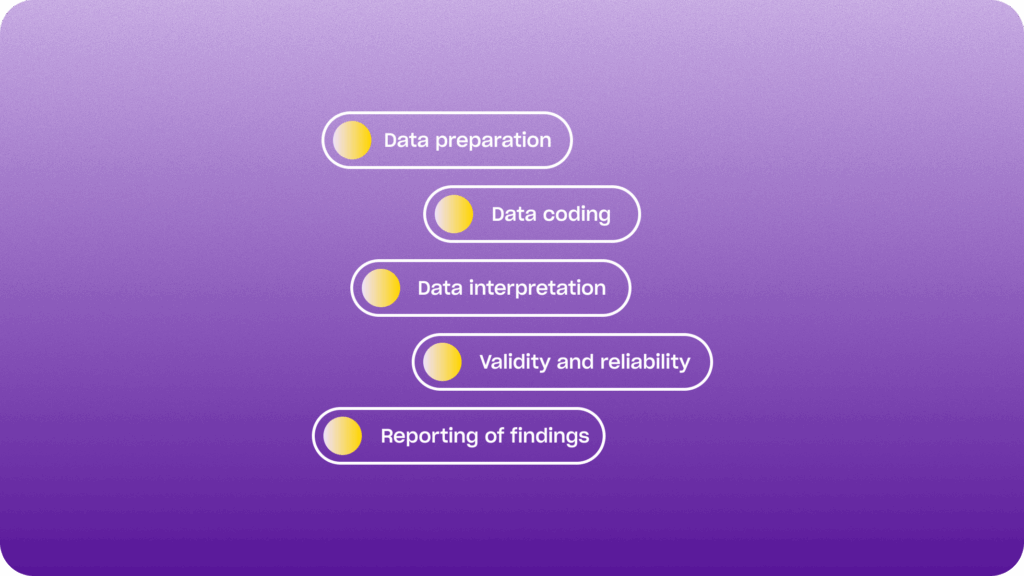
Transcribed market research interviews become searchable, taggable, and codeable in ways raw audio never can be, enabling faster thematic analysis, easier quote extraction, and cleaner handoffs to stakeholders. Word-level timestamps let analysts jump directly to relevant moments rather than scrubbing through recordings. The practical limitation is that transcript quality directly determines analysis quality: a low-accuracy transcript introduces systematic error that compounds at the coding and synthesis stages.
5. Faster Market Research Transcription Without Accuracy Tradeoffs - The Combined Workflow Payoff
Speed and accuracy are typically framed as a tradeoff in transcription, but the combination of automated speaker labeling, benchmark-verified models, and unlimited processing capacity collapses that tension for most market research use cases. Researchers who previously rationed transcription hours due to cost or turnaround time can now process entire interview sets before analysis begins. The remaining tradeoff is real: highly technical jargon or heavily accented speech still warrants a targeted human review rather than full reliance on automation.
Related Reading
- Happy Scribe Vs Otter
- Rev Alternatives
- Notta Alternatives
- Happy Scribe Vs Trint
- Rev Vs Scribie
- Rev Vs Otter
- Rev Vs Gotranscript
- Trint Vs Temi
- Best Asr Transcription Software
Next steps
If your research recordings are sitting unanalyzed because transcription keeps consuming the hours meant for insight work, the path forward starts with recognizing that the time sink is not inherent to the process. It is a symptom of using tools whose accuracy was never verified against your actual audio conditions. Start with our voice transcription app.
Verifiable accuracy benchmarks across accents, background noise, and 30 languages mean the first draft arriving from a well-tested tool is already trustworthy enough to code and quote from, collapsing the cleanup cycle before it starts. The fact that the largest recoverable time cost sits not in transcription itself but in sequential transcript review means that a trustworthy first draft also makes parallel team review structurally possible, concentrating human attention only on flagged segments rather than every line of every file. Together, those two realities point to one action: test the tool on your actual recordings before committing, using evidence you can read before you create an account.
Start with the voice transcription app Cockatoo offers on its free tier, no credit card required, up to three files per day at 30 minutes each. Upload a recording from your most recent session, check the speaker labels, pull a quote, and compare the output against whatever you are using now. The accuracy benchmarks are public before you sign in, so the decision is based on what the tool proves on your audio, not what it claims on a marketing page.
Frequently Asked Questions
How much time does transcription actually save compared to doing it manually?
Manual transcription runs at 4 to 6 hours of work for every hour of recorded audio, meaning a single 60-minute interview can consume a full working day. Uploading a recording to an automated tool like Cockatoo and receiving an editable, speaker-labeled transcript automatically redirects those hours back into analysis work that actually requires a human mind.
How much does professional human transcription typically cost?
Human transcription services typically charge in the range of $1 to $1.50 per audio minute for standard turnaround. That puts a six-hour focus group recording somewhere between $360 and $540 depending on the provider and audio complexity, with turnaround typically running 24 to 48 hours per hour of audio.
How does transcription make qualitative research data easier to work with afterward?
A written transcript is the foundation every downstream step depends on: quote extraction, qualitative coding in tools like NVivo or ATLAS.ti, and the executive summaries that reach decision-makers. Because transcripts can be searched and coded, they make it possible to organize and analyze recordings in ways that raw audio simply does not allow.
Are my uploaded recordings kept securely, and for how long?
Cockatoo's Free tier keeps files in encrypted cloud storage until the user deletes them, so there are no automatic purges mid-project. The Pro plan includes 2 TB of encrypted cloud storage per person, and the Team plan also offers 2 TB of encrypted cloud storage per person with shared transcript access, keeping every record in one auditable place.
When does it still make sense to use a human transcriptionist instead of an AI tool?
Human transcription remains the right call when audio quality is genuinely poor, the recording is short, and the task requires something automation cannot replicate, emotional tagging, for instance, or fine-grained speaker attribution in overlapping dialogue. Human transcriptionists also deliver up to 99% accuracy on clean audio and handle heavy accents and dense industry jargon better than most automated tools.